
If you want to bake one large dish for guests
Compare the oven’s usable internal dimensions with those of your baking dish, including the handles. The stated capacity in litres alone won’t tell you whether the dish will fit.


Choose an oven that your baking dish will actually fit in and that has a suitable oven setting for baking the dish. A built-in oven may work if you have a suitable housing unit; without one, a freestanding model is an option, while a combination microwave is worth considering if you also want to reheat food regularly. Always compare the usable interior space and features of the exact model.
Compare the oven’s usable internal dimensions with those of your baking dish, including the handles. The stated capacity in litres alone won’t tell you whether the dish will fit.
A freestanding oven could be an option. As well as checking there’s room for your dish, consider where the appliance can sit on your worktop and follow the model’s placement instructions.
A combination microwave can combine baking with microwave use, but check that the exact model has a suitable oven setting and enough room for your dish.
First, choose between a built-in oven, a freestanding oven and a combination microwave based on your kitchen and how else you’ll use it. Then check the space for your dish, the baking settings and energy consumption.
Choose this option if: you have a suitable housing unit and need enough room for your dish or several dishes. Measure the interior space; Consumentenbond also recommends checking that your largest oven dish will fit.
Bear in mind: the housing unit and installation must be suitable. Milieu Centraal says that a large oven uses around 20% more energy than a medium-sized oven to cook one dish.
Choose this option if: a built-in oven isn’t possible and you find a model that fits your dish.
Bear in mind: the appliance takes up worktop space, so check its external dimensions and placement instructions.
Choose this option if: you want to reheat food regularly as well as bake. Consumentenbond describes the oven or fan-assisted function as the one to use for baking.
Bear in mind: some models have fewer shelf positions or no bottom heat. The word ‘combination’ alone doesn’t confirm that the baking options are suitable for your recipe.
| What to consider | What to check before buying | Who should consider this? |
|---|---|---|
| Room for your dish | Measure your baking dish, including the handles, and compare it with the usable internal dimensions and shelf space. | If you want to bake the dish in one go for guests, you’ll want to be sure it fits; around 36% of consumers put space for their dish first. |
| Suitable baking settings | Check the individual oven settings on the exact model, such as fan-assisted cooking or conventional top and bottom heat. | If you’re mainly looking for a suitable way to bake the dish, check the oven function; around 29% of consumers give baking settings top priority. |
| Where it will go in your kitchen | For a built-in model, measure the housing unit; for a freestanding model, check its external dimensions and placement instructions. | If your kitchen has limited space or no suitable housing unit, you’ll need somewhere safe and practical for the appliance; around 21% of consumers start by considering placement. |
| Combination features and energy use | Consider how often you’ll also want to reheat food and, for ovens, compare electricity use per standard baking cycle. | If you often reheat food as well as bake, or want to factor in energy use, choose features and a size to suit the way you use it; around 14% of consumers prioritise combined use or energy consumption. |
Components inside the oven can reduce the usable space, so the stated capacity doesn’t necessarily tell you whether your dish will fit.
Measure your dish, including the handles, and compare it with the internal dimensions and shelf space of the exact model.
A combination microwave may have fewer shelf positions or no bottom heat. A microwave setting doesn’t replace an oven setting.
Check the individual oven settings and the space available for your baking dish.
A built-in model will only fit if the housing unit and installation requirements are suitable. The size can also affect energy use.
Measure the housing unit, check the installation instructions and, for ovens with an energy label, compare consumption per standard baking cycle.
The product description for the Severin TO 2056 mentions fan-assisted cooking, while the manufacturer’s technical table says ‘Fan function: no’.
For this exact model, confirm whether the feature is included before choosing it on that basis.
Freestanding ovens; the OV457B is an example for anyone who doesn’t want a built-in model.
Built-in ovens; the HBA534BS3 is an example with several standard oven settings.
Built-in ovens, including larger models such as the OM316MZ, designed for a 60 cm housing unit.
Freestanding mini ovens; the TO 2056 is an example of a compact model.
Combination microwaves, such as the MC35R8058CC/EN, for anyone looking to combine baking with microwave use.
This selection includes built-in ovens and combination ovens for anyone looking to bake a dish and possibly use a microwave as well. Before buying, check the space for your dish and the placement requirements for the exact model.
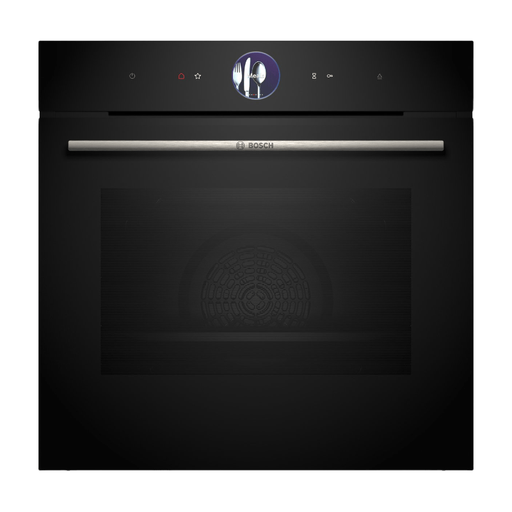 Image unavailable
An option for anyone looking for a built-in oven with baking functions who also wants to cook with steam; check that your housing unit and baking dish will fit.
Capacity: 71 litres. The product name mentions Air Fry; the description lists fan-assisted cooking and top and bottom heat.
Built-in installation requires a suitable housing unit and ventilation, and must follow the product instructions.
 Image unavailable
An option if you want to combine baking with microwave use; measure your baking dish and check the usable space.
Capacity: 25 litres. The product name mentions a grill and convection.
When using the microwave, follow the product’s safety instructions on metal and foil.
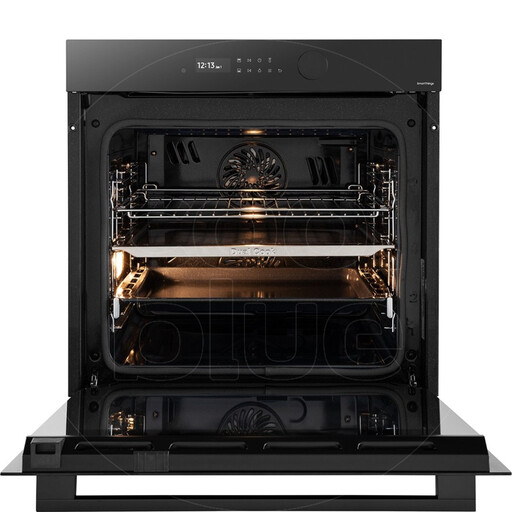 Image unavailable
A built-in option for anyone considering oven capacity and the Dual Cook function; check the housing unit and whether the available space will accommodate your baking dish.
Capacity: 76 litres. The product name mentions Dual Cook, pyrolytic cleaning and AirFry.
 Image unavailable
A standard built-in oven for anyone with a suitable housing unit; compare the internal space with your baking dish.
Capacity: 66 litres. The product name lists five programmes; the description mentions 3D Hotair and top and bottom heat.
Follow the manual for installation.
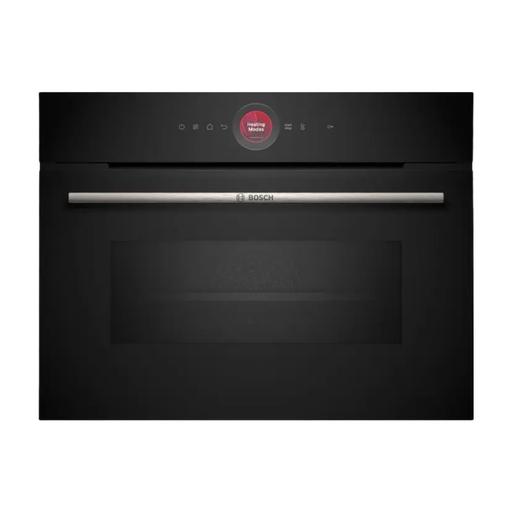 Image unavailable
An option for anyone looking to combine baking and microwave use in a built-in appliance; check the housing unit and whether your baking dish will fit in the available space.
Capacity: 45 litres. The product name lists a microwave output of 900 W, a TFT display and Home Connect.
You can’t tell from the capacity or the number of guests alone. Measure the dish, including the handles, and compare it with the usable internal dimensions and shelf space of the exact model.
No, choose an appliance with an oven function. According to Consumentenbond, a microwave-only model is designed for reheating and defrosting; a combination microwave may also have an oven function.
Follow the placement and cleaning instructions for the exact model. For the OV457B, Inventum recommends cleaning with a soft, damp cloth and a little washing-up liquid once the appliance has cooled down.
For ovens, compare the stated electricity use per standard baking cycle, not just the letter rating. Milieu Centraal points out that oven size also makes a difference; actual energy use partly depends on how you use the oven.
Voedingscentrum recommends cooling leftovers within two hours, storing them covered in the fridge at 4 °C and eating them within two days. Reheat leftovers until piping hot throughout, and don’t reheat anything left over afterwards.