
Making lots of portions
You want to fit plenty of slices side by side for the sale, so you’re looking at the usable tray area and the number of trays included.


Start by considering how many portions you need and the usable surface area of the baking trays: capacity in litres won’t tell you how many slices you can bake at once without overlapping them. A built-in oven with documented baking levels can suit multiple trays, while a freestanding mini oven is better for smaller batches and a countertop model supplied with several trays may suit larger quantities. Check the tray dimensions, which trays are included, where the oven can be placed and how it’s cleaned. Specifications alone can’t prove how crisp the results will be.
You want to fit plenty of slices side by side for the sale, so you’re looking at the usable tray area and the number of trays included.
You want to keep an eye on thin slices over successive batches, so you’re comparing fan-assisted settings and multi-level baking without treating a manufacturer’s claims as a guarantee of results.
You’re looking for a freestanding oven that fits on your available worktop and are happy to make smaller batches.
| What to consider | What should you check? | Who is this important for? |
|---|---|---|
| Usable baking space | Compare the tray dimensions and the number of trays included. Use a test batch to see how many slices fit without overlapping. | If you want to make lots of portions at once, focus on the space available on the trays. Around 29% of consumers prioritise usable capacity. |
| Baking performance and visibility | Check which fan settings and baking levels are listed for the model, and whether you can check on or swap the trays during a test batch. | If you want to keep a close eye on thin slices, focus on the baking function and how easy it is to see inside while they’re cooking. Around 23% of consumers prioritise even baking and being able to monitor it. |
| Placement and size | Measure the built-in space or worktop, and check the placement instructions for the exact model. | If you don’t have a suitable built-in space or much worktop room, the available space will determine which oven you can use. Around 18% of consumers prioritise placement and size. |
| Cleaning and hygiene | Check the cleaning method and which parts can be removed. Plan for hygienic food preparation separately from choosing the oven. | If you’re making several batches, you’ll want to know how to clean the oven and its parts. Around 18% of consumers prioritise easy cleaning and hygienic food preparation. |
| Energy use per batch | Where available, compare the energy use in kWh per cycle and factor in how many batches you’ll need. | If you want to make a set quantity of crisps, consider both energy use and the number of cycles required. Around 12% of consumers prioritise running costs. |
Capacity in litres doesn’t tell you how many slices fit on a baking tray without overlapping. The number of shelf positions also doesn’t tell you how many trays are included.
Compare the usable tray area and the number of trays supplied. Try a test batch before planning your production.
Limited tray space could mean extra batches or buying additional baking trays separately.
Function names and manufacturer claims don’t prove how sweet potato crisps will turn out with your oven and load.
Choose based on verifiable dimensions and features, then adjust the load and cooking time with a test batch.
Energielabel.nl recommends focusing on energy use per cycle when comparing ovens. The energy rating alone won’t tell you how many batches you’ll need to make your desired quantity.
Where available, compare kWh per cycle and keep a separate record of how many cycles you need.
More batches could change the total energy used to make the quantity you want.
Choosing an oven doesn’t replace your responsibility to prepare, sell and store food safely and hygienically. Allergen information also depends on how the crisps are packaged and sold.
Plan for hygienic food preparation, and check ingredients, packaging and information for buyers separately from your oven choice.
The HBG578EB7 built-in oven is an option if you’re looking for a model with a multi-level baking function.
The NBU5P40SM is a built-in option with a 72-litre capacity and pyrolytic cleaning.
According to ETNA, the OP670Ti is a built-in option with a 72-litre capacity, turbo fan-assisted cooking and five shelf positions.
The TO 2058 freestanding mini oven is an option if you don’t want a built-in oven.
The 09300420 countertop model is an option if you want to use several separate trays.
This selection includes a freestanding mini oven and built-in ovens for anyone considering different oven sizes for making sweet potato crisps.
 No image available
Suitable if you’re looking for a freestanding mini oven with two cooking compartments.
23-litre capacity; two independent cooking compartments; 15 programmes; air circulation.
 No image available
Suitable if you’re considering a built-in oven with several documented baking levels.
71-litre capacity; 3D Hotair on up to three levels; stated cavity dimensions: 585 × 560 × 550 mm.
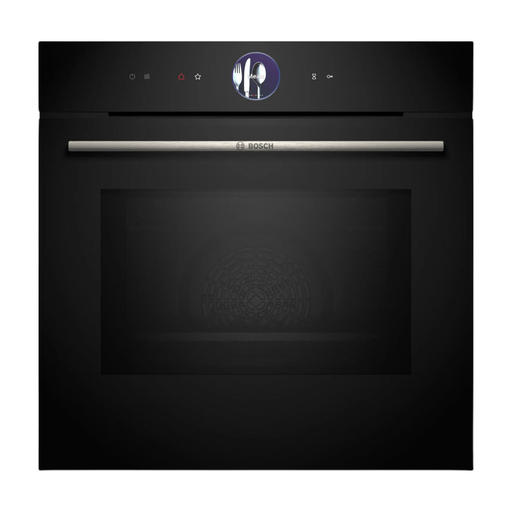 No image available
Suitable if you’re considering a built-in model with an Air Fry function for thinly sliced vegetables.
Five shelf positions; the product description mentions an Air Fry baking tray and 4D Hotair.
 No image available
Suitable if you’re looking for a built-in oven with multi-level baking options.
71-litre capacity; 3D Hotair on up to three levels; Air Fry function with baking tray; telescopic rails.
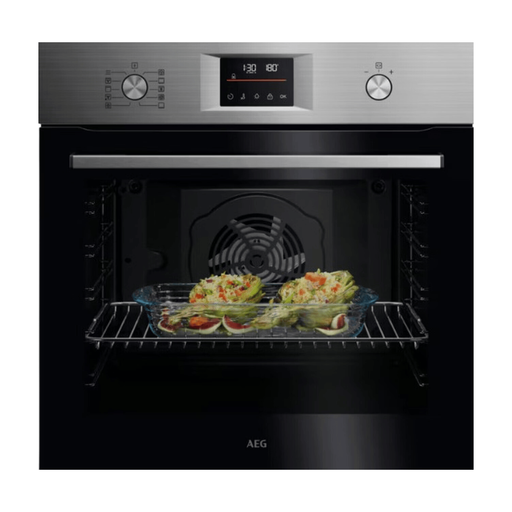 No image available
Suitable if you’re looking for a built-in oven with several shelf positions and pyrolytic cleaning.
72-litre capacity; five shelf positions; pyrolytic cleaning; stated built-in dimensions: 450 × 560 × 550 mm.
According to the NVWA’s step-by-step guide, you don’t need to register if you sell food once a year. If you sell food several times a year, registration is required. You must still work safely and hygienically, even for a one-off sale.
Check the ingredients you use and make allergen information available to buyers. The NVWA requires information to appear on the label of prepacked products. For unpackaged products, it must be available in another way before purchase. Any other labelling requirements will also depend on how you package and sell the crisps.
Not necessarily: shelf positions aren’t the same as included baking trays, and they don’t prove that four full trays will bake evenly. Check how many trays are supplied and test the load you want to use.
Where available, compare energy use in kWh per cycle and work out how many cycles you’ll need for your desired quantity. Energielabel.nl highlights energy use per cycle when comparing ovens. To calculate the cost, you can use your own electricity tariff.
No. A function name or manufacturer claim doesn’t prove how sweet potato crisps will turn out with your oven and load. Start with a test batch and adjust the load and cooking time before planning larger quantities.