What should you look for?
Large built-in fan oven
Best for: an existing, suitably sized housing unit and making use of several dishes or shelf levels.
Bear in mind: check the housing unit, connection and model-specific guidance on cooking several dishes at once. Larger ovens generally use more energy, according to Milieu Centraal.
Freestanding fan oven
Best for: baking without installation work, if you have enough safe space on your worktop.
Bear in mind: measure the external dimensions and baking tray, and follow the positioning instructions. A large stated capacity in litres doesn’t guarantee that your planned batch will fit.
Combination oven or microwave oven
Best for: a kitchen where you’ll also use the same appliance for reheating.
Bear in mind: according to the Consumers’ Association’s buying advice, a combination oven generally puts more emphasis on oven functions; a microwave oven with grill and convection often has fewer shelf positions. Check the specifications of each model.
The Consumers’ Association recommends comparing your largest oven dish with the internal dimensions and measuring the housing unit carefully. Milieu Centraal points out that larger ovens generally use more energy. The percentages below show the main buying concern for each scenario.
| Consideration |
What should you check? |
Which consumers is this for? |
| Batch capacity |
Measure your largest dish and compare it with the usable internal dimensions, baking tray and suitable shelf positions. |
If you want to bake enough portions per batch for your sales event, check which dishes and peppers will actually fit. Around 36% of consumers prioritise batch capacity. |
| Even baking |
Check the fan setting and which shelf levels the manufacturer recommends for baking several dishes at once. |
If you want to bake several dishes at once, pay attention to the oven setting and the model-specific guidance on positioning. Around 29% of consumers prioritise even baking above all else. |
| Positioning and connection |
Measure the built-in housing unit or, for a freestanding oven, compare its external dimensions with the available space and positioning requirements. |
If the oven needs to fit into your existing kitchen, first check the housing unit or safe location and the connection. Around 21% of consumers prioritise positioning and connection. |
| Energy use and cleaning |
Compare energy use on a like-for-like basis and check which cleaning function and accessories come with the model. |
If you also want to consider energy use and cleaning after several rounds of baking, look at the energy consumption and available cleaning function. Around 14% of consumers make this their main buying concern. |
Ovens on Joybuy for stuffed peppers
These models are suitable for freestanding baking or for use in an existing built-in housing unit. Check the usable space and positioning requirements for each model to make sure they suit your kitchen and batches.
 No image available
Wiggo WMO-E657(B) freestanding oven, 65 L
A freestanding model to consider if you want to bake without installation work and have enough suitable space to position it.
The stated capacity is 65 L; the description lists four shelf positions, a turbo fan and six cooking functions. The power rating in the product name is 2000 W.
Place the oven on a stable, heat-resistant surface with enough ventilation; the exterior gets hot. Check the external dimensions and the clearance required.
View at Joybuy
 No image available
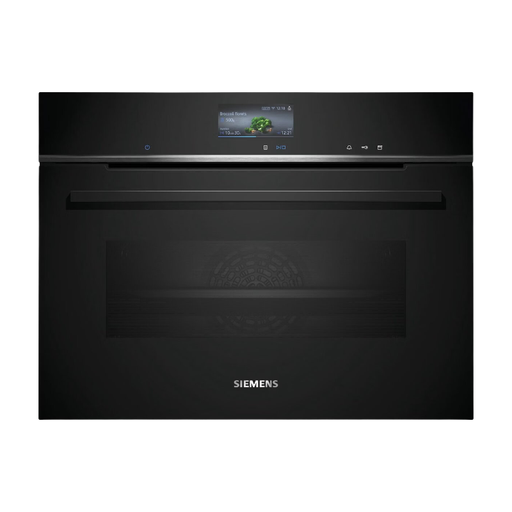
Siemens CS736G1B1 built-in steam oven, 47 L
This built-in model is worth considering if you already have a suitable housing unit and want to explore steam cooking as well as oven cooking.
The product name lists 47 L and 4D hot air; the description mentions fullSteam Plus. Check that the housing unit is suitable and follow the installation instructions; installation by a qualified electrician is recommended.
View at Joybuy
 No image available
Bosch HMG7361B1 built-in oven, 71 L
A built-in model to compare if you have a suitable housing unit and are looking for a large fan oven.
The product name lists 71 L and 3D hot air. Before installation, check that the housing unit and installation requirements are suitable for your kitchen.
View at Joybuy
 No image available
Bosch HBG536EB4 built-in oven, 71 L
This built-in model is an option to compare if it fits your housing unit and you want to consider using several shelf levels.
The product information lists 71 L and 3D hot air for up to three levels. Eco Clean Direct is also mentioned. Check the housing dimensions and installation requirements.
View at Joybuy
 No image available
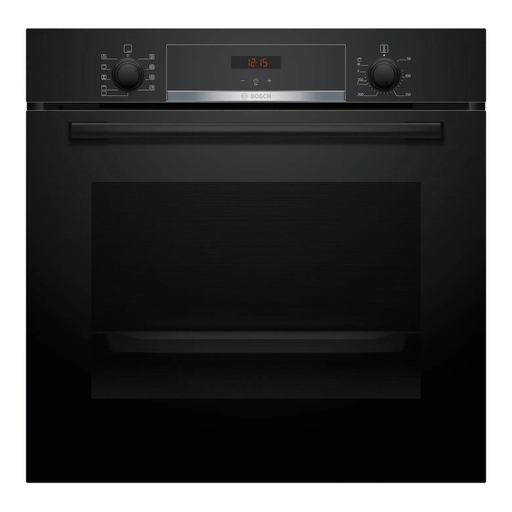
Bosch Serie 4 HBA534EB3 built-in oven
A built-in model to consider if you have an existing housing unit and its stated capacity suits the dishes you use.
The product information lists 71 L, convection and hydrolytic cleaning. Check that the stated housing dimensions match the space available.
View at Joybuy
Frequently asked questions
Is a large capacity in litres enough to work out your batch size?
No. Measure your dishes too, and check the usable internal dimensions and shelf positions. The Consumers’ Association notes that the usable space may be smaller than the stated capacity.
How do you keep stuffed peppers safe until it’s time to sell them?
Plan how you’ll store and transport them before you start cooking. For perishable foods at markets and events, the NVWA specifies a maximum of 7 °C for chilled storage and above 60 °C for keeping food hot; check the food’s temperature with a digital probe thermometer. What’s suitable also depends on the filling and how you serve the portions.
Do you need to register with the NVWA for a one-off sales event?
According to the NVWA’s step-by-step guide, anyone who sells food once a year doesn’t need to register; registration is required if you sell several times a year. You still need to handle food safely. Check how often you actually sell.
How should you provide information about allergens in the filling?
Check the ingredients and let customers know which allergens are present. For unpackaged foods, the NVWA describes written and verbal ways to provide this information; different rules apply to prepacked portions. Before selling, check which way you’ll be presenting your food.


