What should you look for when choosing?
Freestanding oven
A good fit if: you don’t have a suitable built-in space and your tin fits in the usable baking area.
Keep in mind: the capacity in litres doesn’t tell you whether your tin will fit. Also check the required clearance and power connection.
Built-in oven
A good fit if: you have a suitable cavity and power connection, and want to use the oven for other baking too.
Keep in mind: measure both the cavity and your tart tin, and check the installation instructions.
Combination microwave with oven function
A good fit if: you want one appliance for reheating and baking, and its oven settings and usable space suit your recipe.
Keep in mind: according to the Consumers’ Association, combination microwaves often have fewer shelf positions and sometimes no bottom heat.
First measure your tart tin and the available space. Then compare suitable oven settings and whether there’s room for any extra batches you may need to bake.
| What to consider |
What to look for when buying |
Who is this important for? |
| Tin and portions |
Measure your tart tin and check the internal dimensions and trays supplied. |
If I’m baking for several people before lunch, I want to know whether my tin will fit and how much I can bake in each batch. Around 26% of consumers put tin size and portion capacity first. |
| Cooking settings |
Check that conventional heat and fan-assisted cooking match your recipe. |
For the tart case and filling, I want to be able to select the settings my recipe calls for. The right cooking settings are the main buying concern for around 26% of consumers. |
| Positioning |
For a built-in oven, measure the cavity; for a freestanding model, check the external dimensions and positioning instructions. |
I want to know in advance whether the oven will fit in the available space or cavity. Around 21% of consumers prioritise finding a suitable place for their oven. |
| Lunchtime |
Allow for your recipe and the number of batches you’ll need to bake. |
If the tart needs to be ready for a shared lunch, I want to make sure my baking schedule works. Around 16% of consumers prioritise planning. |
| Energy use and cleaning |
Where available, compare kWh per cycle using the same setting, and check what a cleaning function does. |
If I bake regularly, I want to weigh up the oven’s size, energy use and cleaning effort. Around 11% of consumers say this is their main consideration. |
Ovens at Joybuy
These models include built-in options and a freestanding option for anyone looking for an oven to bake a tart. Before buying, check the tin size, positioning instructions and safety information for the exact model.
 No image available
Bosch HBF133BR0, 66 litres
A built-in option if you’re looking for an oven with a stated capacity of 66 litres; check that the cavity and tart tin will fit.
The product name lists five cooking programmes and ecoClean cleaning. Follow the model’s installation instructions.
View at Joybuy
 No image available
Bosch HBA534BB3 Series 4, 71 litres
A built-in option if the cavity fits and you want to compare conventional heat and fan-assisted cooking for your baking.
Bosch lists a capacity of 71 litres, 3D fan-assisted cooking and baking on up to three shelf levels for this model. Check the tin size, cavity dimensions and accessories supplied.
View at Joybuy
 No image available
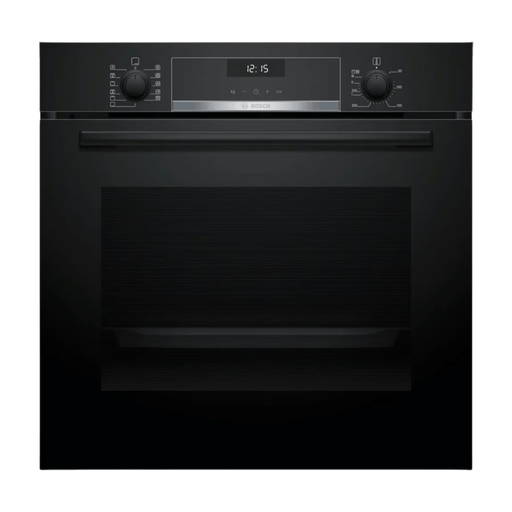
Bosch HBG537EB4 Series 6, 71 litres
A built-in option if you’re considering an oven with a stated capacity of 71 litres; measure the cavity and tart tin first.
The product name lists Air Fry and ecoClean Direct. Check the installation instructions and decide which features you’ll actually use.
View at Joybuy
 No image available
Wiggo WMO-E353(X), 35 litres
A freestanding option if you don’t have a built-in space and are looking for a model with a stated capacity of 35 litres.
The product name lists 1.800 W. The model instructions specify that clearance is required around the oven; check the exact positioning requirements and make sure there’s room for your tart tin.
View at Joybuy
 No image available
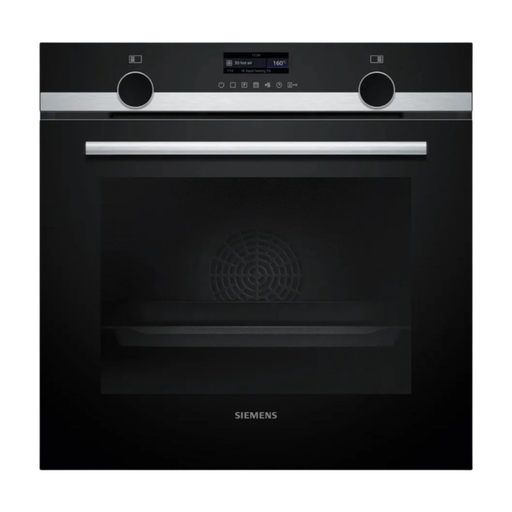
Siemens iQ500 HB579GBR3, 71 litres
A built-in option if you’re looking for an oven with a stated capacity of 71 litres; check the cavity and the dimensions of your tin.
The product name lists a capacity of 71 litres. Follow the model-specific installation instructions and check which accessories are included.
View at Joybuy
Frequently asked questions
Is a combination microwave automatically suitable for baking a tart case?
No, it depends on the settings and usable space of the exact model. According to the Consumers’ Association, combination microwaves often have fewer shelf positions and sometimes no bottom heat. Compare the oven settings and dimensions with your recipe and tart tin.
What temperature and cooking time should I set?
Follow your recipe and the instructions for the oven setting you’ve chosen. A Netherlands Nutrition Centre recipe for a different savoury vegetable tart uses 200 °C, but that temperature and cooking time won’t necessarily be right for a spinach and cheese tart.
How should I store the tart if I bake it before lunch?
For leftover savoury puff pastry tart, the Netherlands Nutrition Centre recommends cooling it quickly, storing it covered in the fridge or freezer, and not leaving it out of the fridge for more than two hours. This advice applies specifically to this type of savoury tart.
Do I need to compare the same energy label for every small oven?
No, the European Commission excludes small, portable ovens from the scope of energy labelling rules for domestic ovens. For models covered by the rules, compare energy use in kWh per cycle using the same setting.
What product information should I check for an electric oven in the Netherlands?
The Netherlands Food and Consumer Product Safety Authority (NVWA) states that CE marking is mandatory for electrical products covered by the relevant rules. Check the marking and the safety and installation instructions for the specific appliance; the general requirement alone doesn’t prove that an individual product complies.


