
For bakers with a permanent spot in the kitchen
If you have a suitable housing unit, you could consider a built-in oven and choose the cooking settings to suit your recipe. Check that your tin will fit: the Allerhande recipe uses a Ø 26 cm tin.


Start by checking whether your tart tin will fit in the oven and whether you can set the cooking mode and temperature in your recipe. For Allerhande’s spinach and cheese tart, for example, you’ll need a Ø 26 cm tin and a temperature of 200 °C. Capacity in litres alone won’t tell you whether the tin will fit. A built-in oven is suited to a suitable housing unit, a freestanding oven needs its own space, and a combination microwave can combine baking with microwave functions.
If you have a suitable housing unit, you could consider a built-in oven and choose the cooking settings to suit your recipe. Check that your tin will fit: the Allerhande recipe uses a Ø 26 cm tin.
If you don’t want a built-in oven, you could look at a freestanding model. Consider both the space available on your worktop and the room inside the oven for your tart tin.
A combination microwave could be a good choice if you want to bake and use a microwave in one appliance. Make sure the oven setting and the available space are suitable for your tin.
Suitable for: a kitchen with a suitable housing unit, especially if you’ll also use the oven for larger dishes or on multiple shelf levels.
Bear in mind: measure the housing unit and check the connection requirements. A larger capacity or extra functions alone don’t guarantee better baking results.
Suitable for: anyone looking for a separate oven without using a built-in housing unit.
Bear in mind: set aside a suitable spot and follow the placement instructions to allow heat to escape.
Suitable for: anyone who wants to use a microwave as well as bake in the same appliance.
Bear in mind: check the oven setting and the space available for your tart tin. A recipe written for a conventional oven won’t necessarily take the same time to cook.
Suitable for: anyone short on worktop space who usually bakes one tart at a time.
Bear in mind: according to Severin, the TO 2067 doesn’t have a fan oven function. Also check the height of your filled tin.
Allerhande’s spinach and cheese tart recipe specifies a Ø 26 cm tin and a temperature of 200 °C. Use these measurements as a guide for that recipe, not as a fixed requirement for every tart.
| What to consider | What should you check? | Who is this important for? |
|---|---|---|
| Cooking setting and space for your tin | Check the internal dimensions, shelf positions, and available cooking settings and temperatures against your tin and recipe. | If I’m using a tart tin, I want to be sure it fits on the right shelf and that I can set the cooking mode specified in the recipe; around 36% of consumers prioritise cooking settings and space for their bakeware. |
| Installation and kitchen space | For a built-in oven, measure the housing unit according to the installation instructions. For a freestanding model, check where you’ll place it and how much space is needed around it. | Without a suitable housing unit, I want to be able to position an oven without losing sight of my worktop space; for around 29% of consumers, installation and available space are the main considerations. |
| Baking and reheating | Check whether the oven function can be used on its own and whether your tin will fit inside the appliance. | If I also want to reheat or defrost food, I’m looking for one appliance that combines those functions without overlooking the space needed for my tin; around 21% of consumers give this combination top priority. |
| Use and cleaning | Compare the energy label consumption per cycle only for ovens within its scope and using the same cooking setting. Check what the cleaning function involves. | If I use the oven regularly, I want to know how to compare energy use and how much cleaning will be left to do; around 14% of consumers focus mainly on running costs and maintenance. |
For ovens within the scope of the EU energy label, the European Commission lists information including energy consumption in kWh per cycle for conventional and fan oven settings. Small and portable ovens are outside the stated scope. So only compare figures when they’re based on the same criteria.
Capacity in litres won’t tell you whether your tart tin will fit on the shelf. The Allerhande recipe uses a Ø 26 cm tin.
Before choosing an oven, check its usable internal dimensions, shelf positions and the height of your filled tin.
Recipes may specify different temperatures for different oven settings. For example, Iglo recommends 175 °C for a spinach tart in a conventional electric oven and 150 °C in a fan oven.
Follow the setting and temperature in your own recipe. Don’t quietly adjust them as though the settings were interchangeable.
An oven function or a capacity in litres doesn’t confirm that there’s enough room for your tin.
Check the usable internal dimensions and whether the oven setting can be used on its own.
The Dutch Government distinguishes between statutory guarantees and paid-for extended warranties. If a product is faulty, the retailer is your point of contact.
Check what cover an extended warranty provides and what terms and conditions apply.
For anyone looking for a built-in oven with a choice of cooking settings, including bottom heat and conventional heat.
Offers both a freestanding oven and a combination microwave; the right option depends on the space available and how you plan to use it.
A compact freestanding option in the form of the TO 2067 baking and toast oven.
A spacious built-in option for anyone with a suitable housing unit.
This Joybuy selection consists of built-in ovens. Before choosing, compare the housing unit and the space for your tart tin with your kitchen and recipe.
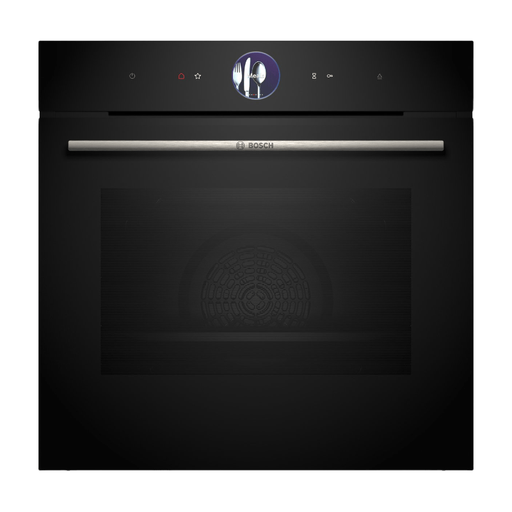 No image available
Suitable for anyone looking for a built-in oven with adjustable cooking settings. Check the space for your tin and the installation requirements for your kitchen.
71 litres; 21 heating methods; conventional heat; temperature range 30–250 °C.
For built-in installation, the product information recommends installation by a qualified electrician, a suitable housing unit and sufficient ventilation.
 No image available
Suitable for anyone who wants a choice of cooking settings in a built-in oven. Check that the housing unit and tart tin will fit before buying.
71 litres; including 3D fan cooking, conventional heat and bottom heat; temperature range 50–275 °C.
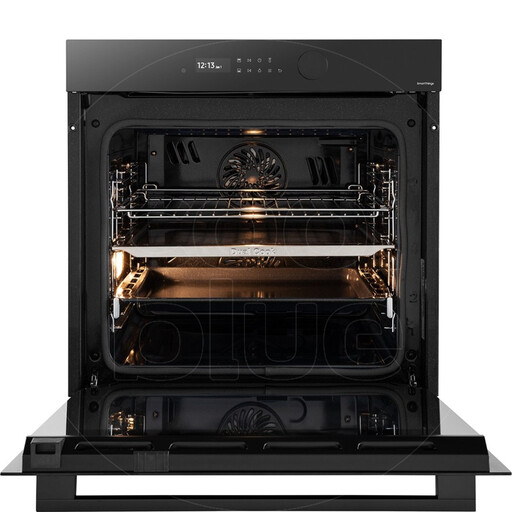 No image available
Suitable for anyone looking for a built-in oven with an adjustable temperature. Check the housing unit and make sure the layout suits the way you’ll use it.
76 litres; temperature range 40–250 °C; Dual Cook technology with two oven cavities.
 No image available
Suitable for anyone looking for a built-in oven with conventional heat. Check the internal space for your tart tin.
66 litres; 3D fan cooking and conventional heat; temperature range 50–275 °C.
 No image available
Suitable for anyone looking for a built-in oven with conventional heat. Compare the stated housing unit dimensions with your kitchen.
71 litres; fan cooking and conventional heat; temperature range 30–275 °C.
The stated housing unit dimensions are 585 × 560 × 550 mm; the product information lists a connected load of 3600 W.
No, follow the temperature and oven setting in your own recipe. The Allerhande recipe uses 200 °C and a Ø 26 cm tin; an Iglo recipe specifies 175 °C for a conventional electric oven and 150 °C for a fan oven.
Check the model’s installation instructions, the space available and the connection requirements. The Fire Service advises that heat from appliances such as ovens and microwaves needs to be able to escape; the built-in dimensions for the ETNA OM316MZ are listed on its product sheet.
Drain the spinach thoroughly before adding it to the tin. In Allerhande’s spinach and cheese tart recipe, excess liquid is squeezed out of the wilted spinach.
For ovens within its scope, the European Commission’s energy label includes information such as kWh per cycle for conventional and fan oven settings; small and portable ovens are outside that scope. According to the Dutch Government, you’re entitled to a product that works as it should. There’s no fixed statutory warranty period in the Netherlands, and the retailer is your point of contact if a product is faulty.