
Baker making large batches for sale
You want to make enough rolls within the time available, so compare the tray space and the number of shelf levels supported by the model.


Start by choosing an oven that suits your kitchen and the number of rolls you want to bake in each batch. Compare the usable tray space and the number of shelf levels supported by the manufacturer for that specific model: the capacity in litres won’t tell you how many rolls will fit at once. Extra features, such as a microwave, are only relevant to this bake if you’ll use them for other tasks too.
You want to make enough rolls within the time available, so compare the tray space and the number of shelf levels supported by the model.
You need a freestanding appliance, so weigh up its external and internal dimensions, the worktop space available and the baking tray supplied.
You want to use the same built-in space for other oven or microwave tasks too, so compare the extra function with the space left for baking trays.
Start with the available space and baking tray size. Then check whether the cooking modes and shelf levels you need suit your recipe and schedule.
| What to consider | What to look for when buying | Who is this important for? |
|---|---|---|
| Capacity per batch | Compare the internal dimensions and baking tray size; also check whether the oven supports using several shelf levels at once. | If I want to bake lots of rolls for a sale, it matters how many fit on a tray and which shelf levels I can use. Around 42% of consumers prioritise capacity per batch. |
| Suitable cooking modes | Check which oven modes the model has and which one the dough and recipe require. | If you want the puff pastry to bake according to the recipe instructions, check which modes the oven offers. Around 33% of consumers prioritise suitable cooking modes. |
| Dimensions and placement | Measure the built-in recess or worktop and compare those measurements with the appliance’s external and internal dimensions. | If my kitchen has limited space, the oven needs to fit without the baking tray being too small. Around 17% of consumers focus on dimensions and placement. |
| Costs and accessories | Check which trays are included and compare models on the same up-to-date basis. | If you want to weigh up the purchase price and any accessories you may need, check what comes with the oven and which features you really need. Around 8% of consumers focus on the total cost. |
The stated capacity doesn’t tell you how many rolls will fit on a baking tray. The Consumers’ Association points out that the usable space may differ from the stated capacity.
Compare the internal dimensions and the baking tray size with the portions you plan to make, and check which accessories are included.
If the tray space isn’t sufficient, you may need to bake more batches or consider buying a suitable extra tray.
Having several shelf positions doesn’t prove that several full trays will bake evenly at the same time. Any claim about baking on multiple levels applies to the specific model mentioned and its instructions for use.
Check the model-specific instructions for baking on multiple levels and try out your chosen recipe in advance.
An oven doesn’t remove the need to consider safe preparation and storage or allergen information when selling food. The Netherlands Food and Consumer Product Safety Authority (NVWA) sets out separate requirements for these.
Plan preparation, transport, storage and allergen information alongside your baking schedule.
Depending on the ingredients and how you sell the rolls, you may also need suitable refrigeration, a thermometer or a way to provide information.
Built-in ovens for those with a suitable recess who want to compare shelf levels.
Freestanding ovens for when a built-in model won’t fit.
A more compact freestanding baking and toast oven, for weighing up worktop space against baking capacity.
Compact built-in combination ovens for those looking for a microwave function as well as oven modes.
These Joybuy models are built-in ovens, including models that support baking on multiple levels and a combination oven with a microwave function.
 No image available
Ideal if you’re looking for a built-in oven that supports baking on multiple levels.
71 L capacity; 3D Hotair for up to three levels at once.
Requires a suitable built-in recess.
 No image available
Worth comparing if you’re looking for a built-in oven with 3D Hotair for baking on multiple levels.
71 L capacity; 3D Hotair for up to three levels at once.
The product information specifies professional installation.
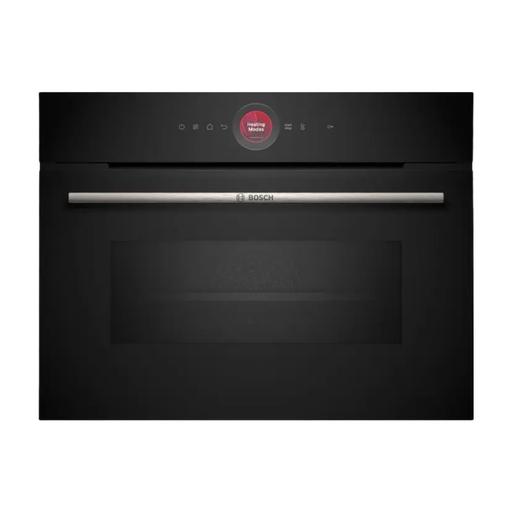 No image available
An option if you want a microwave function as well as an oven in the same built-in space.
45 L capacity; convection cooking as an oven function; microwave power 900 W.
Requires a suitable built-in recess.
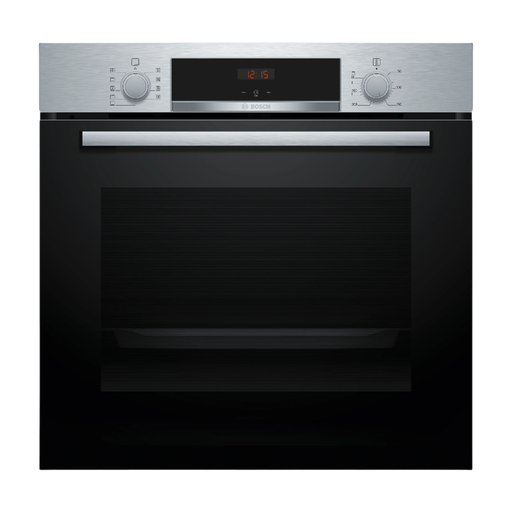 No image available
A good fit if you’re looking for a built-in oven with 3D Hotair for baking on multiple shelf levels.
71 L capacity; baking on up to three levels at once; maximum temperature 275 °C.
Requires a suitable built-in recess.
 No image available
A built-in option to compare if you want to use multiple shelf levels.
71 L capacity; 3D Hotair for up to three levels at once.
Requires a suitable built-in recess.
No. The Consumers’ Association distinguishes between a combination oven, which focuses on oven functions, and a combination microwave, which focuses on microwave functions. Check the specific model’s oven modes, bottom heat and shelf positions.
Measure the oven’s internal dimensions and compare them with the baking tray, rather than relying on the capacity in litres alone. Also check whether the tray is included.
The NVWA requires food to be prepared, stored and sold safely. Perishable ingredients need appropriate temperature control; the NVWA recommends storage below 7 °C and using a digital probe thermometer. The right approach depends on the ingredients, storage time and applicable hygiene code.
Yes. According to the NVWA, you must inform consumers about allergens present in the food you offer. For unpackaged rolls, the NVWA explains how written information or, under certain conditions, verbal information must be available at the point of sale.
Not necessarily: the NVWA says a food safety plan is required for anyone who prepares and sells food several times a year. According to the NVWA, the general duty to work safely and hygienically also applies to individuals selling food at an event.