
Cooking for several guests
You want to spread the parsnips across enough tray space and might want to cook another dish at the same time. So look at the internal dimensions and shelf levels, not just the stated capacity in litres.


Choose an oven based on the baking tray space you need for your guests and the room available in your kitchen. A mini oven suits smaller portions, a larger freestanding oven gives you more space without needing a built-in recess, and a built-in oven requires a suitable recess. Then check the usable internal dimensions, fan setting and required ventilation clearance. The capacity in litres doesn’t tell you how many parsnips you can spread out on one tray.
You want to spread the parsnips across enough tray space and might want to cook another dish at the same time. So look at the internal dimensions and shelf levels, not just the stated capacity in litres.
You want to roast food on your worktop and are choosing between a compact and a larger freestanding oven. Balance the portion size against the space the appliance takes up and the ventilation clearance it needs.
You’re looking for a size that suits your usual portions, but also want to check whether the tray is large enough for the occasional meal with guests.
A good fit if: you usually cook smaller portions and worktop space matters more to you than having a large baking tray.
Bear in mind: check the usable tray dimensions. A compact capacity doesn’t tell you how many parsnips you can spread out at once.
A good fit if: you don’t have a built-in recess and want more space for a baking tray.
Bear in mind: measure the available worktop space and leave the ventilation clearance specified in the manual.
A good fit if: you have a suitable built-in recess and want to use a larger baking tray or several shelf levels.
Bear in mind: check the recess dimensions and installation requirements. Extra capacity or cleaning functions don’t necessarily mean more usable tray space.
| What to consider | What should you check? | Who is this important for? |
|---|---|---|
| Baking tray space | Measure the tray you want to use and compare it with the internal dimensions and the tray supplied. Consumentenbond distinguishes between stated and usable oven capacity. | When I’m cooking for guests, I want to know whether I can spread the parsnips out on one tray or will need to roast them in batches. Around 36% of consumers prioritise having enough tray space for a portion for guests. |
| Fit and placement | For a built-in model, compare the appliance and recess dimensions. For a freestanding model, measure the worktop space and follow the ventilation requirements in the manual. | When there’s little free space in my kitchen, I want to know in advance whether an oven will fit on the worktop or in the existing recess. Around 29% of consumers base their choice mainly on placement and available space. |
| Roasting setting and timing | Check the fan setting and the baking tray supplied, and see whether your recipe says to preheat the oven. Voedingscentrum’s parsnip recipe calls for evenly sized pieces and a preheated oven at 180 °C; this isn’t a set cooking time for every model. | When friends are nearly here, I want to plan the roasting around a suitable setting and the instructions in my recipe. Around 21% of consumers give the most consideration to the roasting setting and timing. |
| Energy use and cleaning | Where relevant, compare energy use per cycle in kWh and the capacity, and check how the specific model is cleaned. Milieu Centraal recommends comparing ovens by energy use per cooking session or per year, rather than by energy label alone. | If I use the oven often, I want to know how its energy use and cleaning requirements will fit into my routine. Around 14% of consumers put energy use and cleaning first. |
The stated capacity doesn’t tell you how much tray space you can actually use. If the tray is too small, you may have to roast the parsnips in several batches.
Measure the baking tray or oven dish you want to use and compare it with the internal dimensions and the tray supplied. Only then choose a capacity range.
Cooking in several batches can take extra time when you’re making food for guests.
An oven needs room to release the heat it produces; the clearance required varies from one appliance to another.
Check the external dimensions and the manual before positioning the oven, and leave the recommended ventilation clearance unobstructed.
The energy rating letter alone doesn’t tell you how much energy an oven uses during cooking. The European Commission also explains that small ovens don’t all fall under the same labelling rules as domestic ovens.
Where applicable, compare energy use per cycle in kWh and the size of the oven. Don’t base your comparison on the rating letter alone.
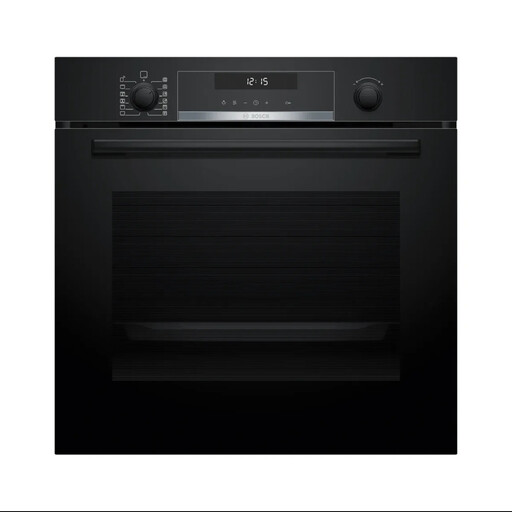
According to Bosch, the HBA534EB3 is a 60 × 60 cm built-in oven with 3D Hotair.
According to Inventum, the OV607B is a 60-litre freestanding fan oven.
According to Princess, the 112754 is a 45-litre freestanding fan oven.
According to Severin, the TO 2068 is a mini oven with a capacity of around 20 litres and a fan setting.
According to AEG, the OU5PB40WSM is a 72-litre built-in oven with a fan setting and pyrolytic cleaning.
These ovens are selected for roasting parsnips, from freestanding models for the worktop to built-in ovens for a suitable recess.
 No image available
A freestanding oven for anyone looking for more cooking space without a built-in recess.
The product information lists a turbo fan, six cooking functions and a 90-minute timer. The stated external dimensions are 60 × 40 × 49 cm. Keep the ventilation openings clear; the exterior and glass door can become very hot during use.
 No image available
A built-in oven for anyone with a suitable recess who wants a larger capacity.
The product information lists 3D Hotair, Air Fry, pyrolytic cleaning and baking on up to three levels at once. Check that the stated recess dimensions suit your kitchen.
 No image available
A built-in oven for anyone with a suitable recess who wants to cook dishes on several levels.
The product information lists 3D Hotair, Air Fry and baking on up to three levels at once.
 No image available
A freestanding model for anyone who wants to roast food without a built-in recess and is looking for a mid-sized oven.
The product information lists convection, upper and lower heating, and a rotisserie. Place the oven on a stable, heat-resistant surface and don’t block the ventilation openings.
 No image available
A freestanding oven for anyone who also wants to use an integrated hob.
The product information lists convection, upper and lower heating, a grill function and a power rating of 3534 W. Check that a width of 60 cm will fit the space you have available.
Not for every oven dish, but Voedingscentrum’s parsnip recipe says to preheat the oven to 180 °C. Milieu Centraal notes that for many dishes you can skip preheating if you adjust the cooking time. For a specific recipe, follow its instructions and check that the parsnips are cooked through.
For a built-in oven, measure the recess according to the installation diagram for your chosen model. For a freestanding oven, measure the available worktop space and follow the ventilation requirements in the manual. Brandweer advises making sure heat from ovens and other appliances can escape.
Check how the specific model is cleaned and follow the manual. Inventum recommends cleaning the inside of the OV607B with a soft, damp cloth and a little washing-up liquid. Bosch lists hydrolysis cleaning assistance for the HBA534EB3.
In addition to any manufacturer’s warranty, you’re covered by the statutory guarantee. If a product doesn’t meet what you could reasonably expect under normal use, the seller must provide an appropriate solution at no cost. According to the Autoriteit Consument & Markt, the statutory guarantee in the Netherlands doesn’t have a fixed term of just two years.
Don’t assume so. The European Commission outlines energy-labelling rules for domestic ovens and says that small ovens and appliances with a microwave heating function are outside the scope described. Check which product type you’re comparing before judging a product for not having a label.