
Cooking for a full table
You want to spread the carrots out on a usable baking tray for your guests, and perhaps cook other dishes at the same time.


When choosing an oven for roasting carrots for guests, don’t look at capacity in litres alone. Compare the usable baking tray with the amount you plan to cook, so you can spread the carrots out on it. Then choose between a freestanding and built-in model based on the space available, and check the tray, heating functions and stated energy consumption for the exact model.
You want to spread the carrots out on a usable baking tray for your guests, and perhaps cook other dishes at the same time.
You’re looking for a freestanding oven that fits on your worktop and can accommodate your own baking tray or dish.
You use your oven outside of dinner parties as well, and want to weigh the capacity you need against its energy consumption.
A good fit if: you don’t have a suitable built-in space and can use a baking tray on your worktop that’s large enough for your portion.
Bear in mind: the worktop space, ventilation clearance and power connection you’ll need.
A good fit if: the housing space and connection are suitable, and you regularly cook larger dishes or several dishes at once.
Bear in mind: the dimensions of the housing space and any installation requirements; check these for the exact model.
A good fit if: you cook smaller portions and have limited worktop space.
Bear in mind: the available baking tray space, and whether the functions you need are confirmed for the exact model.
If you’re looking for an oven to roast carrots for guests, key things to consider include the usable baking tray, the space in your kitchen, energy consumption and ease of use.
| What to consider | What should you check? | Who should pay particular attention? |
|---|---|---|
| Baking tray space for guests | Compare the internal dimensions and the supplied tray with the amount you want to cook. | When I’m cooking for guests, I want to be able to spread the carrots out on the tray. Around 36% of consumers give baking tray space their top priority. |
| Fits in your kitchen | Measure the built-in space against the model specifications, or check the space needed for positioning and ventilation if you’re considering a freestanding oven. | If you first need to know whether an oven will fit in a built-in space or on your worktop, available space is the main consideration. This is the top priority for around 29% of consumers. |
| Energy consumption with regular use | Compare the stated energy consumption on the same basis, and choose a size that suits the portions you usually cook. | If I use the oven often for smaller meals, I also want to know how much energy it uses per cooking session. Around 21% of consumers put everyday energy consumption first. |
| Controls and cleaning | Check the controls and cleaning function for the exact model. | If I want the oven to be easy to use and clean after a dinner party, these features matter too. Around 14% of consumers name ease of use as their top priority. |
The internal space and usable baking tray are not the same thing. For roasted carrots, what matters most is whether your portion fits on the tray.
Check the internal dimensions and the size of the supplied baking tray. Otherwise, you may still need to find a suitable tray.
Built-in dimensions vary by model, so an oven with enough capacity won’t necessarily fit in your kitchen.
Compare your measurements and power connection with the installation specifications for the exact model. Allow for any installation or modification work that may be needed.
For the Severin TO 2056, the product description and the manufacturer’s technical table contradict each other about the fan function.
If a fan function is essential for you, check the manual or ask the manufacturer to confirm it for this exact model.
Tomado makes freestanding ovens. The TEO4500S is an example of a model with a capacity of 45 litres.
Bosch offers built-in ovens. The HBA534BB3 is a model-specific example with a capacity of 71 litres.
Electrolux offers built-in ovens. The KOEBH09H is an example with a capacity of 72 litres.
Severin makes compact freestanding mini ovens; according to the manufacturer, the TO 2056 has a capacity of 30 litres.
This selection includes built-in and compact freestanding ovens. For built-in models, check that the space is suitable, and see which features and accessories suit your cooking plans for each model.
 No image available
A built-in option if you’re looking for an oven with a fan function for meals with guests.
The product name lists a 66-litre capacity, 3D hot air, five programmes and ecoClean.
Check that your built-in space is suitable for this model.
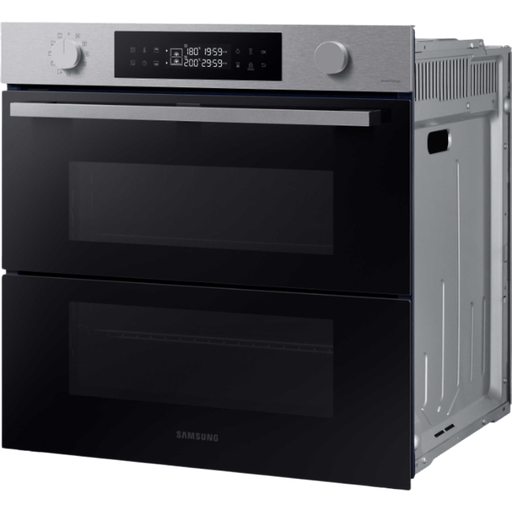 No image available
A built-in model to consider if you’re comparing options and need extra oven space for a meal with guests.
The product name lists a 76-litre capacity, Flex Dual Cook and hydrolytic cleaning.
Check the built-in dimensions required for the exact model.
 No image available
A built-in option if you’re looking for 3D hot air and a 71-litre oven.
The product name lists a supplied roasting pan and EcoClean Direct.
Check the built-in space and power connection before choosing a built-in model.
 No image available
A built-in model to compare if you’re looking for a 71-litre oven with 3D hot air.
The product name lists an Air Fry baking tray and EcoClean Direct.
Check that this model fits your built-in space.
 No image available
A compact freestanding option if you don’t have a built-in space and want a supplied baking tray.
The product name lists a 35-litre capacity and 1800 W.
Leave at least 10 cm of clearance on all sides and 30 cm above; don’t use the oven in an enclosed cupboard.
A DekaMarkt recipe for four people uses 225 °C and roasts the chopped carrots for 25 to 30 minutes, turning them occasionally. Treat this as an example recipe: cooking time may vary depending on the oven and how the carrots are cut.
Follow the installation instructions for the exact model and make sure heat can escape. Brandweer Nederland recommends leaving ventilation space around appliances that give off heat.
No, not under the energy labelling regulation for household ovens referred to here. The European Commission lists small and portable ovens as categories outside its scope. Where possible, compare the stated energy consumption; the absence of a label does not in itself prove that an oven is inefficient.
According to the Dutch government, you’re entitled to a product that works properly and can contact the seller if there’s a problem. An additional warranty is most relevant if its terms offer something beyond your legal rights.