
Workshop host using several dishes
Wants to prepare several portions in one session. The Consumers’ Association recommends measuring your dishes and checking the oven’s internal dimensions; the shelf positions matter too.


Start by measuring your oven dishes and choosing an oven that can fit them on the shelf levels you need for your workshop. Capacity in litres alone won’t tell you that. A built-in oven may suit a permanent kitchen with several dishes, while a freestanding model is an option if you don’t have a suitable housing unit. Also check the cooking functions, controls, connection and available space.
Wants to prepare several portions in one session. The Consumers’ Association recommends measuring your dishes and checking the oven’s internal dimensions; the shelf positions matter too.
Is looking for a freestanding oven that will fit in the available workspace. Check your dishes, the space available and the connection requirements beforehand.
Wants to set the time, temperature and cooking functions easily during the workshop. The Consumers’ Association highlights simple controls for the oven function, time and temperature.
Start with your dishes and the space available. Then compare the cooking functions and controls with the steps in your recipe.
| What to consider | What to look for | Who should pay particular attention? |
|---|---|---|
| Space for your dishes | Measure your dishes when filled and compare their dimensions with the oven’s internal measurements and shelf positions. | If I want to use several dishes at once, I need to know whether they will actually fit and which shelf positions I can use. Around 36% of consumers give usable oven space their highest priority. |
| Installation | For a built-in oven, check the housing unit dimensions; for a freestanding oven, check the worktop space and installation instructions. | If I need to set the oven up in a specific workshop space, I want to know whether the housing unit or worktop is suitable and whether the connection is right. Around 29% of consumers put suitable installation first. |
| Cooking functions and controls | Check how to set the time, temperature and available heating functions. | If I want to follow the baking steps with participants, clearly adjustable time and temperature are important. Around 21% of consumers give ease of use during the session their highest priority. |
| Maintenance and running costs | Compare the cleaning method and any parts or installation you may need for your use. | If you use the oven for workshops often, you’ll want to factor in cleaning and any extra costs. Around 14% of consumers put maintenance and manageable running costs first. |
The oven’s stated capacity doesn’t tell you whether your dish, or combination of dishes, will fit. The Consumers’ Association recommends checking the internal dimensions and the size of your largest oven dish.
Measure your dishes and compare them with the internal space and shelf positions of the exact model.
A 20-litre mini oven offers different capacity for dishes than the larger models mentioned here. For a workshop with several portions, you may need to bake in successive batches.
First work out how many dishes you need to bake at once, then check whether they’ll fit in the model.
Allow extra time for multiple baking rounds if needed.
There is no fixed statutory guarantee period in the Netherlands. The Dutch government says that if a product is faulty, you should contact the seller; any additional manufacturer’s guarantee is separate.
Read the terms of any additional guarantee and consider your statutory rights separately.
The Netherlands Nutrition Centre warns of the risk of Bacillus cereus in rice dishes and puddings that are kept for too long or not chilled sufficiently.
Plan ahead so you can cool and store leftovers quickly.
Built-in ovens for a permanent workshop kitchen. For the specific model, compare the oven space, shelf positions and available functions.
Freestanding ovens for spaces without a suitable built-in housing unit. Check the space for your dishes and the cooking functions you need.
Mini ovens for smaller dishes or successive baking rounds. Check that the actual model will suit your workshop.
This selection includes mini ovens, freestanding ovens and built-in models to suit different workshop spaces and dish arrangements.
 No image available
May suit a workshop where you want to plan two dishes at once; the product description mentions two separate cooking chambers that can operate simultaneously.
23 l; 15 programmes; LED touchscreen.
 No image available
A freestanding model to consider if your workshop space doesn’t have a built-in housing unit. Measure the available space and your dishes beforehand.
65 l; 2000 W; six cooking functions; turbo fan; 90-minute timer; four shelf positions; enamel interior.
 No image available
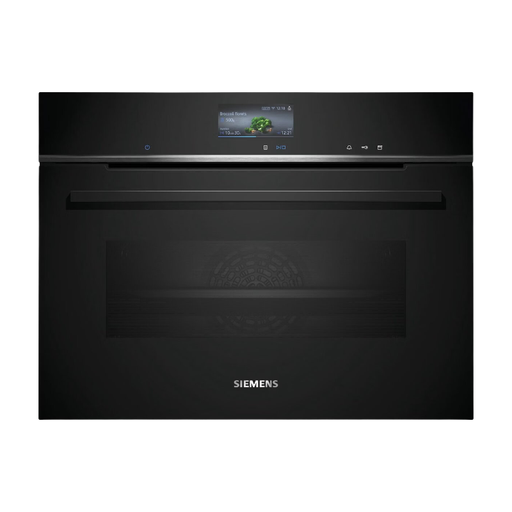
A built-in model to consider for a permanent kitchen. Check that the housing unit and the settings you need are right for your workshop.
47 l; 4D hot air; TFT touchscreen; automatic baking programmes.
 No image available
Could be worth considering for a permanent kitchen if you want to arrange dishes on several levels. Check that they fit and that the oven settings suit your recipe.
71 l; 3D hot air; baking on up to three levels; rotary time-setting control; cleaning assistance programme.
 No image available
A built-in model to compare if you need several cooking functions or shelf levels. Check the housing unit and the dimensions of your dishes first.
71 l; top and bottom heat; 3D hot air; ten automatic programmes; baking on up to three levels; telescopic rails.
Measure the outside of your dishes and compare their dimensions with the oven’s internal measurements and shelf positions. The Consumers’ Association recommends checking that your largest dish will fit; capacity in litres is no substitute for checking the fit.
Don’t use a recipe’s temperature with a different oven function without checking first. Follow the instructions for the function you’ve chosen and check how the rice pudding is baking as you go; there’s no general conversion that works for every model.
Cool leftovers quickly to 4 °C and, according to the Netherlands Nutrition Centre, keep them in the fridge for no longer than two days. Rice dishes and puddings that are stored for too long or not kept sufficiently cold can pose a risk of Bacillus cereus.
For a consumer purchase, the seller must offer a solution if the product doesn’t meet expectations; there is no fixed statutory guarantee period in the Netherlands. The Dutch government distinguishes between your statutory rights and any additional guarantee terms.
That depends on how the workshop is organised and the food activities involved. The Netherlands Food and Consumer Product Safety Authority requires catering and artisan businesses that prepare, process or sell food to have an HACCP food safety plan; an approved sector hygiene code can be used for this. The description ‘baking workshop’ alone doesn’t establish whether this applies.