Who should consider this choice?

Making a single oven dish

You want to make a dish of rice pudding at the weekend and are mainly looking for an oven that fits your dish and lets you select the right setting—not necessarily the largest oven. Good Food and Albert Heijn Allerhande feature recipes with different dish dimensions.

Cooking in a small kitchen

You want to bake without a built-in housing unit, so you need to check both the size of your oven dish and the safe space available for the appliance. Inventum and Severin describe freestanding ovens; check the placement instructions for the model you choose.

Versatile weekend baker

You want to cook larger dishes or several things at once as well as rice pudding, so you’re comparing capacity, settings and energy use. Milieu Centraal recommends taking oven size and energy use per cooking session into account.

What should you look for in an oven for rice pudding?

Freestanding oven

Ideal for a kitchen without a suitable built-in housing unit, if you have a clear, safe place for the appliance.

Consider the oven will take up worktop or storage space; follow the model’s ventilation instructions.

Built-in oven

Ideal for a kitchen with a suitably sized housing unit, especially if you cook larger dishes or several things at once as well as rice pudding.

Consider check the housing dimensions, connection and installation requirements for the exact model before buying.

Combination oven with microwave

Ideal for anyone who needs a microwave function as well as an oven; ETNA describes the MO670Ti as a model for a 60 cm housing unit.

Consider a microwave function isn’t needed to bake rice pudding; check which oven settings the model you choose offers.

What to consider What should you check? Who should pay particular attention?
Dish and oven space Compare your dish with the usable internal dimensions, door opening and shelf position of the exact model. If I’m using one oven dish, I want to know whether it will fit through the opening and sit on the shelf; around 36% of consumers prioritise a suitable dish fit.
Oven setting and temperature Check that the model has the setting you need, and follow your recipe’s temperature and cooking time. If I want to follow the recipe closely, I look at the available settings and temperature controls; around 29% of consumers prioritise control over cooking.
Placement Compare the external or housing dimensions with your kitchen, and read the installation and ventilation instructions. If my worktop or built-in housing unit determines my choice, I want to know in advance where the oven can be placed safely; around 21% of consumers prioritise placement.
Energy use and cleaning Where available, compare energy use per cycle on the same basis and check the model’s care instructions. If I’m also considering energy use and cleaning, I compare these points for my own needs; around 14% of consumers consider them their main purchasing concern.

Common buying mistakes

  • Looking only at the capacity in litres

    An oven’s capacity in litres won’t tell you whether your dish will fit through the door or sit on the shelf. Recipes may also specify different dish dimensions or capacities.

    Measure your dish and compare it with the usable internal space, door opening and shelf position of the exact model.

    If your current dish doesn’t fit, you may need to use a different one.

  • Using the same temperature for every oven setting

    Good Food gives a setting of 130 °C with a fan and 150 °C without a fan for its recipe. These are recipe settings, not universal temperatures for all rice pudding.

    Follow the setting and temperature in the recipe you’re using, and don’t treat fan-oven and conventional top-and-bottom heat settings as interchangeable.

  • Assuming a larger oven or a higher energy-rating class will always be more efficient

    Milieu Centraal points out that a smaller oven with a lower energy rating may use less energy per cooking session than a larger oven with a higher rating. So the energy-rating letter alone doesn’t tell you what a cooking session will cost.

    Where possible, compare energy use per cycle on the same basis and choose a size that suits how you’ll use the oven beyond this recipe too.

Brands to compare

Inventum

Freestanding ovens for kitchens without a built-in housing unit. Inventum lists a 45-litre capacity, fan oven and conventional top-and-bottom heat for the OV457B.

  • Inventum says the OV457B includes a timer, baking tray and shelf.
  • Check the internal dimensions, your dish and the space available for the oven; these details don’t automatically apply to other Inventum models.

Severin

Freestanding baking and toast ovens. Severin lists a fan oven and separately usable top and bottom heat for the TO 2058.

  • Severin gives the TO 2058 a capacity of 42 litres and external dimensions of 36,5 × 51,5 × 42 cm.
  • The external dimensions don’t confirm whether your dish will fit; also check the internal space and ventilation instructions.

Bosch

Built-in ovens for a suitably sized housing unit. Bosch specifies a 71-litre capacity, 3D hot air and conventional top-and-bottom heat for the HBA514BB3.

  • Bosch also lists Cleaning Assistance and appliance dimensions of 595 × 594 × 548 mm for this model.
  • The appliance dimensions don’t replace checking the required housing dimensions or the size of your oven dish.

ETNA

ETNA offers built-in models with a range of features. The OP670Ti and MO670Ti are separate models.

  • ETNA specifies a 72-litre capacity and pyrolytic cleaning for the OP670Ti; the MO670Ti is described as an oven with a microwave function.
  • Don’t assume the OP670Ti’s capacity and cleaning system also apply to the MO670Ti; check the features of the exact model.

Siemens

Built-in ovens with different heating methods. Siemens specifies a 71-litre capacity, 3D hot air and conventional top-and-bottom heat for the HB934GAB1.

  • Siemens also lists telescopic rails and additional features for this model.
  • You don’t need these extra features just to bake one dish of rice pudding; consider whether you’d use them for anything else.

Ovens for baking and rice pudding

This selection of Joybuy products includes freestanding ovens, built-in ovens and combination ovens with convection. Check which type of installation and oven setting suits your kitchen and recipe for each model.

Sharp YC-PC254AE-S combination microwave

Sharp YC-PC254AE-S combination microwave, 25 l

An option if you want to combine convection baking and microwave cooking in one appliance.

The product description lists convection with an adjustable temperature range of 110–210 °C, a turntable and a baking tray.

Specified internal dimensions: 340 × 220 × 344 mm. Check that your dish and the required clearance will fit.

View at Joybuy
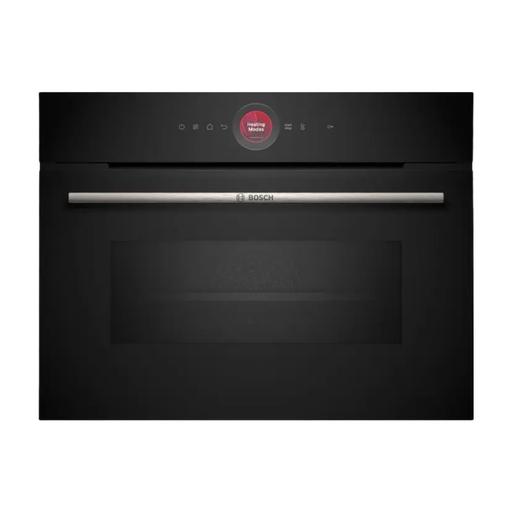
Bosch CMG7241B1 built-in combination oven

Bosch CMG7241B1 built-in combination oven, 45 l

Ideal if you’re looking for a built-in oven with convection and a microwave function; check that the specified housing dimensions suit your kitchen.

The product information lists convection cooking, a temperature setting of 40–230 °C and a microwave power of 900 W.

Specified housing dimensions: 45,50 × 56 × 55 cm. Also check the installation requirements and whether your oven dish will fit inside.

View at Joybuy

Bosch HBA534BB3 Serie 4 built-in oven

Bosch HBA534BB3 Serie 4 built-in oven, 71 l

A built-in option if you want to cook larger dishes or several things at once as well as rice pudding.

The product information lists 3D HotAir, conventional top-and-bottom heat and baking on up to three levels.

A timer is also listed. Check the required housing dimensions and whether your dish will fit in the usable oven space.

View at Joybuy

Wiggo WMO-E456(W) freestanding mini oven

Wiggo WMO-E456(W) freestanding mini oven, 45 l, white

A freestanding option if you want to bake without a built-in housing unit and have a suitable place for the oven.

The product information lists convection, top heat and bottom heat. Check the internal space and placement instructions before choosing your dish.

The product is rated at 2000 W; this figure alone doesn’t tell you how much energy a cooking session will use.

View at Joybuy

Rommelsbacher BGS 1400 mini oven

Rommelsbacher BGS 1400 mini oven

A freestanding mini oven if you’re looking for a more compact model and the stated baking tin size suits your recipe.

The product description lists a 22-litre capacity, a 60-minute timer and a temperature setting up to 230 °C.

The heating settings listed include conventional top-and-bottom heat with a fan. The description says it fits baking tins up to Ø25 cm; also check the shape of your tin and the space available inside the oven.

View at Joybuy

Frequently asked questions

What temperature should I use for rice pudding in a fan oven?

Follow a recipe that specifically gives a fan-oven setting. For its recipe, Good Food recommends 130 °C with a fan, compared with 150 °C without a fan, and a cooking time of around two hours. This isn’t a universal setting: dish size, quantity and cooking method can vary between recipes.

How should I store leftover rice pudding?

Cool leftovers quickly and store them covered at 4 °C. Voedingscentrum advises keeping leftovers in the fridge for no more than two days and reheating them thoroughly before eating. Don’t leave cooked rice out of the fridge for more than two hours.

Does a freestanding fan oven need to be built in?

No. A freestanding model is designed to sit on a suitable surface, not inside a built-in housing unit. Follow the safety and ventilation instructions in the manual for the exact model.

Do all ovens in the Netherlands have the same energy label?

Not every appliance falls within the same scope of oven energy-labelling rules. The European Commission excludes small ovens and appliances with a microwave heating function from the scope described, so first check which type of appliance you’re comparing. The absence of an oven energy label doesn’t, by itself, prove that an appliance is inefficient.

Do ovens in the Netherlands always come with just two years’ statutory guarantee?

No. According to the Dutch government, there’s no fixed statutory guarantee period in the Netherlands; you’re entitled to a product that meets reasonable expectations. If something goes wrong, contact the retailer. A manufacturer’s guarantee is in addition to your statutory rights.
