
Cooking a full dish
You’re making a weekend gratin for several people and want to check first that your dish will fit in the oven. The Consumers’ Association recommends checking the internal dimensions and trying your largest oven dish for size.


Start by checking the internal dimensions: your oven dish needs to fit, and the oven must have the setting your recipe calls for, with a separate grill setting if you want to brown the top. A built-in oven needs a suitable housing space, while a freestanding oven needs worktop space. With a combination microwave, the turntable may limit the size of dish you can use. Capacity in litres alone won’t tell you whether your dish will fit.
You’re making a weekend gratin for several people and want to check first that your dish will fit in the oven. The Consumers’ Association recommends checking the internal dimensions and trying your largest oven dish for size.
You want to cook the gratin through and brown the top to your liking. The right oven setting and a separate grill function matter more than the number of programmes alone.
Your choice mainly depends on the space available in a built-in housing unit or on your worktop, and whether you also need a microwave function.
A good fit if: you have a suitable housing space and want to use the oven for other dishes too.
Bear in mind: the housing space, connection and installation must all suit the exact model.
A good fit if: you don’t have a suitable built-in space but do have a suitable spot on your worktop.
Bear in mind: the appliance takes up worktop space and needs to be ventilated according to the instructions.
A good fit if: you regularly use the microwave function as well as cooking food in the oven.
Bear in mind: the available space for dishes and the materials you can use may vary by setting and model.
When choosing an oven for potato and leek gratin, checking that your dish fits is a practical first step. Then choose the type and features that suit your kitchen and how you’ll use it.
| What to consider | What should you look for? | Who should consider this? |
|---|---|---|
| Dish fits | Measure your dish, including the handles, and compare it with the internal dimensions and the rack. With a combination microwave, check the turntable too. | If I’m making gratin for several people, I want to be able to use my own dish. Around 33% of consumers say checking whether their dish will fit is their first concern when buying. |
| Cooking and browning | Check which oven settings and grill function are available, and follow your recipe’s cooking instructions. | If I want to cook the gratin through and brown the top to my liking, I’ll look at the choice of oven and grill settings. Around 25% of consumers prioritise these controls. |
| Where it will go in your kitchen | For a built-in oven, compare the housing dimensions with the installation diagram. For a freestanding model, check its external dimensions and ventilation instructions. | If space is limited in my kitchen, the oven needs to fit the existing housing space or have a suitable spot on the worktop. Around 25% of consumers start by considering where the oven will go. |
| Care and everyday use | Only compare energy figures measured on the same basis, and check the manual to see what a cleaning function involves. | If I use the oven often, I want to know how much cleaning and day-to-day effort it will involve. Around 17% of consumers prioritise maintenance and running costs. |
Racks, heating elements and, in some combination microwaves, the turntable can all limit the usable dimensions.
Measure your dish, including the handles, and check the internal dimensions, rack and, where relevant, turntable before choosing a model.
If your dish doesn’t fit, you may need another one, or the appliance may not be suitable for the dish you want to make.
The housing space, connection and required ventilation must also suit the exact model.
Compare the installation diagram with the housing dimensions, and ask in advance what’s included with delivery and installation.
If the housing space isn’t suitable, modifications or extra installation work may be needed.
The oven, grill and microwave settings are used in different ways. The Consumers’ Association warns that metal can spark when microwaves are used, creating a fire risk.
Choose the right setting for your recipe and check the manual to see which dishes and accessories are allowed with that setting.
What matters most is whether your dish fits and whether the oven and grill settings you need are available. Manufacturers and product pages don’t always define programme numbers in the same way.
Compare the features you’ll actually use and check the specifications for the exact model.
Extra features may go unused if they aren’t needed for your cooking routine.
The Bosch HBA534BB3 is a 71 l built-in oven. Bosch Netherlands lists features including conventional top and bottom heat, a full-width grill and 3D hot air.
According to AEG, the AEG OU5PB40SM is a 72 l built-in oven with pyrolytic cleaning, conventional heat and a grill, among other features.
Inventum describes the OV457B as a 45 l freestanding fan oven with top and bottom heat and a timer.
According to Panasonic Netherlands, the Panasonic NN-C69KSM is a 30 l combination microwave with convection and a grill.
These models include built-in ovens, freestanding ovens and a combination microwave with an oven function, for anyone looking for a suitable cooking setting and possibly a grill.
 No image available
A built-in option if your kitchen has a suitable housing space.
The product title lists 3 kW, fan-assisted cooking, a grill, pizza function, AquaClean steam cleaning and energy class A. Check the housing dimensions and installation instructions.
 No image available
A worktop oven option if you’re looking for a freestanding model and your dish fits inside.
The product title lists a thermometer and a four-level oven rack. Check the internal dimensions and ventilation instructions for your chosen spot.
 No image available
A combination option if you want to use a microwave function as well as cooking food in the oven.
The product title lists a grill and convection. The turntable is 270 mm; check that your dish will fit and which materials are allowed with each setting.
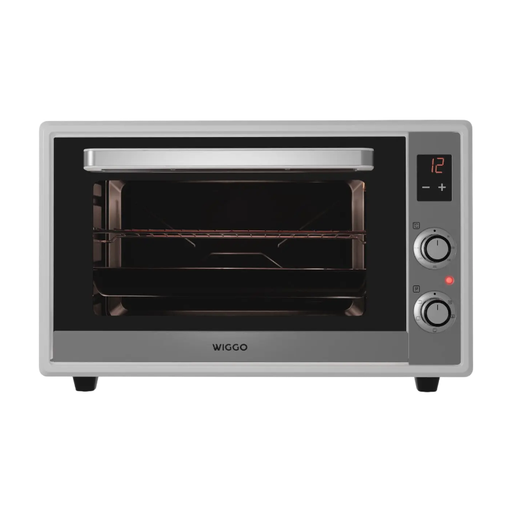 No image available
A freestanding option if you don’t have a built-in housing space and have enough suitable worktop space.
The product title lists 65 L, Inox and 2000 W. Check the dish size, external dimensions and ventilation instructions.
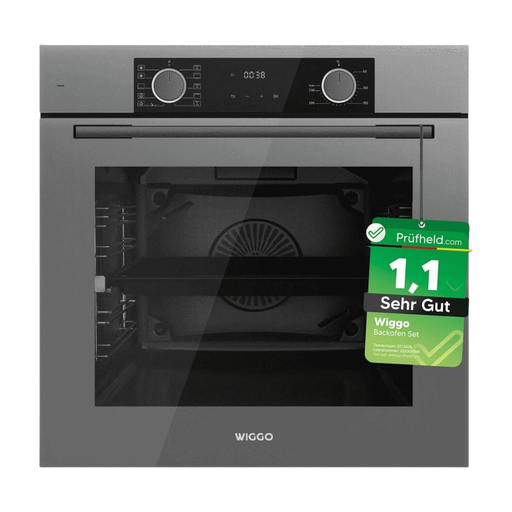 No image available
A built-in option if the housing space and installation meet this model’s requirements.
Before buying, check the housing dimensions, connection and oven settings available on the exact version.
No. Use the setting and cooking time specified in your chosen recipe; grilling is a separate option for browning the top. The Netherlands Nutrition Centre uses the grill for a potato and leek dish in which the potatoes have already been boiled. Don’t use that short grilling time for a gratin made with raw potato slices.
For a built-in oven, compare the installation diagram with the housing space and the specified connection. Follow the ventilation instructions in the manual for both built-in and freestanding appliances. The Netherlands Fire Service points out that heat needs to be able to escape and recommends plugging high-power appliances directly into a wall socket, not into a multi-socket adaptor or cable reel.
Don’t assume the same rule applies to every setting. The Consumers’ Association warns against using metal with microwaves because it can cause sparks and create a fire risk. Check the manual for your exact appliance to see which dishes and accessories are allowed with the setting you’ve chosen.
According to ACM ConsuWijzer, a product must meet the standards you could reasonably expect when used normally; there isn’t one fixed statutory guarantee period for every oven. If a product is faulty, contact the seller to arrange an appropriate solution.
No. The European Commission sets out exemptions under the rules for household ovens, including appliances with a microwave heating function and small ovens. So only compare labels that apply to the appliance in question, and use the same cooking setting when comparing energy consumption.