
Workshop host preparing several portions
Measure your largest roasting tin and check the usable interior space before deciding how many portions will fit at once. Consumentenbond advises measuring the oven dish itself.


Choose an oven based on the roasting tin, how much you want to cook and the space available. A freestanding oven may be suitable if there’s no built-in cavity; a built-in oven needs a cavity of the right size, and a core temperature probe can help you monitor how the meat is cooking. None of these options replaces safe handling of raw meat or checking the dish.
Measure your largest roasting tin and check the usable interior space before deciding how many portions will fit at once. Consumentenbond advises measuring the oven dish itself.
An oven with a core temperature probe can help you monitor the temperature while roasting. Voedingscentrum also emphasises the importance of handling raw and cooked food safely.
If there’s no suitable built-in cavity, a freestanding oven may be an option. Check the dimensions and placement instructions, and make sure the intended use is covered by the manual; Inventum excludes industrial use of the OV457B.
Start with the space available and how much you want to cook. Then consider whether you’d like extra help monitoring how the meat is cooking during the demonstration.
| What to consider | What should you check? | Who should pay particular attention? |
|---|---|---|
| Cooking and food safety | Check what cooking checks the model offers, and keep raw and cooked food separate. | If I want to monitor how the meat is cooking during a demonstration, I’ll look for clear temperature controls and safe handling of raw meat. Around 36% of consumers prioritise cooking and food safety. |
| Portions and roasting tin | Measure your largest tin and check the oven’s internal dimensions and the shelf positions you’ll need. | If I want to prepare several portions, I need to know whether my tin and planned quantity will fit. Around 29% of consumers focus mainly on portion capacity. |
| Placement | For a built-in model, check the cavity dimensions; for a freestanding model, check the placement instructions. | If the workshop kitchen doesn’t have a fixed oven, I need to be able to work out where the appliance can be placed safely. Around 21% of consumers see placement as their main concern. |
| Controls and cleaning | Take a look at the controls and check which parts and surfaces the instructions say need cleaning. | If participants will set the oven themselves during a demonstration, I want the controls to be clear for them and cleaning to fit into the schedule. Around 14% of consumers prioritise ease of use and cleaning. |
A built-in probe is a way to monitor the temperature, not proof that the meat is safely cooked. According to Voedingscentrum, whole pork tenderloin can be eaten pink, but cooking it through is the safest option.
The stated capacity alone doesn’t tell you whether your roasting tin and planned quantity will fit in the oven. If your tins don’t fit, you may need to cook in several batches.
Measure your tin and compare it with the interior space. Plan separate batches if necessary.
If the intended use isn’t covered by the manual, you may need a different oven or to adjust your schedule.
The freestanding OV457B may be worth considering for a workshop venue without a suitable built-in cavity, provided the dimensions and setup are right.
The HBA534BS3 is an example of a built-in oven with rotary controls and conventional oven settings. According to Bosch, the HSG7364B1 has a three-point core temperature probe.
According to AEG, the BS7700B built-in oven combines a core temperature probe with fan-assisted cooking and steam support.
This selection includes freestanding and built-in ovens, including models with features to help you monitor how food is cooking. Check the exact model’s dimensions and installation requirements for your workshop kitchen.
 No image available
A freestanding model to consider if you don’t have a built-in cavity and can set the oven up in a suitable place.
The product information lists a capacity of 65 litres, six functions, a turbo fan and a 90-minute mechanical timer. The stated dimensions are 60 × 49 × 40 cm.
Keep the ventilation openings clear and take care around hot surfaces. The product information advises against using the oven outdoors or in damp environments.
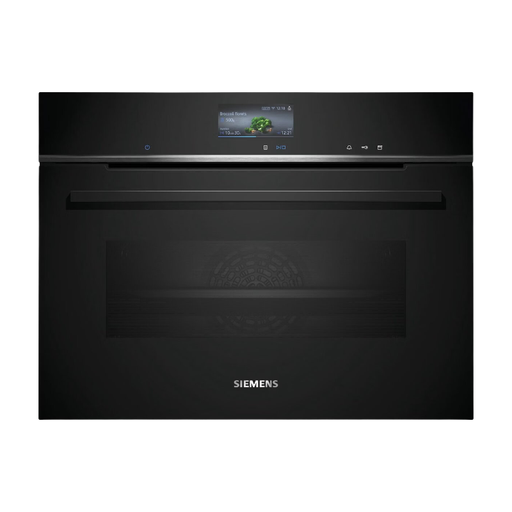 No image available
A built-in model to consider if it fits your cavity and you want to monitor how food is cooking during a demonstration.
The product information lists a roastingSensor Plus with three-point measurement, 4D hot air, pyrolytic cleaning and Home Connect. Check the specified cavity dimensions and have the oven installed in accordance with the product specifications.
The installation information recommends using a qualified electrician. Also take care around hot surfaces and steam.
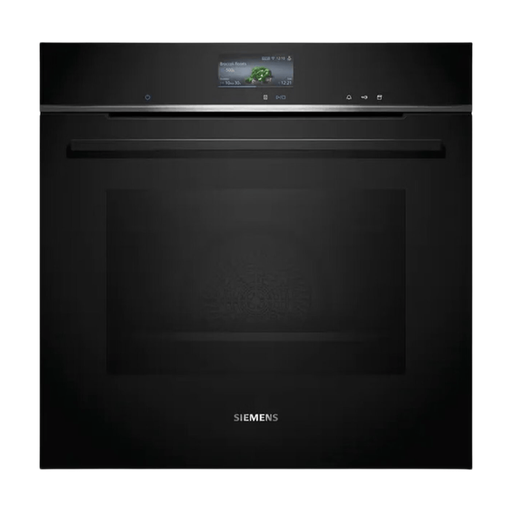 No image available
A built-in option for a workshop kitchen with a suitable cavity and a need to monitor the temperature while roasting.
The product information lists 4D hot air, steam support, pyrolytic cleaning and a roastingSensor Plus that measures at three points. Automatic roasting programmes and control via a TFT touch display are also mentioned.
Follow the installation instructions and take care around hot surfaces and hot steam.
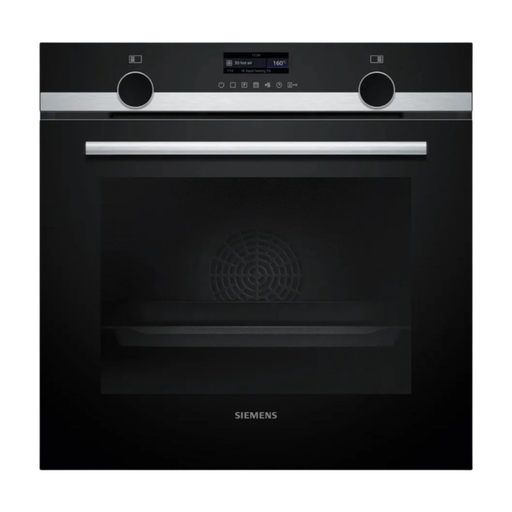 No image available
A built-in oven to consider if your workshop venue has a suitable cavity and you want to compare the controls and cleaning features.
The product information lists a 71-litre capacity, convection, a grill, a keep-warm function, and hydrolytic and pyrolytic cleaning. A TFT display and rotary controls are also mentioned.
The product information warns of hot surfaces and flammable materials nearby.
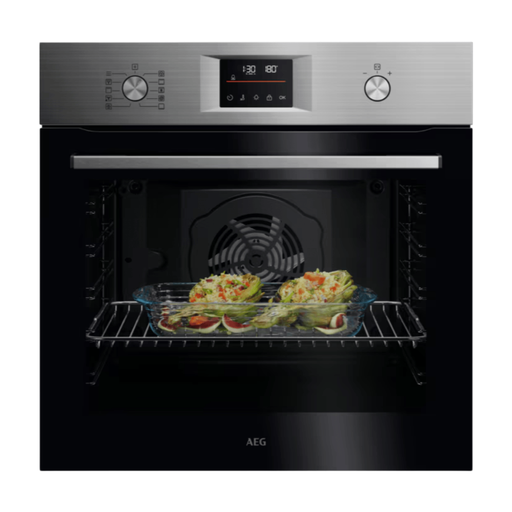 No image available
An oven to compare if its stated capacity and cleaning function suit your workshop needs.
The product information lists a capacity of 72 litres and pyrolytic cleaning. Check the built-in dimensions and installation requirements for the kitchen space available.
No, the information consulted doesn’t state that a built-in probe is essential. It can help you monitor the temperature during a demonstration, but it doesn’t replace safe cooking and hygiene practices. According to Voedingscentrum, whole pork tenderloin can be eaten pink; cooking it through is the safest option.
Keep raw and cooked food separate, use clean utensils, and wash your hands and any equipment you’ve used. Voedingscentrum advises storing opened, uncooked pork tenderloin covered at the bottom of the fridge and gives two days as the recommended storage time. For an unopened pack, follow the date and storage instructions on the packaging.
For a built-in oven, measure the cavity and check that your largest roasting tin will fit. For a freestanding model, read the placement and safety instructions in the manual; the Inventum OV457B manual also warns about accessible hot parts.
No. If you buy as a consumer, your statutory rights apply alongside any manufacturer’s guarantee. ACM ConsuWijzer explains that, under the applicable conditions, the seller must resolve a fault free of charge if a product breaks sooner than expected during normal use. Check separately which terms apply if the oven is bought for commercial use.
It depends on the organiser’s activities. The NVWA says registration is compulsory when a business sells or supplies food directly to consumers. For businesses that prepare, process or sell food, the NVWA states that an HACCP food safety plan or an applicable hygiene code is required. Simply describing an activity as a ‘cookery workshop’ doesn’t determine whether these requirements apply to a particular organiser.