
Baker without a built-in housing unit
You want to bake a cake on an available worktop and need to compare your tin size with the oven’s interior. Also check how much clearance the manual recommends around the freestanding model.


Choose an oven that fits your cake tin and has a setting suited to your recipe. The Dutch Consumers’ Association, Consumentenbond, cites conventional top and bottom heat as an example for baking cake. A freestanding model needs worktop space, while a built-in oven requires a suitably sized housing unit. A microwave combination oven is worth considering if you also want to use the microwave function. Your choice of oven does not determine how to store your picnic cake: that depends on its ingredients and topping.
You want to bake a cake on an available worktop and need to compare your tin size with the oven’s interior. Also check how much clearance the manual recommends around the freestanding model.
You’re looking for an oven to fit an existing or planned housing unit, and comparing its dimensions, the oven’s interior and the available settings. Remember to allow for any installation work.
You want one appliance for baking cakes and using the microwave. Check that the oven settings and space for your cake tin suit your recipe.
Choose this option: if you don’t have a suitable built-in housing unit and want to place the oven on a worktop.
Keep in mind: the worktop space required and the clearance specified in the manual for that particular model.
Choose this option: if you have a suitable housing unit or are planning a built-in oven for your kitchen.
Keep in mind: the exact housing unit dimensions and any installation work. A larger capacity doesn’t guarantee your cake tin will fit.
Choose this option: if you want to use the microwave function regularly as well as bake.
Keep in mind: according to the Dutch Consumers’ Association, combination microwave ovens often don’t have bottom heat and offer fewer shelf positions than combination ovens.
| What to consider | What should you check? | Who is this important for? |
|---|---|---|
| Oven setting and cake tin | Compare the interior dimensions with your tin and check which oven settings are available. | If I’m using my own cake tin, I want to know whether it will fit and whether the oven has a suitable setting. Around 31% of consumers put this combination first. |
| Positioning in the kitchen | For a built-in oven, measure the housing unit; for a freestanding model, also check the recommended clearance around the appliance. | If I have limited worktop space or want to use an existing housing unit, the oven needs to fit my kitchen. Around 25% of consumers make positioning their main consideration. |
| Combining baking and reheating | Check that the exact model has an oven function, and see which heat sources and shelf positions are available. | If I want to reheat food as well as bake cakes, I’m looking for one appliance that can do both. Around 25% of consumers prioritise multifunctionality. |
| Energy use and additional costs | Only compare energy use on a like-for-like basis, and ask about any installation costs. | If I’m mainly using the oven for one cake, I want enough space without an unnecessarily large appliance or unexpected installation costs. Around 19% of consumers focus mainly on energy use and additional costs. |
The oven’s capacity in litres doesn’t tell you whether your cake tin will fit. The external dimensions and usable interior space are not the same thing.
Measure your tin and compare it with the interior dimensions and positioning instructions for the exact model.
If your tin doesn’t fit, you may need a different tin or appliance.
According to the Dutch Consumers’ Association, combination microwave ovens often don’t have bottom heat and offer fewer shelf positions. Features vary by model.
Check the oven function, available heat sources, rack and space for your cake tin.
The clearance required around the appliance can affect where you can put it. For the Tomado TEO4500B, the manufacturer specifies 10 cm of clearance all around. This measurement doesn’t automatically apply to other ovens.
Check the positioning instructions for your chosen model before deciding where to put it.
Storage advice differs for a plain cake and, for example, one topped with whipped cream.
Decide how to transport your cake based on its ingredients and topping. Take any food that needs to stay chilled in a cool bag.
The freestanding OV457B is an example to consider if you don’t want to use a built-in housing unit.
The freestanding TEO4500B is an example of an oven designed to sit on a worktop.
The Serie 4 HBA534BB3 built-in oven is an example to consider if you have a suitable housing unit.
The NV7B4550VAK/U1 is an example to consider if you’re comparing cleaning features and additional controls in a built-in oven.
This selection includes freestanding ovens, built-in ovens and combination models with an oven function. They’re for anyone who wants to bake a cake and choose an oven with enough space for their tin.
 Image unavailable
An option if you want to use the microwave function as well as bake.
The product name lists a 25 l capacity, grill and convection. The interior is specified as 340 × 220 × 344 mm, with a 270 mm turntable. Check that your cake tin will fit. The temperature range is 110 to 210 °C.
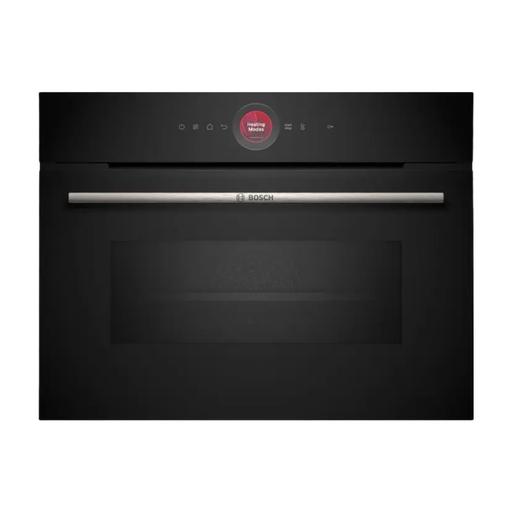 Image unavailable
A built-in combination oven to consider if you’re looking for one appliance for both oven and microwave use.
The product name lists a 45 l capacity and 900 W microwave power. The specified housing unit dimensions are 45,50 × 56 × 55 cm. Check that they suit your kitchen.
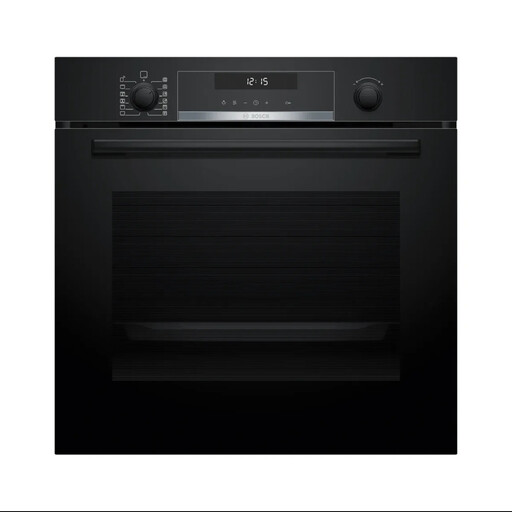 Image unavailable
A built-in oven to consider if you have a suitable housing unit and want to compare the space available with the size of your cake tin.
The product name lists a 71 l capacity. The specified housing unit dimensions are 585 × 560 × 550 mm. Check these measurements before choosing the oven.
 Image unavailable
A freestanding model to consider if you’re not using a built-in housing unit.
The product name lists 1800 W and a 35 l capacity. The positioning information specifies at least 10 cm of clearance on all sides and 30 cm above the appliance.
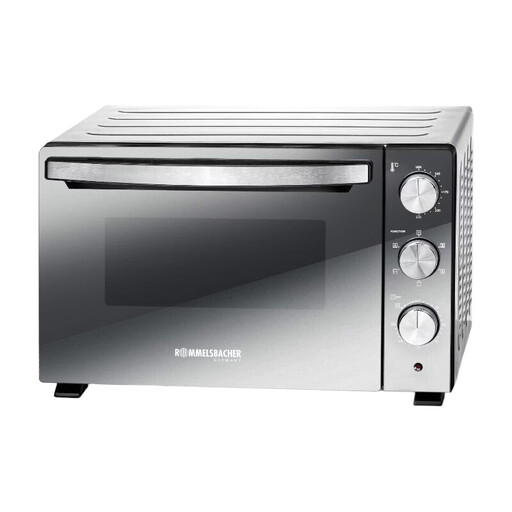 Image unavailable
A baking and grilling oven to consider if you want to match the available oven functions to your recipe.
The product information states that it must be cleaned by hand. Bear this in mind when considering maintenance.
Conventional top and bottom heat is a common setting for baking cakes, but it’s not the only option. The Dutch Consumers’ Association lists it as a suitable setting for cakes, among other things. Follow your recipe and oven manual. If you have a microwave combination oven, check which oven settings the exact model offers.
Follow the positioning instructions for the specific model. For the Tomado TEO4500B, the manufacturer specifies 10 cm of clearance all around. Don’t assume this requirement applies to other ovens.
That depends on the ingredients and topping. The Netherlands Nutrition Centre advises that plain cake can be stored outside the fridge, but cream cakes must be kept chilled. Take food that normally needs to be refrigerated in a cool bag. Its picnic advice is to throw it away if it has been left unrefrigerated for more than two hours.
Not all ovens fall within the same labelling scope. The European Commission lists small and portable ovens as exceptions to the relevant energy-labelling requirements for domestic ovens. First check which product category applies to your appliance.
Transport the cake chilled, for example in a cool bag. The Netherlands Nutrition Centre advises throwing away food that would normally be kept in the fridge if it has been left unrefrigerated for more than two hours during a picnic.