
Baking a single pear galette
You mainly want an oven setting and baking tray that suit your galette, without making extra features a priority.


For a pear galette, choose an oven that lets you select the setting specified in the recipe and has a baking tray that your galette will actually fit on; capacity in litres alone won’t tell you that. A freestanding model means you won’t need a built-in cavity, but you will need a suitable spot for it. A built-in oven will only fit if the cavity and connection are right. The Dutch government says that electrical appliances placed on the market in the EU must carry a CE mark, so check the specific appliance you’re considering.
You mainly want an oven setting and baking tray that suit your galette, without making extra features a priority.
You need to decide whether there’s a suitable spot for a freestanding oven or a cavity that will fit a built-in model.
You want to use your oven for other bakes as well as galettes, and weigh up those options against installation and maintenance.
Start with the oven setting specified in your recipe and the space your galette needs on the baking tray. Then decide whether a freestanding model or a built-in oven will suit your kitchen.
| What to consider | What should you check? | Who is this important for? |
|---|---|---|
| Oven setting and pastry | Check which settings the exact model offers, then select the setting and temperature specified in your recipe. | I want to use the setting in my recipe rather than simply copy over settings; around 36% of consumers prioritise the recipe setting. |
| Baking tray space | Measure your galette, including its folded edge, and compare it with the baking tray and usable interior space. | I want to bake my galette on a tray that fits; around 29% of consumers prioritise baking tray space. |
| Positioning and connection | Compare the external dimensions, installation requirements and connection details with the available space or cavity. | I need to know where the oven can go and whether the connection is suitable; around 21% of consumers prioritise positioning and connection. |
| Cleaning and servicing | Check the cleaning instructions, removable parts and service information for the exact model. | I want to be able to clean up quickly after baking and know what happens if something goes wrong; around 14% of consumers prioritise maintenance and servicing. |
A galette is baked on a tray. The oven’s capacity won’t tell you whether your tray will fit inside.
Measure the baking tray and usable interior space before choosing a model.
If your current tray doesn’t fit, you may need a different one.
Conventional heat and fan oven settings aren’t automatically interchangeable. Laura's Bakery explains that switching from conventional heat to a fan setting may mean adjusting the temperature.
Check your recipe’s instructions and adjust the settings carefully for the oven mode you’re using.
Cavity dimensions and connection details vary by model, so an oven won’t necessarily fit your existing kitchen.
Compare the installation details for the exact model with your cavity and connection.
You may need to modify the cavity or connection if they aren’t suitable for your chosen model.
Freestanding ovens; the OV607B is one to consider if you want a larger oven without a built-in installation.
Freestanding mini ovens; the TO 2058 is worth comparing if you’re looking for a choice of oven settings.
Built-in ovens; the HBA514BB3 is worth comparing if you have a suitable cavity.
Built-in ovens with a range of heating settings; the OS6AB50AK is one model-specific example.
Built-in ovens; the OM272ZT is worth comparing if you’re looking for turbo fan cooking.
This selection includes freestanding ovens and built-in models for baking. Check the baking tray space and CE mark on the specific appliance; for a built-in model, also measure the cavity and check the connection.
 No image available
A built-in model for anyone looking for fan cooking and a range of baking functions; check that the baking tray will fit your galette.
The product details list fan cooking, a grill and a pizza function.
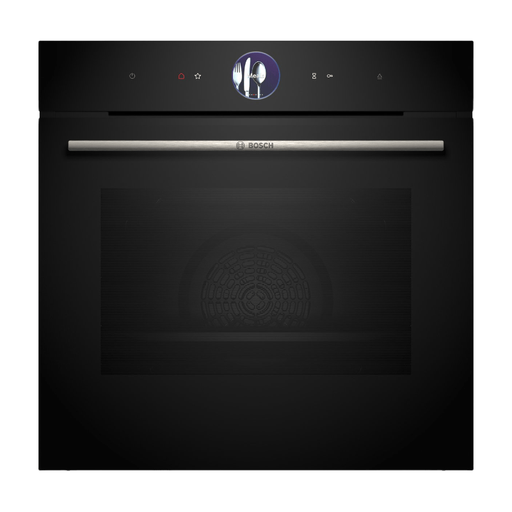 No image available
A built-in steam oven for anyone who wants to compare different heating settings for baking too; check the cavity and connection first.
The product details list fan cooking, conventional heat and 21 heating systems. The description states that installation must be carried out by a qualified electrician.
 No image available
A countertop model for anyone considering a freestanding fan oven; measure the baking tray and interior space for your galette.
The product details list a capacity of 35 litres, a four-level baking rack, a thermometer and an LED display.
 No image available
A freestanding oven for anyone considering a larger capacity without a built-in installation; check that you have space for it on your worktop and that the baking tray will fit.
The product details list a turbo fan, six cooking functions and four shelf positions.
 No image available
A built-in oven for anyone looking to compare fan cooking with conventional heat; check the stated cavity dimensions against your kitchen.
The product details list 3D Hotair, a baking tray and pyrolytic cleaning.
No, use the setting specified in your recipe. A recipe written for conventional heat doesn’t automatically translate to a fan oven setting; Laura's Bakery explains that you may need to adjust the temperature when switching between the two. Check the instructions before changing the settings.
No. Measure your galette, including its folded edge, and compare the baking tray with the usable interior space and shelf positions. The capacity in litres and an included tray won’t automatically give you all the measurements you need.
Follow the model-specific instructions for positioning and connection, and make sure the appliance has enough room to release heat. The Dutch Fire Service recommends plugging high-power appliances directly into a wall socket rather than using a cable reel or extension block. This is safety advice, not a general legal installation requirement for every oven.
According to the Netherlands Authority for Consumers and Markets, the seller is responsible for the statutory guarantee if the product doesn’t meet what you can reasonably expect from normal use. Online purchases also generally come with a statutory 14-day cooling-off period from delivery; conditions and exceptions may apply to your specific purchase.
Yes. The Dutch government says that electrical appliances placed on the market in the EU must carry a CE mark. Check the mark on the specific appliance; the general product requirement doesn’t automatically confirm that an individual appliance carries one.