
Host preparing several oven dishes
You want to plan the nut loaf and side dishes for the same dinner, so oven space and usable shelf levels matter. Milieu Centraal and ETNA outline factors to consider around oven size and cooking space.


Start by choosing an oven that can fit your filled loaf tin. A freestanding model may be enough for one dish, while a built-in oven could offer more room for a meal with side dishes. Measure your tin and check the oven’s internal space, settings and available space before you decide: a larger capacity or extra feature doesn’t guarantee better baking results.
You want to plan the nut loaf and side dishes for the same dinner, so oven space and usable shelf levels matter. Milieu Centraal and ETNA outline factors to consider around oven size and cooking space.
You’re mainly looking for an oven that fits your tin and has settings to suit your chosen recipe. Inventum, Severin and Bosch describe models with different capacities and heating settings.
You need to weigh up worktop space and oven size, or find a suitable built-in space. Milieu Centraal, Inventum and Severin offer useful pointers to help you decide.
Choose this option if: you want to use one baking tin, don’t have a suitable built-in space and have enough room on your worktop.
Trade-off: a stated capacity of around 30 litres doesn’t tell you whether your tin will fit. There may not be enough room to cook several dishes at once.
Choose this option if: you have a suitable built-in space and want to cook the nut loaf alongside other oven dishes.
Trade-off: check the dimensions of the housing space and the connection requirements for the specific model. A larger capacity isn’t automatically the most energy-efficient choice for one dish.
Choose this option if: you also use the microwave function regularly and the appliance has an oven setting with enough room for your tin.
Trade-off: having a microwave function doesn’t tell you whether your tin will fit or how well a particular model will bake.
| What to consider | What should you check? | Who should pay particular attention? |
|---|---|---|
| Room for your tin and side dishes | Measure your baking tin and check the usable internal dimensions, shelf levels and space between dishes. | If I want to plan the nut loaf alongside side dishes, the dimensions and usable shelf levels are crucial; around 36% of consumers say cooking space is their main priority. |
| Oven settings for your recipe | Check which setting and temperature the recipe calls for, and whether the model offers them. | If you want to follow the method in your recipe, pay close attention to the specified oven setting; around 29% of consumers prioritise having suitable baking settings. |
| Where it will go in your kitchen | Check the external dimensions and installation instructions, or the housing dimensions and connection requirements for a built-in model. | If I have limited worktop space or need an oven to fit an existing housing space, the available room will determine my choice; around 21% of consumers say installation space is their main priority. |
| Energy use for the capacity you need | Compare energy use per cycle on the same basis, where that information is available. | If you mainly cook one dish, you’ll want enough space without choosing an unnecessarily large oven; around 14% of consumers prioritise energy use that suits their needs. |
The capacity in litres doesn’t tell you which baking tin or combination of dishes will actually fit.
Measure your tin and compare its dimensions with the usable internal space and height at each shelf level.
If your tin doesn’t fit, you may need to buy another one or cook the dish separately.
Milieu Centraal advises choosing an oven size that suits how you’ll use it; a larger oven uses more energy.
First work out how much cooking space you need, then compare energy use on the same basis.
A freestanding oven must be positioned according to the model’s instructions and needs space for ventilation.
Check the external dimensions and installation instructions. Don’t place a freestanding model in an enclosed housing space unless the manufacturer says you can.
Nuts are allergens. Choosing a particular oven or setting doesn’t make a dish containing nuts safe for someone with a nut allergy.
Ask your guests about allergies in advance and check the ingredients and labels. Make this part of your meal planning.
The freestanding OV307B is an example to consider if you’re looking at a compact oven with several programmes.
The freestanding TO 2056 is worth considering if you’re looking for an oven that fits one baking tin.
The built-in OM316MZ is an example to look at if you need room for more than one oven dish for a dinner party.
According to Bosch, the built-in HBA534BS3 offers top and bottom heat and 3D Hotair.
AEG describes pyrolytic cleaning on selected built-in ovens. This may be worth considering if ease of cleaning is another factor in your decision.
These Joybuy ovens are worth considering for a savoury nut loaf at a dinner party: freestanding models for a suitable spot on your worktop, plus a built-in model for a matching housing space.
 No image available
Worth a look if you’re after a fan oven with several shelf levels.
The product title lists a capacity of 35 litres, a thermometer, a four-level rack and an LED display.
 No image available
A freestanding model to consider if you need space for a dinner party with several oven dishes.
The description lists a capacity of 65 litres, four shelf positions, six functions and a turbo fan. It needs to be cleaned by hand. Follow the model’s installation and ventilation instructions.
 No image available
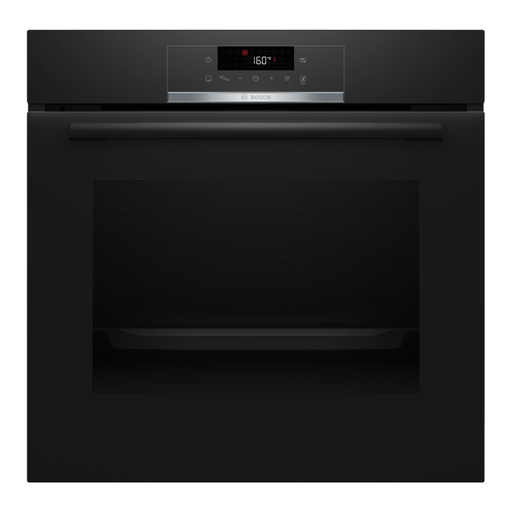
A built-in option to consider if you have a suitable housing space and want oven settings to suit different cooking plans.
The product information lists a capacity of 71 litres, five shelf levels, top and bottom heat, fan cooking and a steam function. Check that the housing space fits this model.
 No image available
A freestanding model to consider if you have a suitable spot and want to cook a recipe using top and bottom heat.
The description lists a capacity of 35 litres, 1800 W, top and bottom heat, a baking tray and a rack. The instructions require at least 10 cm of clearance around the oven and 30 cm above it; don’t use it in an enclosed cupboard.
 No image available
A compact option for one nut loaf, provided your tin is within the stated size limit.
The description lists baking tins up to 25 cm in diameter and five heating settings, including top and bottom heat and fan cooking. The stated maximum temperature is 230 °C.
Measure the outside of the filled tin and compare it with the usable internal space of the exact model. The capacity in litres alone isn’t enough; also check whether there will be room for a second dish if you want to use one.
No. Check the setting and temperature specified in your recipe, as well as your oven’s manual. A model may offer both top and bottom heat and fan cooking, but that doesn’t mean the settings are interchangeable.
Not necessarily. The European Commission excludes small and portable ovens from the energy-labelling rules for domestic ovens referred to here. The absence of a label on one of these models doesn’t in itself prove that it’s inefficient or non-compliant.
The Netherlands Food and Consumer Product Safety Authority says that electrical products covered by the Commodities Act Decree on Electrical Equipment must carry a CE marking. Check the product information for the specific model; a CE marking doesn’t assess its baking performance.
No. You don’t only have warranty rights if you buy an additional warranty plan. ACM ConsuWijzer explains that, when used normally, you’re entitled to a product that meets reasonable expectations, and the seller is responsible for offering a suitable solution if it’s faulty. First compare what an additional plan actually covers.