
Home baker with a favourite loaf tin
Wants to know whether the tin will fit and whether the oven has the setting they need. The Consumers’ Association recommends comparing the oven’s internal space with your own oven dish or tin.


Start by checking the size of your loaf tin and the oven setting your recipe calls for, then choose an oven that fits the space you have available. The Netherlands Nutrition Centre gives a temperature of 180 °C and a cooking time of 45–60 minutes for a nut bread recipe. These are guidelines for that recipe, not fixed requirements for every nut loaf. A combination microwave is worth considering if you also need a microwave function. If so, check separately that the oven setting and available space are suitable for your tin.
Wants to know whether the tin will fit and whether the oven has the setting they need. The Consumers’ Association recommends comparing the oven’s internal space with your own oven dish or tin.
Weighs up a freestanding appliance on the worktop against an oven that fits a suitable built-in space. For a built-in model, measure both the housing space and the oven; the Consumers’ Association stresses that exact dimensions matter.
Is considering a combination appliance for multiple tasks, but also wants to check that the oven function and space for the tin are suitable for their loaf. The Consumers’ Association describes a combination microwave as combining microwave and fan oven functions.
Measure your tin and the available space first. Then compare the oven settings with your recipe and decide whether you need any extra features.
| What to consider | What to look for | Who this matters to |
|---|---|---|
| Tin and oven setting | Measure your tin and compare it with the internal dimensions and shelf position. Check that the oven offers the setting and temperature your recipe calls for. | If I want to use my usual loaf tin, I need to know it will fit and that I can follow the recipe. Around 31% of consumers put suitability for their own tin first. |
| Kitchen space | Measure the worktop or built-in housing space. Follow the installation instructions for a freestanding model, and check the dimensions and connection requirements for a built-in oven. | When space is limited in my kitchen, I need an oven that will fit on the available worktop or in the housing space. Around 31% of consumers give available kitchen space top priority. |
| Other functions | Check whether the oven setting works on its own and whether the tin can be placed at a suitable height. | If I also want to reheat or defrost food, I’m looking for a combination of functions without losing sight of what I need to bake my loaf. Around 23% of consumers prioritise versatility. |
| Cleaning and use | Check the cleaning instructions, and compare energy information only when it applies to the types of oven you’re considering. | When cleaning and ease of use are my main concerns, I want to know in advance what cleaning involves and which information applies to my appliance. Around 15% of consumers put these considerations first. |
The stated capacity doesn’t tell you whether your loaf tin will fit in the oven or whether there’ll be enough space around it.
Measure the tin, usable internal space and shelf position separately.
Oven functions and shelf positions can vary between appliances. The microwave function doesn’t tell you which oven settings are available.
Check the individual oven settings and whether your tin can be placed at a suitable height.
The European Commission says that not all oven types are covered by the same energy labelling rules. A cleaning function on its own tells you nothing about the baking results.
Compare energy information only when it applies on the same basis to the appliances you’re considering, and assess baking functions separately.
The OV307B is a freestanding model. Inventum lists a net capacity of 30 litres, six programmes and a timer.
The TO 2058 is a freestanding oven and toaster. Severin lists a capacity of 42 litres, with conventional top and bottom heat and fan cooking, which can be used separately or together.
The HBG7741B1 is an example of a 60 × 60 cm built-in oven with several heating systems, including conventional top and bottom heat and fan cooking.
The WMW57DHMW is an example of a built-in combination microwave. Whirlpool lists a capacity of 40 litres and combination heating.
This selection includes freestanding ovens, built-in ovens and combination microwaves for anyone looking to bake a nut loaf. For an electrical appliance, check that the specific model has the required CE marking. As the Dutch government points out, a model name alone doesn’t prove that the item on offer carries that marking.
 No image available
A built-in option if you have a suitable housing space. Measure your tin and the usable oven space before choosing.
70 L; 3 kW; grill; pizza function; AquaClean steam cleaning; LED screen with timer; ECO Mode; black; Energy rating A.
 No image available
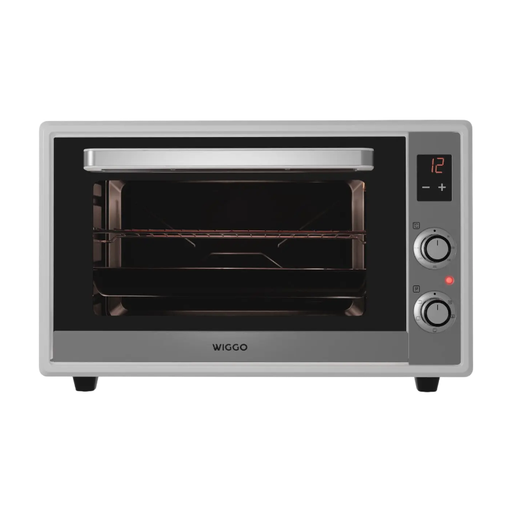
A worktop oven to consider if you’re not looking for a built-in option. Check that your loaf tin will fit inside.
35 L; oven rack with four levels; thermometer; LED screen.
 No image available
A combination option if you also want a microwave function. Check that the oven setting and space are suitable for your loaf tin.
25 L; grill and convection functions.
 No image available
A freestanding model to consider if you have worktop space. Measure your tin and follow the placement instructions.
65 L; 2000 W; stainless steel. Check whether the fan is included in the version you’re considering; it’s described as optional.
 No image available
A compact combination option if you also want a microwave. Check that the oven space is suitable for your loaf tin.
20 L; grill and convection functions. If placing it in a cupboard, allow for the required ventilation space.
Follow your chosen recipe and the instructions for your oven. The Netherlands Nutrition Centre recommends preheating the oven to 180 °C and baking for 45–60 minutes for a nut bread recipe. Don’t automatically use these settings for a different recipe or oven setting.
Measure the housing space and compare it with the model’s exact installation dimensions. Follow the instructions for ventilation and connection too, and measure the tin you want to use: the stated capacity isn’t the same as the usable space.
The Netherlands Nutrition Centre advises cooling cooked food within two hours and keeping it covered in the fridge. Eat leftovers within two days and, when reheating, heat them all the way through until piping hot.
No. According to the Dutch government, the Netherlands has no fixed legal guarantee period. You’re entitled to a product that meets the standard you could reasonably expect; if a product is faulty, contact the seller.
No. The European Commission gives small and portable ovens as examples of products that are outside the scope of the oven labelling rules mentioned. For a combination microwave, check separately which information applies to that type of appliance. Don’t assume that the appliance is inefficient simply because it doesn’t have a comparable oven label.
For electrical appliances covered by the relevant EU rules, the required CE marking is important. Check the specific model: a model name or general product description doesn’t prove that the item on offer carries the marking.