Start by checking the internal dimensions: your tart tin needs to fit, and the oven needs to offer the setting your recipe calls for. Conventional top and bottom heat is a practical starting point for baking a tart. Then choose between a built-in oven, a freestanding oven, a mini oven or a combination microwave, based on your kitchen space and how else you’ll use it. The Consumentenbond recommends comparing your tin with the oven space, rather than looking at the capacity in litres alone.
Which oven option is right for you?
Tart baker who wants to follow the recipe’s instructions
You want to use a suitable oven setting for your mushroom tart and pay attention to how the base and filling cook. The Consumentenbond recommends conventional top and bottom heat as a useful setting for dishes such as tarts.
Lunch-maker with a favourite tart tin
You already have a tin or you’re baking for several people. Compare its dimensions with the usable internal space and shelf position. The Consumentenbond recommends checking that the largest oven dish you use will actually fit.
Cook with limited kitchen space
You need to choose between a suitable built-in space and room on the worktop. Follow the chosen model’s instructions for installation and ventilation; the Consumentenbond notes that built-in ovens may need ventilation space.
What should you look for when choosing?
Built-in oven
Choose this option: if you have a suitable housing unit and the oven space fits your tart tin.
Bear in mind: the housing dimensions and the model-specific installation instructions.
Freestanding oven
Choose this option: if you don’t want to use a built-in space and have enough room on your worktop.
Bear in mind: the model’s requirements for positioning, ventilation and connection.
Mini oven
Choose this option: if your tin fits inside the smaller oven and you want to make the most of the space available on your worktop.
Bear in mind: the capacity in litres won’t tell you whether your tin fits; also check that the oven has the features you need.
Combination microwave with oven function
Choose this option: if you also want to reheat or defrost food regularly, as well as bake.
Bear in mind: oven settings and usable space vary by model. Also check whether your tin will fit on any turntable.
| What to consider |
What should you check? |
Who should pay particular attention? |
| Oven setting |
Check whether the oven has conventional top and bottom heat, and which fan settings are available. If using a fan setting, follow the instructions in your recipe or oven manual. |
I want to use the setting in my recipe and make sure the base and filling are cooked through. Around 36% of consumers prioritise having the right oven setting. |
| Space for your tin |
Measure the width, depth and height of your tin, then compare them with the usable internal dimensions and shelf position. The Consumentenbond recommends checking that it fits, rather than relying on the capacity in litres alone. |
I want to be able to put my own tart tin in the oven without a struggle, even if it has a protruding rim. Around 29% of consumers who prioritise space for their tin put this first. |
| Positioning in your kitchen |
For a built-in oven, compare the appliance and housing dimensions; for a freestanding model, measure the space available on your worktop. Follow the model’s instructions for ventilation and connection. |
I need to know in advance whether there’s room for a built-in oven or a freestanding appliance. Around 21% of consumers make kitchen placement their top priority. |
| Energy use and maintenance |
Where available, compare energy use per cycle on the same basis and check how to clean the oven. Milieu Centraal points out that a smaller oven with a lower energy rating doesn’t automatically use more energy than a larger oven with a higher rating. |
I want a suitable size and need to know what using and cleaning the oven involves in practice. Around 14% of consumers prioritise energy use and maintenance. |
Which buying mistakes can you avoid?
-
Choosing based on capacity in litres alone
The stated capacity doesn’t tell you whether your tart tin will fit on the shelf. If it doesn’t, you may need a different tin or oven.
Measure your tart tin and check the internal dimensions and shelf position before you choose.
-
Assuming a combination microwave works just like a conventional oven
Oven settings and shelf positions vary by model; bottom heat or multiple shelf levels aren’t always available.
Check the individual oven settings and make sure there’s room for your tin.
-
Leaving installation and connection checks until after you buy
An unsuitable housing unit or location, or an incompatible connection, could mean you need to make changes or get help with installation.
Check the space available and the manual for the exact model before ordering.
A built-in model needs a suitable housing unit; a freestanding oven needs an appropriate location with the specified ventilation space.
-
Taking conflicting product specifications as confirmed
Some product listings give conflicting details about capacity, microwave power or the fan function. This could affect the space and features you’re relying on when making your choice.
Ask for any specification that’s crucial to your decision to be confirmed against the exact model number and current product documentation.
Which oven brands are worth considering?
Bosch
The HBA534BB3 is an example of a built-in oven with several heating settings.
- Bosch lists a capacity of 71 l, conventional top and bottom heat, 3D Hotair and bottom heat for this model.
- Check the housing dimensions and connection requirements. These features apply to the HBA534BB3 and aren’t automatically found on other Bosch ovens.
Inventum
The freestanding OV607B is an example of a larger oven for anyone looking for a worktop model.
- Inventum lists a capacity of 60 litres, a fan function and conventional top and bottom heat for the OV607B.
- Allow for the worktop space you’ll need. The accessories supplied don’t determine whether a model is suitable for your tart tin.
Whirlpool
The MCP 347 SL is an example of a combination microwave for anyone looking to combine baking with reheating.
- Whirlpool lists a capacity of 25 l, Forced Air and a turntable for this model.
- Compare the usable space with your tart tin and check the oven settings; product listings for this model may differ.
Severin
The TO 2078 is an example of a mini oven for smaller tins and kitchens with limited space.
- Severin lists a capacity of 20 litres and conventional top and bottom heat for the TO 2078.
- The product information is contradictory about the fan function. Ask for confirmation if this feature is important to your choice.
ETNA
The OM670MZ is an example of a built-in oven with several cooking settings.
- ETNA lists a capacity of 72 litres, bottom heat and conventional top and bottom heat for this model.
- ETNA says the OM670MZ is no longer available. Don’t use its specifications as evidence for another or current ETNA model.
Ovens on Joybuy
These oven options are suited to baking a savoury tart. They include built-in and freestanding models, as well as a combination microwave for anyone who also wants to reheat food.
 No image available
Comfee built-in oven, 60 cm, 70 L, 3 kW
An option if you’re looking for a built-in oven. Check that the housing dimensions and installation instructions suit your kitchen.
The product name lists 60 cm, 70 L and 3 kW.
View at Joybuy
 No image available
Sharp YC-PC254AE-S combination microwave, 25 L, silver
An option if you want to combine baking with microwave use. Check that the oven function and available space are suitable for your tart tin.
The product name lists 25 L, grill and convection.
View at Joybuy
 No image available
Wiggo WMO-E353(X) oven, 1800 W, 35 L, Inox
A freestanding option if you want conventional top and bottom heat and don’t want to use a built-in space. Keep the specified space around and above the appliance clear.
The product name lists 1800 W and 35 L.
View at Joybuy
 No image available
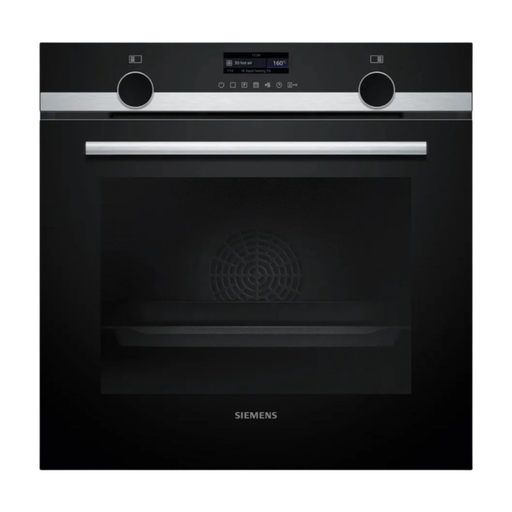
Siemens iQ500 HB579GBR3 built-in oven, 71 L, black
An option if you’re looking for a built-in model. Check that the housing dimensions and installation instructions suit your kitchen.
The product name lists 71 L.
View at Joybuy
 No image available
Wiggo WMO-E4562H(B) freestanding oven with hob, 60 cm, 45 L, 3534 W, black
A freestanding option if you want to use cooking zones as well as bake. Allow for the worktop space you’ll need and check the model-specific positioning instructions.
The product name lists 60 cm, 45 L and 3534 W.
View at Joybuy
Frequently asked questions
Which oven setting should you use for a mushroom tart?
Follow the recipe first; conventional top and bottom heat is a common setting for tarts. If you’re using a fan setting for a recipe written for a conventional oven, adjust the temperature as instructed in the recipe or oven manual, and check towards the end that the tart is cooked through.
Does the oven need to be preheated?
Follow the instructions in your chosen recipe. Voedingscentrum says preheating isn’t always necessary, but its recipe for a savoury vegetable tart does recommend it.
What should you check when positioning and connecting the oven?
For a built-in oven, compare the housing dimensions with the instructions for the exact model. For a freestanding oven, check the positioning and ventilation requirements; connection requirements may vary by model.
Does every mini oven in the Netherlands have an energy label?
No. The European Commission says that small and portable ovens fall outside the scope of the energy-labelling rules for household ovens. So when comparing these models, don’t assume that the absence of an oven energy label in itself means a product specification is missing.
Who should you contact about a fault, and how long does the legal guarantee last?
Report a fault to the seller. According to the Dutch government, there’s no fixed statutory guarantee period in the Netherlands: what matters is what you could reasonably expect from the product. A manufacturer’s guarantee is in addition to your statutory rights.


