
Baking a large family tart
You want to fit your tart tin in the oven and choose a setting that suits the pastry base. Measure your tin and compare it with the oven’s internal dimensions, not just its capacity in litres.


Start with an oven that fits your tart tin and has the setting your recipe calls for. The puff pastry recipe we looked at uses top and bottom heat, with the tart baked on the lowest shelf; the oven’s capacity in litres alone doesn’t prove that your tin will fit. A built-in oven needs a suitable housing space, while a freestanding model needs room on your worktop and adequate ventilation.
You want to fit your tart tin in the oven and choose a setting that suits the pastry base. Measure your tin and compare it with the oven’s internal dimensions, not just its capacity in litres.
You need room for a freestanding oven, with the ventilation space specified by the manufacturer for that model.
You bake other dishes too, so you compare usable space, oven settings and energy use per cycle.
First check the setting your recipe calls for and whether your tart tin will fit. Then see if the model can be installed in the space available and suits the way you’ll use it.
The Tante Fanny puff pastry recipe we looked at uses a springform tin of around 30 cm and specifies top and bottom heat. The Consumentenbond advises checking the internal dimensions: the stated capacity in litres doesn’t, by itself, tell you whether your tin will fit.
| What to consider | What should you check? | Who is this important for? |
|---|---|---|
| Setting for the pastry base | Check for top and bottom heat and the available shelf positions; follow the instructions for your own recipe. | If I want my tart to bake according to the recipe, I first check for the right setting and shelf position. Around 36% of consumers put the setting for the pastry base first. |
| Room for the tart tin | Measure your tin and compare its width and depth with the model’s internal dimensions and the space available to slide it in. | If you want to use a tin for a family-sized tart, the internal dimensions are more useful than the capacity in litres alone. Around 29% of consumers prioritise whether their tin will fit. |
| Where the oven will go in your kitchen | For a built-in oven, compare the housing dimensions; for a freestanding model, follow the manual’s guidance on the surface and ventilation space required. | If I don’t have a suitable housing space, the oven needs to fit somewhere appropriate and have room to release heat. Around 21% of consumers prioritise the space available in their kitchen. |
| Energy use and cleaning | Where possible, compare energy use in kWh per cycle using the same oven setting, and check the cleaning instructions. | If I use the oven regularly, I also want to know how much energy it uses per cycle and how to clean it. Around 14% of consumers prioritise energy use and maintenance. |
Milieu Centraal advises comparing ovens by their energy use per use or per year. Where relevant, compare the same heating mode; an energy label alone doesn’t tell you how much electricity a particular dish will use.
Capacity in litres isn’t the same as usable width and depth. So a tin of around 30 cm won’t necessarily fit in an oven with a generous stated capacity.
Measure your own tin and compare its dimensions with the internal measurements and available shelf space of the exact model.
Combination ovens and combination microwave ovens can have different baking options and shelf heights. The word ‘combination’ alone doesn’t tell you whether the appliance has the setting your recipe needs.
Check the settings and shelf positions of the specific model before choosing.
A built-in oven needs to fit its housing space; a freestanding appliance needs a suitable surface and room for heat to escape. The manual for the Inventum OV607B specifies 10 cm of clear space all around. The Dutch Fire Service stresses that heat from appliances needs to be able to escape.
Check the model’s installation and ventilation instructions, and measure the available space in advance.
A manufacturer’s warranty, for example for two years, doesn’t by itself determine your rights if a product is faulty. According to the Dutch government, there is no fixed statutory two-year warranty period in the Netherlands.
Keep your proof of purchase and contact the seller if a product is faulty.
The HBA534EB3 is a built-in model to consider if you want conventional heat, fan heating and a separate bottom heat setting.
The OV607B is a freestanding alternative if you don’t have a suitable built-in housing space.
The NBU5A40PM is a built-in oven to compare if you’re looking for a generous stated capacity and several heating functions.
The HB534AER3 is a model to include in your comparison if controls, rails and cleaning assistance matter to you.
The compact TO 2078 may be worth considering for comparison if a smaller tin will do.
These models include built-in ovens and a freestanding gas cooker with an oven; top and bottom heat is listed for each model. Check that your tin will fit and find out what installation requirements apply.
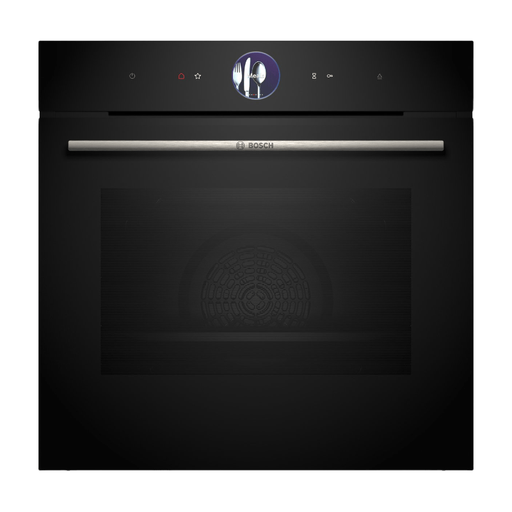 No image available
A built-in model to consider if your recipe needs top and bottom heat.
The product information lists a capacity of 71 l, 21 heating functions and top and bottom heat. Check that the housing space and internal dimensions suit your kitchen and tart tin.
 No image available
A built-in model to consider if you want top and bottom heat for your recipe.
The product information lists a capacity of 66 l, five heating methods and 3D Hotair. Check the housing dimensions and whether your tart tin will fit separately.
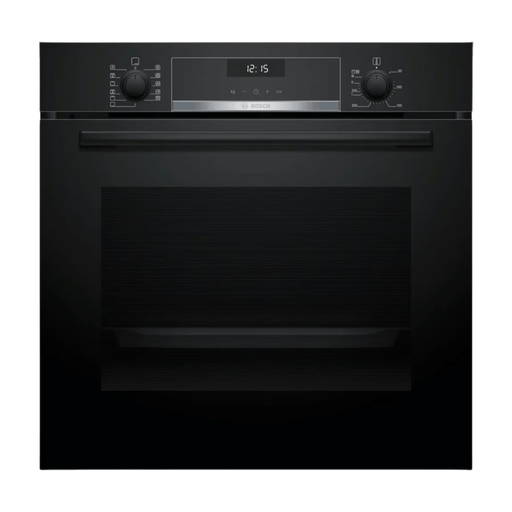 No image available
A built-in model to compare if you’re looking for top and bottom heat and a separate bottom heat setting.
The product information lists a capacity of 71 l, 3D Hotair and top and bottom heat. The stated capacity doesn’t tell you whether your tin will fit; also check the installation dimensions.
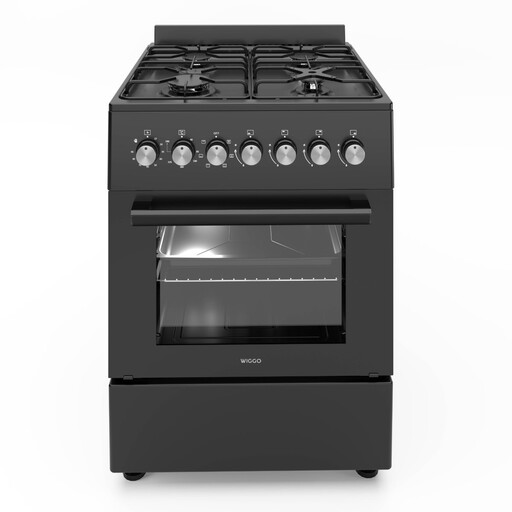 No image available
A freestanding model to consider if you don’t have a built-in housing space and want a gas cooker with an oven.
The product information lists an oven capacity of 66 l, six shelf positions and top and bottom heat. Professional installation and a gas connection are specified for this cooker; check the requirements and the space available.
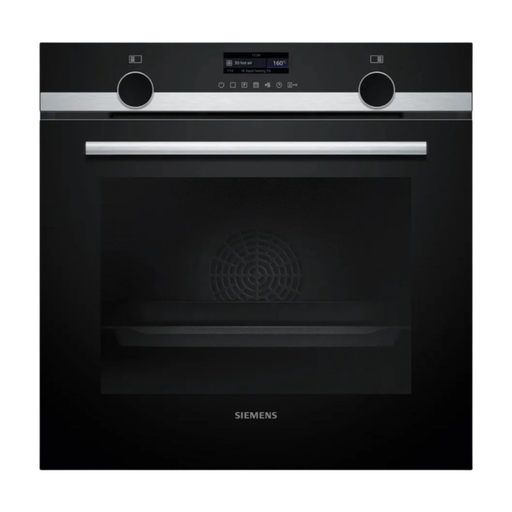 No image available
An oven to consider if you need top and bottom heat and several shelf positions.
The product information lists a capacity of 71 l, five shelf positions and top and bottom heat. Check the installation dimensions and whether the internal space will fit your tin.
Follow the instructions for your own recipe. The Tante Fanny puff pastry recipe we looked at says to preheat the oven to 200 °C using top and bottom heat, then bake the tart on the lowest shelf for around 35–40 minutes. That setting won’t necessarily suit every type of pastry or filling.
You can’t tell from the capacity in litres alone. Measure your tin and compare its dimensions with the internal measurements and available shelf space of the exact model. The recipe we looked at uses a tin of around 30 cm.
Follow the manual for the model you choose. The manual for the Inventum OV607B specifies 10 cm of clear space all around. The Dutch Fire Service advises allowing heat from appliances to escape and, where possible, plugging high-energy appliances directly into a socket rather than using an extension lead or cable reel. This isn’t a general statutory clearance distance for all ovens.
The cost of baking each tart depends partly on the energy use of the model you choose and your electricity tariff. Where relevant, compare energy use in kWh per cycle using the same oven setting. According to the Dutch government, there is no fixed statutory two-year warranty period in the Netherlands. If a product is faulty, contact the seller.
No. Don’t assume the oven rules mentioned apply to every appliance. The European Commission gives small ovens and appliances with microwave heating as examples of products outside the scope of those rules. First check which product category applies before judging whether an oven energy label is missing.