What should you consider when choosing?
Measure your tart tin and compare it with the oven’s internal dimensions. The Dutch Consumers’ Association identifies conventional heating as a suitable setting for tarts and also advises checking the usable space.
| What to consider |
What to look for |
Who is this important for? |
| Tart base and oven settings |
Check whether the model has conventional heating or a separate bottom-heat setting, and see which shelf positions are available. |
If I want the oven setting to match my recipe, I focus particularly on heat from below. Around 40% of consumers give the settings for baking the tart base their highest priority. |
| Space for dishes |
Compare the internal dimensions and usable shelf positions with your tart tin and the other dishes you want to cook. |
If I want to cook more than one dish in the oven for a meal, I look at the usable space and shelf positions. Around 30% of consumers prioritise space for the tart and other dishes. |
| Positioning and connection |
For a built-in oven, check the housing unit dimensions and connection. For any installation, follow the model’s ventilation requirements. |
If the space available in my kitchen determines which type of oven I can install, I first check the housing unit or available space and the connection. Around 20% of consumers consider positioning and connection their main priorities. |
| Combining baking and reheating |
For a combination model, check that it has the oven settings you need, including bottom heat if your recipe calls for it. |
If I also need a microwave, I compare the functions of the specific combination model with my baking requirements. Around 10% of consumers give combining baking and reheating their highest priority. |
Ovens at Joybuy
This selection includes freestanding ovens and a built-in oven for anyone who wants to bake a tart while taking the space available in their kitchen into account.
 No image available
HAUSWIRT C40 Smart convection oven, 35 L
A freestanding option to consider if you’re looking for an oven for baking and cooking several dishes.
The product title lists a 35 L capacity, a four-level baking rack and a built-in thermometer. Check that your tart tin fits on the rack.
View at Joybuy
 No image available
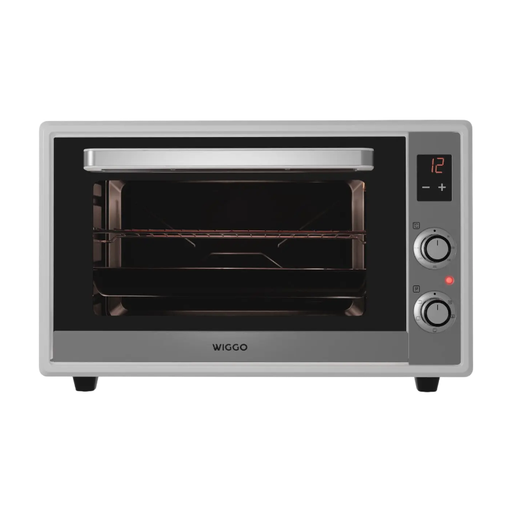
Wiggo WMO-E657(X) midi oven, 65 L
A freestanding model to compare if you’re looking for an oven for entertaining.
The product title lists a 65 L capacity and 2000 W. Check that your tart tin fits and whether the optional turbo fan is included with this version.
View at Joybuy
 No image available
Bosch HBG536EB4 oven, 71 L
A built-in model to consider if you want to cook several oven dishes for a meal.
The product title lists a 71 L capacity and 3D Hotair. Check the housing unit dimensions, connection and ventilation requirements for your kitchen.
View at Joybuy
 No image available
Wiggo WMO-E353(X) oven, 35 L
A freestanding option to compare if heat from below is important to you when baking.
The product title lists a 35 L capacity and 1800 W. Check the space around the appliance and whether your tart tin fits at a usable height.
View at Joybuy
 No image available
OIMIS Smart air fryer oven, 30 L
An oven combination to compare if you’re looking for other cooking methods as well as baking.
The product title lists a 30 L capacity. Check which functions and accessories are included with this version, and follow the safety instructions for positioning.
View at Joybuy
Frequently asked questions
Which setting should you use for a mushroom tart?
Start by following the setting specified in your recipe; the Dutch Consumers’ Association recommends conventional heating for tarts. For fan cooking, the Dutch Consumers’ Association suggests using a temperature around 20 °C lower than for conventional heating as a general starting point. Check the result as it bakes, as this difference isn’t guaranteed to work for every oven or recipe.
How can you prevent a soggy tart base?
Blind baking is a technique mentioned by Heel Holland Bakt to help prevent a soggy quiche base. Check that it’s suitable for your pastry and recipe; it isn’t an oven function and doesn’t guarantee a particular baking result.
What should you consider when positioning and connecting an oven?
For a built-in oven, compare the housing unit dimensions and the connection requirements for the exact model with your kitchen. Whether built in or freestanding, make sure there is the ventilation specified in the manual; the Netherlands Fire Service warns that heat from appliances such as ovens needs to escape. If you’re unsure about the connection, have it checked before using the appliance.
Can you compare ovens’ energy use using the energy label?
For domestic ovens covered by EU labelling rules, the label includes information such as capacity and energy use per standard cycle in conventional and fan settings. The European Commission lists exceptions to the scope of the rules, including small ovens and appliances with microwave heating. So don’t assume that every freestanding or combination appliance has a comparable oven energy label.
Are you always entitled to exactly two years’ legal guarantee on an oven in the Netherlands?
No. According to the Dutch government, the Netherlands has no fixed statutory guarantee period; you’re entitled to a product that works properly for as long as you could reasonably expect. If a product is faulty, contact the retailer. Any manufacturer’s guarantee is in addition to this.


