Which type of oven is right for you?

If you regularly bake savoury tarts

Look for suitable oven settings and check that your tart tin will fit in the usable space. The Consumentenbond recommends checking the internal dimensions and taking your largest oven dish into account when choosing.

If you don’t have a built-in recess

A freestanding oven could be the answer if you have enough worktop space. Check where you’ll put it, its internal dimensions and the model’s installation instructions.

If you mainly want to reheat food and bake occasionally

A combination microwave can handle both jobs. Before baking a tart, check that the exact model has the oven setting you need and enough room for your tin.

What should you consider when choosing?

Built-in oven

Choose this option if: you have a suitable recess and regularly bake tarts.

Consider: the built-in dimensions need to be right; the capacity in litres won’t tell you exactly whether your tin will fit.

Freestanding oven

Choose this option if: you don’t have a built-in recess and have enough suitable worktop space.

Consider: check the space around the appliance and whether your tin will fit inside the oven.

Combination microwave

Choose this option if: you’ll use it for reheating as well as occasional baking.

Consider: according to the Consumentenbond, combination microwaves often lack bottom heat and multiple shelf positions. Check the features of the exact model.

What to consider What should you check? Who is this important for?
Oven settings and baking control Check for top and bottom heat, fan cooking and the oven instructions in your recipe. The Voedingscentrum generally recommends a lower temperature for fan cooking than for conventional heat. When I bake a savoury tart, I want to follow the recipe setting and position the tin properly; around 36% of consumers put baking control first.
Positioning Measure the built-in recess or available worktop space and compare it with the model’s dimensions and installation instructions. Without a suitable recess, I’m looking for a freestanding model that will fit safely in the space available; around 29% of consumers put positioning first.
Tin size and energy consumption Measure your tin and the usable internal space. For ovens covered by the energy label, compare consumption per cycle on a like-for-like basis. I don’t want to choose an oven that’s bigger than I need, but my tart tin still has to fit; around 21% of consumers put size and energy consumption first.
Combining reheating and baking Check the oven settings, bottom heat and the space available for your tart tin in the exact model. If I want one appliance for reheating and occasional baking, I’ll check that its baking function suits my recipe; around 14% of consumers put combined use first.

Common buying mistakes

  • Assuming oven capacity tells you whether your tart tin will fit

    The stated capacity doesn’t guarantee that a wide tin will fit on the shelf at the height you want. That’s why the Consumentenbond recommends checking the internal dimensions and measuring your largest oven dish.

    Measure your tin and compare it with the usable oven space and shelf positions before choosing a model.

  • Assuming every combination microwave has bottom heat

    The available oven settings and shelf positions can limit how you position and bake a savoury tart.

    Check the features of the exact model if baking is important to you.

  • Comparing energy labels without checking what they apply to

    The European Commission lists exceptions to EU rules on oven labels, including small, portable and microwave ovens. So a missing label doesn’t mean the same thing for every type of appliance.

    Only compare consumption for appliances and settings where the figures are available on the same basis.

Oven brands to consider

Bosch

The Bosch HBA534BB3 is a 60 × 60 cm built-in oven with settings including top and bottom heat, bottom heat and 3D fan cooking. Bosch lists this model as having a capacity of 71 litres.

  • These oven settings may be useful if you’re following a recipe that uses conventional heat.
  • The recess and the space for your tin need to be suitable. These specifications come from Bosch and aren’t an independent assessment of baking performance.

Inventum

Inventum lists the freestanding OV457B as having a net capacity of 45 litres, with top and bottom heat and fan cooking.

  • A freestanding model could suit you if you don’t want to use a built-in recess.
  • Check the internal and external dimensions and how to position it safely in the manual. The details come from the manufacturer and aren’t from an independent performance test.

AEG

AEG lists the built-in oven OU5AB20WCM as having a net capacity of 65 litres, conventional heat, bottom heat and multi-fan cooking. The stated built-in dimensions are 590 × 560 × 550 mm, and the manufacturer lists it as energy class A.

  • The published recess dimensions give you specific measurements to compare with your kitchen installation plan.
  • The manufacturer’s claim about even cooking isn’t an independent comparison with other ovens.

Whirlpool

Whirlpool describes the built-in combination microwave WMW57DHME as a microwave with fan cooking and a Crisp function; the stated capacity is 40 litres.

  • This combination could suit you if you want a microwave as well as an oven.
  • Check your tin size and the available oven settings. A claim about crispy quiches doesn’t prove that it will bake as well as a conventional oven.

Ovens at Joybuy

This selection includes freestanding gas and electric ovens, as well as built-in ovens. Before buying, check the CE marking and EU declaration of conformity for the exact variant. A gas oven must be connected and installed by a qualified professional, and the kitchen must be well ventilated.
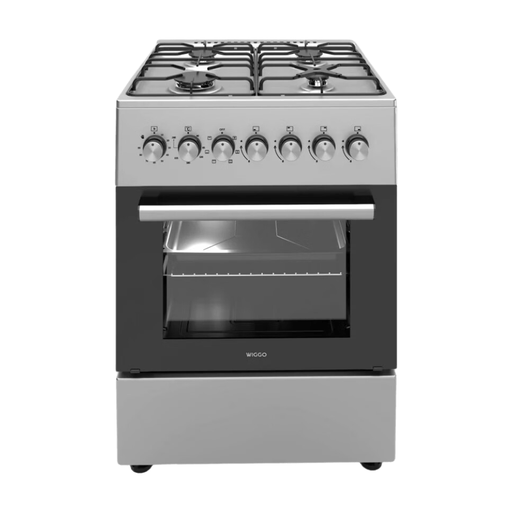
Wiggo WO-E606A(XX) freestanding gas oven

Wiggo WO-E606A(XX) freestanding gas oven

A freestanding gas oven to consider if you have a suitable space and want to grill as well as bake.

Capacity: 66 litres. The product description lists six cooking programmes, a timer and a grill function.

Have a qualified professional connect and install the gas oven, and make sure your kitchen is well ventilated.

View at Joybuy

Wiggo WMO-E657(B) freestanding oven

Wiggo WMO-E657(B) freestanding oven

A freestanding model to consider if you don’t have a built-in recess and have room for an oven on your worktop.

Capacity: 65 litres; power: 2000 W. The product description lists a turbo fan, six cooking functions and a 90-minute timer.

Keep the ventilation openings clear while the oven is in use.

View at Joybuy

Bosch HBA514BB3 built-in oven

Bosch HBA514BB3 built-in oven

A built-in model to consider if your kitchen has a suitable recess and you’re looking for an oven with 3D fan cooking.

Capacity: 71 litres. The product description lists baking on up to three levels and a cleaning assistant.

Check the built-in dimensions and follow the installation diagram for the exact variant.

View at Joybuy
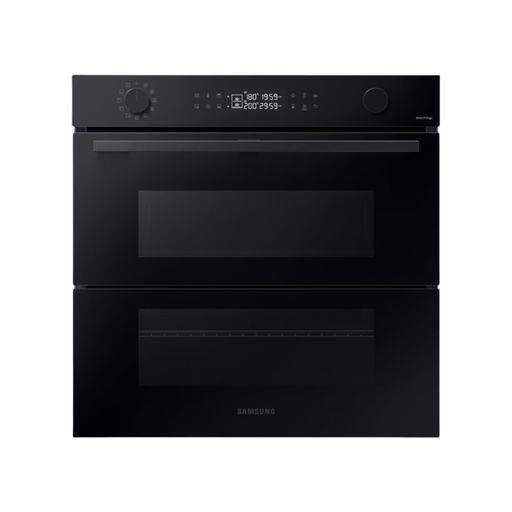
Samsung NV7B4540VAK/U1 built-in oven

Samsung NV7B4540VAK/U1 built-in oven

A built-in model to consider if you want to use the oven zones separately; check that the recess meets the installation instructions.

Capacity: 76 litres. The product description lists independently operating upper and lower zones, pyrolytic cleaning and Dual Cook technology.

View at Joybuy
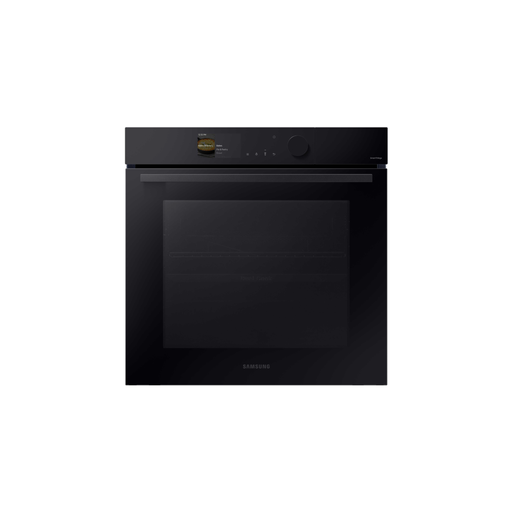
Samsung NV7B6675CCK/U1 Bespoke built-in oven

Samsung NV7B6675CCK/U1 Bespoke built-in oven

A built-in model to compare if you’re looking for an oven with independently operating upper and lower sections.

Capacity: 76 litres. The product name lists pyrolytic cleaning and Smart Control; the product description also mentions catalytic cleaning.

Check the installation instructions and which features are included with this variant.

View at Joybuy

Frequently asked questions

Should you preheat the oven for a mushroom and leek tart?

Follow your recipe and the instructions for your oven. For its leek tart recipe, the Voedingscentrum preheats the oven to 200 °C and gives a baking time of 20–30 minutes; this isn’t a set baking time for every mushroom tart variation. For fan cooking, the Voedingscentrum generally recommends a temperature around 10% lower than for conventional heat.

How do you know if the oven and tart tin will fit in your kitchen?

For a built-in oven, first measure the recess and compare it with the installation diagram for the exact variant. Also measure your tart tin and the usable oven space: the Consumentenbond points out that the internal space may be smaller than the stated capacity suggests. For a freestanding model, follow the positioning and ventilation instructions.

How do you compare ovens’ electricity consumption?

For ovens covered by the EU energy label, compare consumption in kWh per cycle on the same basis. The European Commission lists exceptions, including microwave ovens and small or portable ovens. So first check whether the labelling rules apply to the type of oven, then compare like-for-like figures.

Who can help if an oven breaks down too soon in the Netherlands?

According to ACM ConsuWijzer, the seller is responsible for the statutory guarantee if a product used normally doesn’t do what you could reasonably expect it to. The solution may be a repair, replacement or refund. A manufacturer’s guarantee doesn’t replace this statutory right.

What safety information should you check for an electric oven?

Check that the exact variant has the required CE marking and EU declaration of conformity. According to Dutch government information, after the conformity assessment the manufacturer must affix the CE marking and draw up an EU declaration of conformity. This requirement alone doesn’t tell you the status of a specific model.
