
Home baker with limited worktop space
Wants to bake a whole lemon cake in a cake tin and needs to make sure the tin, the appliance’s external dimensions and the required clearance all work together.


Choose an oven that fits your cake tin, with enough room for positioning and ventilation, and a separate baking mode that suits your recipe. A freestanding oven may be the obvious choice if baking is your priority; a combination microwave is an option if you also want to reheat food, while a built-in model will only work if you have a suitable housing unit and installation. Capacity in litres alone won’t tell you whether your tin will fit.
Wants to bake a whole lemon cake in a cake tin and needs to make sure the tin, the appliance’s external dimensions and the required clearance all work together.
Wants one appliance for baking cakes and reheating meals, so checks whether it has a separate, usable oven function.
Wants to keep the worktop clear and can choose a compact built-in model if the housing unit and installation requirements suit the kitchen.
Choose this when: baking cakes is your priority and you don’t have a suitable built-in space.
Consider: the appliance takes up worktop space, and its capacity in litres doesn’t prove that your cake tin will fit.
Choose this when: you want one appliance for baking and reheating; the Dutch Consumers' Association describes freestanding combination microwaves as appliances with microwave and oven functions.
Consider: check that your cake tin fits in oven mode and that this mode can be used separately.
Choose this when: you have a suitable housing unit and want to keep the worktop clear.
Consider: the housing unit, connection and ventilation must meet the installation requirements; the Dutch Consumers' Association and the Netherlands Fire Service highlight the need for ventilation space.
Good Food’s lemon drizzle recipe specifies a particular cake tin and baking method; compare these with the oven space and available settings. The Netherlands Fire Service stresses that heat from ovens and microwaves needs somewhere to escape.
| What to consider | What should you check? | Who is this important for? |
|---|---|---|
| Fit and positioning | Measure your cake tin and compare it with the usable oven space. Also check the external dimensions and required ventilation clearance. | I first want to know whether my tin will fit and whether the oven can go in the available space. Around 36% of consumers put fit first. |
| Separate baking mode | Check whether conventional heat or fan-assisted cooking is available and whether the temperature suits your recipe. | If I mainly bake cakes, I want to be able to select the method specified in the recipe. Around 29% of consumers put a suitable baking mode first. |
| Baking and reheating | Check whether the oven and microwave functions can be used separately and whether your tin fits in the oven space. | I don’t want to use two appliances for baking and reheating, as long as my tin fits in oven mode. This combination is the top priority for around 21% of consumers. |
| Built-in installation and connection | Compare the required housing-unit dimensions, connection and ventilation clearance with your kitchen and the installation instructions. | If I want to keep my worktop clear, a built-in model needs to fit the existing housing unit. Around 14% of consumers prioritise this built-in option. |
Capacity in litres doesn’t tell you whether the tin will fit in the right place in the oven. The example recipe uses a cake tin measuring approximately 14 × 24 cm; usable internal space varies between models.
Measure your own tin, including any protruding edges, and compare it with the usable oven space and the model’s instructions.
An oven recipe calls for a specific baking method; on a combination microwave, separate oven functions and combined settings are not necessarily the same thing.
Before buying, check which settings are available on their own, then follow the recipe and the manual when baking.
Even in a small kitchen, heat from an oven or microwave needs somewhere to escape, as the Netherlands Fire Service advises.
Compare the available space with the positioning or built-in installation requirements for your chosen model.
Any additional manufacturer’s warranty is separate from your statutory rights. According to the Dutch government, the retailer must provide a solution if a product is faulty.
Keep your proof of purchase and contact the retailer if there’s a problem.
The examples below show different sizes and features; a brand mention on its own says nothing about whether your cake tin will fit or whether a product is available.
Freestanding baking ovens; the OV207B is an example for a small kitchen.
Freestanding mini ovens; the OV-3620SU is an example with conventional top and bottom heat.
Baking and toast ovens in various sizes; the TO 2058 is a larger freestanding example.
Whirlpool Netherlands lists freestanding combination microwaves with convection.
Compact built-in ovens with a microwave function; the EVL6E46GZ is an example for a suitable housing unit.
This selection includes freestanding convection ovens and combination microwaves, as well as built-in combination ovens; check each model individually for cake-tin fit, baking mode and the required positioning clearance.
 No image available
The product name describes a convection oven; check the dimensions of your cake tin and the available space before choosing a model.
The product information lists a capacity of 35 litres, a rack with four shelf positions and a smart thermometer. The product name also mentions an LED display.
 No image available
This combination microwave is an option if you want microwave and convection functions in one appliance; check that your tin fits in the oven space.
The product information lists a capacity of 25 litres, a 270 mm turntable, a baking tray included and convection with a temperature range of 110–210 °C.
 No image available
The product information lists convection, grill and microwave functions; check the manual and ventilation clearance for your intended installation location.
Listed specifications include a capacity of 20 litres, a 270 mm turntable, seven automatic programmes and dimensions of 34,5 × 44,2 × 26 cm.
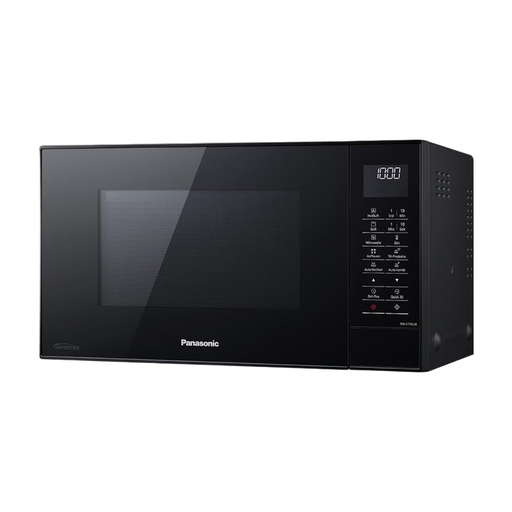 No image available
The product information describes a combination microwave with fan-assisted cooking; check which setting you need for your cake and whether your tin will fit.
Listed specifications include a capacity of 27 litres, a 34 cm turntable, a maximum temperature of 220 °C and microwave power of 1000 W. Only use metal items if the manual expressly allows them for the selected setting.
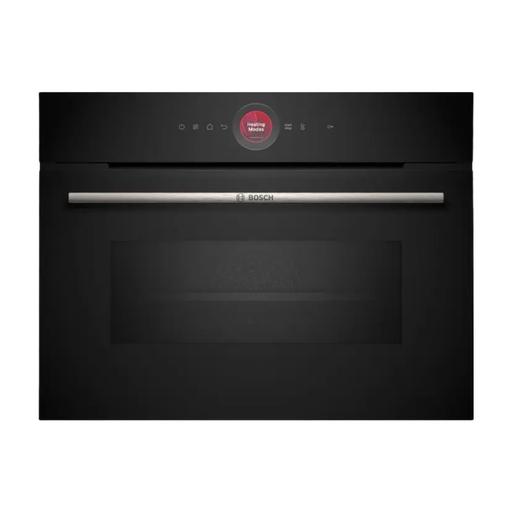 No image available
This built-in model will only fit if the housing unit and installation requirements are compatible with your kitchen.
The product information lists a capacity of 45 litres, microwave power of 900 W, a maximum temperature of 230 °C and housing-unit dimensions of 45,5 × 56 × 55 cm.
Follow the setting and temperature in the recipe you’re using. Good Food’s lemon drizzle recipe from December 2007 uses a cake tin measuring approximately 14 × 24 cm and specifies 180 °C conventional or 160 °C fan, with a baking time of 45–50 minutes; check whether it’s done with a skewer. These instructions won’t necessarily apply to a different recipe or tin.
Check the manual for the specific oven setting and tin. A separate oven setting and a setting with the microwave active are not interchangeable; the information consulted does not give general approval for using metal with every combination setting.
Follow the required ventilation clearance: the Netherlands Fire Service points out that heat from ovens and microwaves needs somewhere to escape. Clean the appliance according to the manual; for the OV207B, Inventum recommends using a soft, damp cloth with a little washing-up liquid on the inside.
In the Netherlands, the retailer must provide a solution if a product is faulty, according to the Dutch government. There is no fixed two-year statutory warranty period in the Netherlands for every product.
Not necessarily: the European Commission excludes small ovens and appliances that use microwave heating from the rules described for domestic ovens. Check which information applies to each product category; don’t use the absence of an oven energy label to infer the appliance’s electricity consumption.