What should you consider when choosing?
If you usually bake one cake, start by checking whether your tin fits and which oven setting you need. Then decide between a freestanding and built-in model.
Freestanding oven
A good fit for: anyone without suitable built-in housing or who usually bakes one cake at a time, provided the tin fits in the oven.
Bear in mind: the space needed around the appliance and its usable internal dimensions; a smaller model won’t necessarily fit a large tin.
Built-in oven
A good fit for: anyone with suitable housing who wants to bake on multiple levels more often, as well as making one cake at a time.
Bear in mind: the housing and installation details. Check claims about baking on multiple levels for each model; they don’t automatically guarantee an even result.
| What to consider |
What should you check? |
Who should pay particular attention? |
| Oven setting and baking results |
Check the settings specified in your recipe and, ideally, look for independent baking tests of the exact model. |
I want my lemon cake to bake according to the recipe, so I’m looking for the right setting and baking test results. Around 36% of consumers put baking results first. |
| Space for your tin and other baking |
Measure your baking tin and check the usable internal dimensions, shelf and shelf positions. |
For a family gathering, I need room for my cake tin and might want to bake more than one thing at a time. Around 29% of consumers give capacity top priority. |
| Positioning and connection |
For a built-in oven, measure the housing space and check the installation details; for a freestanding model, follow the positioning instructions for that model. |
I need to choose based on the available housing space or worktop area. Around 21% of consumers give positioning the greatest weight. |
| Energy use and cleaning |
Compare kWh per cycle only when the figures are measured on the same basis, and check how the exact model should be cleaned. |
I want to take energy use and cleaning into account when choosing an oven for regular use. Around 14% of consumers prioritise these practical considerations. |
Joybuy products to help you choose
This selection features built-in ovens for anyone with suitable housing who’s looking for an oven to bake cakes and possibly other things too.
 No image available
Bosch HBA514BB3 built-in oven, 71 l, 3D Hot Air
For anyone looking for a built-in oven; the product name states a capacity of 71 l and 3D Hot Air. Check that the housing space and cake tin will fit.
View at Joybuy
 No image available
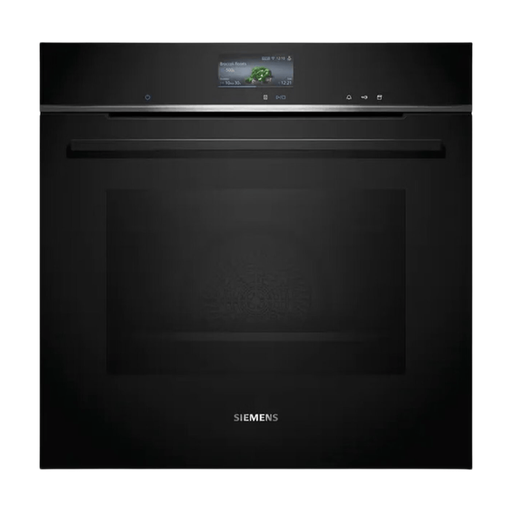
Siemens HS736G3B1 built-in oven, 60 l, 4D hot air
For anyone looking for a built-in oven with 4D hot air; the product name states a capacity of 60 l. Check the housing dimensions and whether your tin will fit in the oven.
View at Joybuy
 No image available
Bosch HBG536EB4 built-in oven, 71 l, 3D Hot Air
For anyone considering a built-in oven with 3D Hot Air; the product name states a capacity of 71 l. Check the housing space and the usable room for your cake tin.
View at Joybuy
 No image available
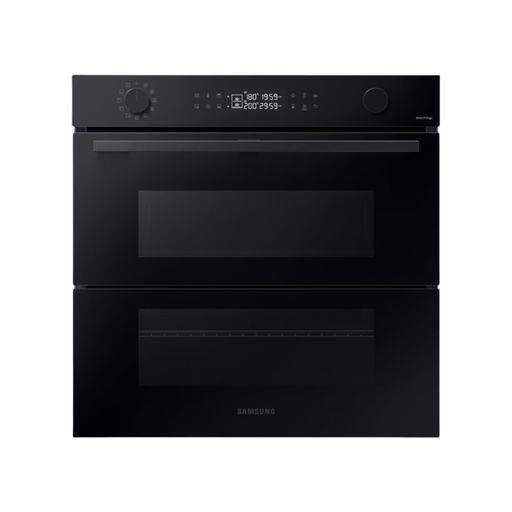
Samsung NV7B4540VAK/U1 built-in oven, 76 l, Dual Cook
For anyone considering a built-in oven with Dual Cook; the product name states a capacity of 76 l. Check that the housing space and cake tin are suitable for this model.
View at Joybuy
 No image available
Bosch HBF133BR0 built-in oven, 66 l, 5 programmes
For anyone looking for a built-in oven with five cooking programmes; the product name states a capacity of 66 l. Check the housing dimensions and the usable room for your cake tin.
View at Joybuy
Frequently asked questions
Do I always need to use the fan setting for lemon cake?
No. Follow the setting and temperature in your recipe, as well as your oven manual. Koopmans’ recipe for lemon cake with icing gives settings for both a conventional electric oven and a fan oven; these values won’t automatically apply to every cake.
How do I know whether my cake tin will fit in the oven?
Compare the dimensions of your tin with the usable internal dimensions, rather than relying on the capacity in litres alone. Also check that it will fit on the shelf with enough space above it; the Consumentenbond recommends measuring the largest oven dish you use.
What should I check before positioning and using the oven for the first time?
For a built-in oven, check the housing and installation details for the exact model. For a freestanding oven, read the positioning and safety instructions; the Inventum manual, for example, says to use oven gloves when putting food in or taking it out.
Does every freestanding mini oven need an EU energy label?
No. According to the European Commission, small and portable ovens are outside the scope of the specific EU energy labelling rules for household ovens. So first check which type of product you’re considering before assessing whether the lack of such a label matters.
Do I have a cooling-off period when I buy online?
When you buy from a business at a distance, you generally have 14 days to change your mind, according to the Rijksoverheid. Whether this applies to your purchase depends on the specific circumstances and any exceptions.


