
Weekend baker with one cake tin
You want to follow the recipe and fit your cake tin on a usable shelf position. The Consumers’ Association recommends checking the internal dimensions and measuring your tin.


Start with the oven setting in your recipe and check whether your cake tin fits on a usable shelf position; you don’t automatically need a larger oven for one cake. A freestanding oven needs a suitable, well-ventilated spot, while a built-in oven will only fit if the housing space and connection are suitable. If you use a fan setting, adjust the recipe temperature.
You want to follow the recipe and fit your cake tin on a usable shelf position. The Consumers’ Association recommends checking the internal dimensions and measuring your tin.
You’re looking for a freestanding oven and should also check that there’s enough room on your worktop to position it safely. The Netherlands Fire Service stresses that heat from appliances needs to be able to escape.
You may also want to cook other dishes, and if you’re considering a built-in model, you’ll need to compare its housing dimensions and connection requirements with those of your kitchen. The Consumers’ Association recommends checking the usable internal space.
Best for: baking one cake without having an oven built in, as long as your tin fits inside.
Bear in mind: the oven takes up worktop space, and a small capacity doesn’t necessarily mean your tin will fit.
Best for: anyone who wants to cook larger dishes or several dishes more often, as well as their weekend cake.
Bear in mind: compare the internal dimensions and the worktop space required; extra capacity isn’t automatically useful for one cake.
Best for: a kitchen with a suitable housing space and connection, for example if you also use the oven to cook other dishes.
Bear in mind: housing and installation dimensions vary by model and need to suit your kitchen.
Best for: anyone who also needs a microwave function and has checked the oven functions of the specific model.
Bear in mind: some models don’t have bottom heat or have fewer shelf positions, according to the Consumers’ Association.
| What to consider | What to look for when buying | Who is this important for? |
|---|---|---|
| Oven setting | Check whether the specific model has top and bottom heat. For fan ovens, the Netherlands Nutrition Centre recommends setting the temperature about 10% lower than for a conventional oven. | If I want to use the oven setting in my recipe, I check the model’s functions. Around 36% of consumers prioritise having the right oven setting. |
| Space for the cake tin | Measure your tin and compare it with the internal dimensions and shelf position; capacity in litres alone won’t tell you whether it will fit. | I want to be sure my own cake tin will fit in a usable position before choosing an oven. Around 29% of consumers prioritise a suitable fit for their tin. |
| Positioning | Measure the available worktop space or housing and check the model’s installation instructions and connection requirements. | If the oven needs to fit in my kitchen, I consider the space, ventilation clearance or built-in dimensions. An estimated 21% of consumers prioritise positioning and connection requirements. |
| Other uses and costs | Decide what else you want to cook. Where applicable, compare the energy label and consumption per standard cycle. | I want to use the oven for more than just my weekend cake, so I consider relevant functions and energy consumption. Around 14% of consumers prioritise these additional uses. |
The stated capacity doesn’t tell you whether your cake tin will fit on a usable shelf position. The Consumers’ Association recommends checking the internal dimensions.
Measure your cake tin and compare its dimensions with the model’s internal space and shelf position.
According to the Consumers’ Association, some combination microwaves don’t have bottom heat and may have fewer shelf positions.
Check the functions of the specific appliance and compare them with the oven setting required by your recipe.
An oven needs to be able to release heat. The Netherlands Fire Service points out that heat from electrical appliances, including ovens, needs to be able to escape.
Read the positioning instructions for your chosen model and measure the space before setting up the oven.
ACM ConsuWijzer distinguishes between a commercial guarantee and your right to a product that is fit for purpose.
Keep your proof of purchase. If there’s a fault, check both the manufacturer’s guarantee terms and your rights as a consumer.
Freestanding ovens, including models with top and bottom heat.
Freestanding ovens in a range of sizes, from compact to larger models.
Compact baking and toast ovens, including the TO 2067.
Built-in ovens, including the HBA534BS0 for a suitable oven housing.
Built-in ovens, including the OM670Ti for a 60 cm housing space.
This selection includes built-in and freestanding ovens for anyone who wants to consider both the oven setting and the available space when baking.
 No image available
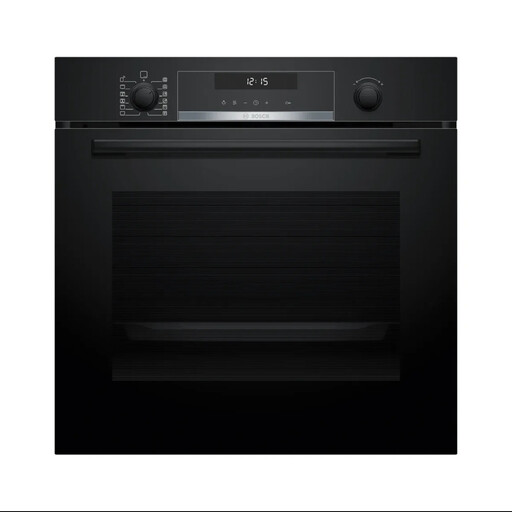
A built-in oven to consider if your recipe calls for top and bottom heat.
Top and bottom heat and a fan function; temperature adjustable from 50 °C to 275 °C.
 No image available
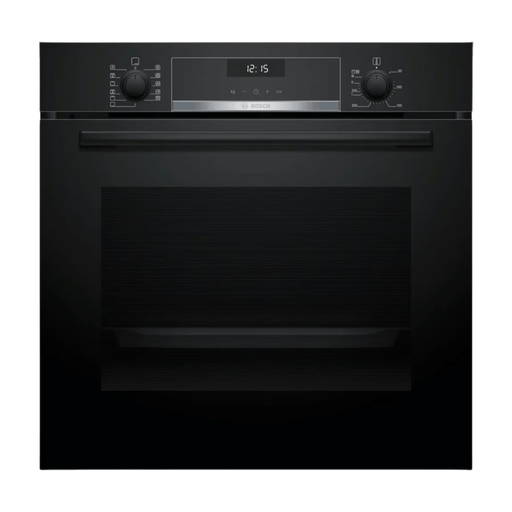
A built-in option to compare if you want to bake on several levels as well as use top and bottom heat.
Top and bottom heat and 3D fan cooking; the description says you can bake on up to three levels and gives a temperature range of 30 °C to 275 °C.
 No image available
A built-in oven to compare if you’re looking for a particular oven setting and want to use it for other dishes too.
Top and bottom heat and 3D fan cooking; the description lists a 71-litre capacity and baking on up to three levels.
 No image available
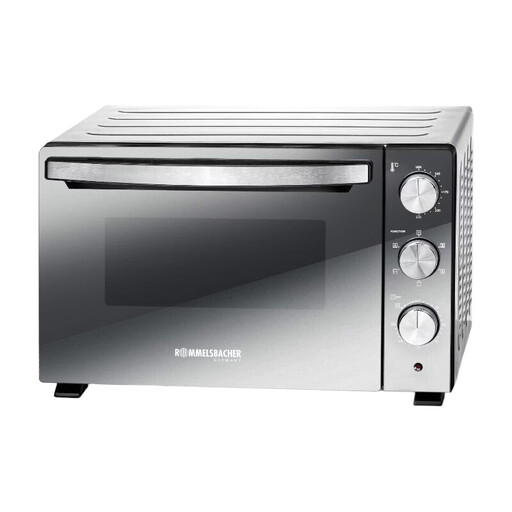
A freestanding option to compare if you want top and bottom heat and have a suitable place to position the oven.
35 litres, 1800 W and four shelf positions; the temperature can be set up to 250 °C. The instruction manual specifies at least 10 cm of clearance on all sides and 30 cm above; don’t use the oven in an enclosed cupboard.
 No image available
A baking and grilling oven to compare if you’re looking for a freestanding model with the oven setting your recipe calls for.
30 litres, a fan function and top and bottom heat; the description lists three shelf levels and manual cleaning.
Follow the recipe and the instructions for your chosen oven. The Netherlands Nutrition Centre says preheating isn’t always necessary, but recommends it when the recipe calls for it. Check whether the cake is ready towards the end of the stated baking time.
Not without adjusting it. The Netherlands Nutrition Centre recommends setting the temperature about 10% lower for a fan oven than for a conventional oven, giving 190 °C compared with around 170 °C as an example. Also check your recipe and the oven manual.
Follow the instructions for the specific model and make sure heat can escape. For a built-in oven, compare the available housing space and connection with the installation dimensions; manufacturers publish these for each model. This isn’t a general legal minimum clearance for all ovens.
In the Netherlands, you have the right to a product that is fit for purpose, in addition to any manufacturer’s guarantee. ACM ConsuWijzer explains that the seller must resolve the issue if the product breaks sooner than you could reasonably expect during normal use, for example by repairing or replacing it. The statutory guarantee doesn’t have a fixed term of exactly two years.
Not every small oven is necessarily covered by the same rules. The European Commission gives small ovens as an example of products outside the scope of energy-labelling rules for domestic ovens. Check which product category and rules apply to the specific appliance; where an oven energy label is required, it shows consumption per standard cycle.