Which oven is right for you?

Baking one cake without a built-in space

You want to bake a cake without making changes to your kitchen, so your main concern is whether your cake tin will fit in a freestanding oven. The Consumers’ Association recommends comparing the internal dimensions with your own cake tin; Inventum lists conventional top and bottom heat and fan-assisted cooking for the OV457B.

Baking several cakes

You want to use more than one tin or baking tray for your gathering, so you compare the usable space, shelf positions and oven settings. The Consumers’ Association explains why baking results on multiple levels matter; check whether your tins will fit at the same time in each model.

Replacing a built-in oven

You already have a space for an oven and are comparing the housing dimensions, connection and installation requirements with the baking functions you want. The Consumers’ Association recommends checking the internal dimensions; AEG and Electrolux model specifications give examples of built-in dimensions and oven functions.

What should you look for when choosing?

Freestanding oven

Best for: anyone who doesn’t want to use a built-in space and has a suitable place for the appliance.

Bear in mind: the space needed around the oven and the instructions for positioning and connecting it.

Multifunction built-in oven

Best for: anyone with a suitable housing space who regularly wants to use several tins or baking trays.

Bear in mind: the housing dimensions and installation diagram; the stated capacity won’t tell you whether your cake tins will fit.

Combination microwave with oven function

Best for: anyone who also needs a microwave function and can find a specific model with suitable baking settings and enough room for their tins.

Bear in mind: oven functions vary by model; check for bottom heat and suitable shelf positions.

What to consider What to look for when buying Who is this important for?
An evenly baked cake Check whether the model has conventional top and bottom heat, and follow the recipe and manual for the setting, temperature and shelf position. I mainly want one cake to bake well according to the recipe, without making extra features a deciding factor. This is the top priority for around 31% of consumers.
Room for several cakes Measure your tins and compare them with the internal dimensions and permitted shelf positions; check the manual to see whether you can bake with them at the same time. If I want to bake several cakes for the gathering, I focus on the space and usable shelf positions. Around 25% of consumers prioritise this need.
A suitable spot in the kitchen For a built-in oven, measure the housing space and follow the installation diagram; for a freestanding model, check the positioning and connection instructions. I don’t want to buy an oven that won’t fit in the chosen spot, whether that’s a housing space or a worktop. Around 19% of consumers prioritise finding a suitable location.
Ease of use and additional work Compare the controls and cleaning method; check in advance what delivery and any installation include. I want to set the oven easily and know what maintenance and installation work are involved. Around 13% of consumers prioritise this.
More than just baking cakes Check whether it’s an oven with a microwave function or a microwave with an oven function; look specifically at bottom heat and shelf positions. If I need other functions as well as baking, I compare the exact model rather than relying on the product name alone. Around 12% of consumers prioritise versatility.

Common buying mistakes

  • Choosing based only on capacity in litres

    The stated oven capacity doesn’t tell you whether your cake tin will actually fit.

    Measure your tin and compare it with the internal space and shelf positions before ordering.

  • Assuming a combination microwave works like a conventional oven

    Some combination microwaves don’t have bottom heat or different shelf positions.

    If baking cakes is your priority, check the specific model’s oven settings and the space available for your tin.

  • Leaving installation and connection checks until after you buy

    An oven that looks like it will fit based on its dimensions may still require adjustments or extra installation work.

    Compare the installation diagram with the housing space and check in advance what delivery and any installation include.

  • Confusing the manufacturer’s guarantee with all your statutory rights

    According to ACM ConsuWijzer, statutory rights apply alongside a manufacturer’s or seller’s guarantee.

    Compare the terms of any additional cover with your statutory rights against the seller.

Brands to consider

Inventum

The freestanding OV457B is an example for anyone who doesn’t want a built-in oven and has enough space for it.

  • Inventum lists a capacity of 45 litres, fan-assisted cooking and conventional top and bottom heat for the OV457B.
  • Inventum says this model has six oven programmes and a timer, but no defrost function. Check that your cake tin will fit inside the oven.

AEG

The OS6AB50AK is an example of a built-in oven with conventional heat and fan-assisted cooking.

  • AEG lists a capacity of 71 litres and built-in dimensions of 590 × 560 × 550 mm for this model.
  • These dimensions describe the model, but don’t confirm whether your cake tin will fit or how your cake will bake. Check the housing space and internal dimensions.

Electrolux

The EOF6H46Z is an example of a built-in oven with conventional top and bottom heat and fan-assisted cooking.

  • Electrolux lists a capacity of 72 litres and baking on three levels.
  • These specifications don’t confirm that three cake tins of your size will fit at the same time or bake evenly.

Bosch

The HBG578EB7 is an example of a built-in model with multiple shelf positions and additional cleaning and control features.

  • Bosch lists 3D Hotair for baking on up to three levels, telescopic rails and pyrolytic cleaning for this model.
  • These are model specifications, not independent confirmation of a particular baking result for lemon cake.

Ovens at Joybuy

This selection of Joybuy products includes freestanding and built-in ovens. Compare the space for your tins, baking settings and positioning requirements with your kitchen and recipe.

Comfee electric built-in oven, 60 cm, 70 L

Comfee electric built-in oven, 60 cm, 70 L

A built-in model to compare if you want to use multiple shelf positions; check that the housing space and connection are suitable.

Capacity: 70 L. The product description lists 10 functions, including fan-assisted cooking, grill and pizza, plus a timer and AquaClean steam cleaning.

Joybuy

Wiggo WMO-E657(B) freestanding oven, 65 L

Wiggo WMO-E657(B), freestanding oven, 65 L

A freestanding model to consider if you don’t want to use a built-in space; follow the manual for positioning and ventilation.

Capacity: 65 L. Power: 2000 W. The product description lists a turbo fan and four shelf positions.

Joybuy
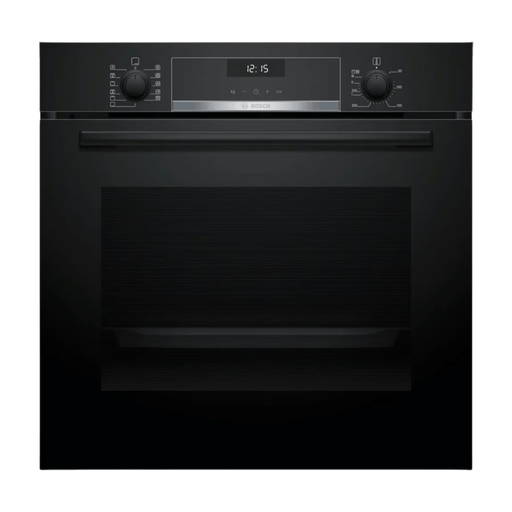
Bosch HBG537EB4 Serie 6 built-in oven, 60 cm, 71 L

Bosch HBG537EB4 Serie 6, built-in oven, 60 cm, 71 L

A built-in model to compare if you’re looking for conventional top and bottom heat and baking on multiple levels; check the housing space and oven manual.

Capacity: 71 L. The product description lists conventional top and bottom heat and 3D hot air for baking on up to three levels.

Joybuy
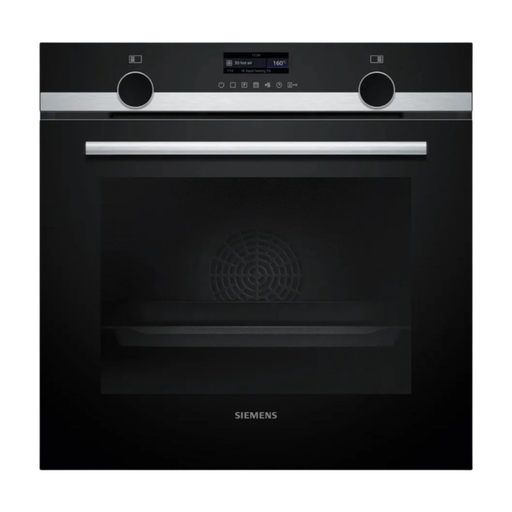
Siemens iQ500 HB579GBR3 oven, 71 L

Siemens iQ500 HB579GBR3, oven, 71 L

A model to compare if you want both conventional top and bottom heat and fan-assisted cooking for cakes; check the positioning requirements.

Capacity: 71 L. The product description lists conventional top and bottom heat and fan-assisted cooking.

Joybuy
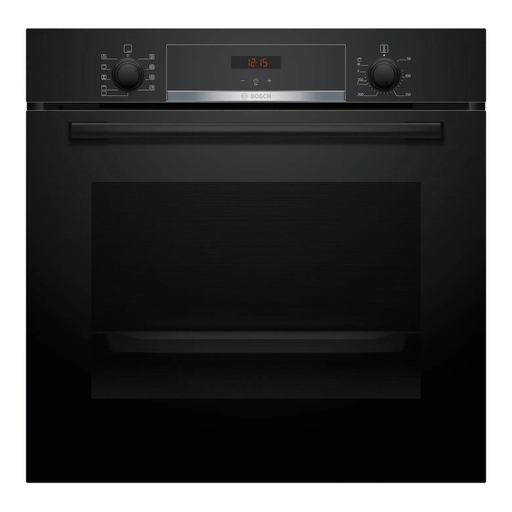
Bosch Serie 4 HBA534EB3 oven, 71 L

Bosch Serie 4 HBA534EB3, oven, 71 L

A model to compare if you’re looking for an oven with fan-assisted cooking and several programmes; check the housing space and the baking setting you need.

Capacity: 71 L. The product description lists fan-assisted cooking, seven oven programmes, a grill function and hydrolytic cleaning.

Joybuy

Frequently asked questions

Should you use conventional top and bottom heat or fan-assisted cooking for lemon cake?

According to the Consumers’ Association, conventional top and bottom heat is commonly used for cakes. Fan-assisted cooking may be useful when preparing several dishes on different shelves; follow your recipe and oven manual for the temperature and baking time.

How can you check whether your cake tin will fit in the oven?

Measure your tin and compare it with the internal dimensions and available shelf positions, rather than relying on the capacity in litres alone. For a built-in oven, also measure the housing space and check the installation diagram.

What should you check when installing and maintaining an oven?

For a freestanding oven, follow the manual for positioning and connection. For a built-in oven, check the housing space and connection, ask what any installation service includes and follow the instructions for the specific model when cleaning.

Are there any rules if you offer homemade cake at a neighbourhood coffee morning?

This depends, among other things, on whether the cake is being sold. According to the NVWA, rules on safely preparing, selling and storing food apply when food is sold to consumers at an event, including by private individuals. Businesses offering food must inform customers about any allergens present. So agree on the arrangements with the organiser, and don’t apply the rules on selling food to a cake offered voluntarily unless it is being sold.

Is a two-year manufacturer’s guarantee your only right if the oven breaks?

No. According to ACM ConsuWijzer, statutory rights apply alongside a manufacturer’s or seller’s guarantee: with normal use, the product must meet what you could reasonably expect from it. There is no single fixed end date that applies to every oven.
