
Cooking for a large neighbourhood meal
You need room for a large oven dish or several dishes. The Consumers' Association advises comparing your dish with the usable internal dimensions, so don’t look at the capacity in litres alone.


Start by checking how many portions you need and the outside dimensions of your oven dish. The Consumers' Association advises comparing the dish with the usable internal dimensions, as the capacity in litres doesn’t tell you whether it will fit. Choose a built-in oven if your housing unit and connection are suitable, or a freestanding oven if you don’t have a built-in space but do have enough room and ventilation. Compare the oven settings and, for energy use, the kWh per cycle for the same heating mode, as listed by the European Commission for domestic ovens.
You need room for a large oven dish or several dishes. The Consumers' Association advises comparing your dish with the usable internal dimensions, so don’t look at the capacity in litres alone.
You’re looking for a freestanding oven and also need to consider worktop space, ventilation and the electrical connection. The Fire Service stresses that heat from appliances, including ovens, must be able to escape.
You want to compare oven settings that suit this meal, as well as assess energy use per cycle on the same basis. The European Commission lists kWh per cycle for conventional cooking and, where applicable, fan cooking.
Suitable for: a suitable built-in space and a large dish or several dishes cooking at once.
Bear in mind: check the housing dimensions, internal dimensions and ventilation. Multiple shelf positions don’t automatically mean that one deep dish will cook more quickly.
Suitable for: a kitchen without a built-in space, but with enough room and a suitable connection.
Bear in mind: check the external dimensions and ventilation space. The stated capacity alone doesn’t tell you whether your dish will fit.
Suitable for: smaller dishes or a schedule that allows for several batches.
Bear in mind: measure your dish beforehand; limited internal space may mean you need to cook in extra batches.
Suitable for: anyone who needs a microwave as well as oven functions.
Bear in mind: the Consumers' Association points out that a combi microwave may have fewer oven settings or shelf positions. Check the details of the exact model.
| What to consider | What should you check? | Who is this important for? |
|---|---|---|
| Room for your dish | Measure your dish and compare its dimensions with the usable internal dimensions, shelf positions and door opening. | For a neighbourhood meal, I want to know whether the whole dish will fit in the oven; around 36% of consumers give dish capacity their top priority. |
| Oven settings | Check the settings on the exact model and consider whether you’ll be using one deep dish or several dishes. | If I want to bake and perhaps brown the top, I want to be able to choose the right heating modes; around 29% of consumers put baking functions first. |
| Positioning | Check the housing or external dimensions, installation instructions, ventilation space and connection. | In a kitchen without a suitable built-in space, I want to know whether a freestanding model will fit safely in the space; around 21% of consumers give positioning their top priority. |
| Energy use and maintenance | Compare kWh per cycle for the same heating mode and look at cleaning functions separately. | If I use the oven regularly, I want to take energy use and cleaning effort into account; around 14% of consumers prioritise this balance. |
The stated capacity doesn’t tell you how much usable width there is. An oven with enough litres may still be unsuitable for the dimensions of your dish.
Measure your dish and check the internal dimensions, shelf positions and door opening before you buy.
If the dish doesn’t fit, you may need a different dish or have to cook the meal in several batches.
Oven settings and shelf positions can vary between models. The Consumers' Association points out that a combi microwave may have fewer oven settings or shelf positions.
Check the oven settings, shelf positions and internal dimensions of the exact model.
An appliance needs to fit and be able to release heat. A freestanding model needs worktop space, while a built-in oven must fit the housing and meet the installation requirements.
Check the dimensions, ventilation requirements and connection for the exact model before choosing a spot.
An unsuitable housing unit or connection may mean extra work in your kitchen.
Built-in ovens, including the HBA534BS3 as an example to consider if you want to assess multiple shelf levels.
Built-in ovens, with the HB534AER3 as an example of a model with a stated capacity and telescopic rails.
Freestanding ovens, such as the OV607B, for anyone who isn’t looking for a built-in oven.
Compact countertop ovens, such as the TO 2068, for when smaller dishes or several batches suit your plans.
AEG’s range includes 45 cm and 60 cm built-in ovens, as well as ovens with a steam function.
These product options include freestanding ovens, built-in ovens and compact baking appliances for oven-cooked dishes. Always check that the dish and the appliance’s position will suit your needs.
 No image available
A freestanding option if you’re not looking for a built-in oven. Measure your oven dish against the usable internal dimensions.
The product details list a capacity of 65 litres, 2000 W, six cooking functions and a turbo fan. Keep the ventilation openings clear and position the appliance away from flammable materials.
 No image available
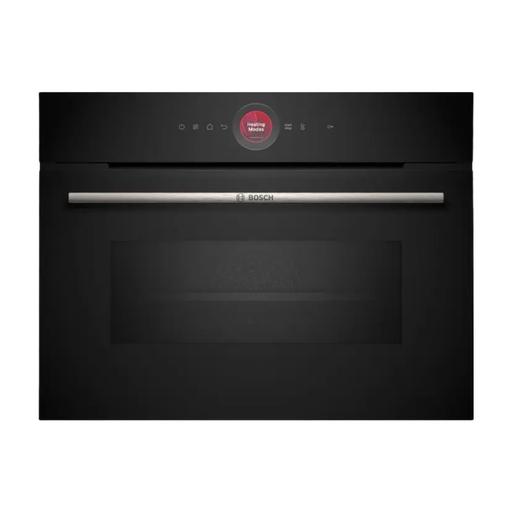
A built-in combination oven for anyone who wants a microwave function as well as oven cooking. Check the housing and dish dimensions.
The product details list a capacity of 45 litres, convection cooking, grilling and a 900 W microwave function. Follow the installation instructions and check the housing dimensions.
 No image available
A freestanding mini oven if you’re looking for a more compact set-up. Check that your dish will fit inside.
The product details list a capacity of 45 litres, 2000 W, six functions, top and bottom heat, and convection. Place the appliance on a stable, level, heat-resistant surface and keep the ventilation openings clear.
 No image available
A compact cooking appliance for anyone who can match the capacity and dish size to the recipe beforehand.
The product details list a capacity of 30 litres, 21 presets including baking, and a function for combining two settings. Keep the appliance away from flammable materials while cooking.
 No image available
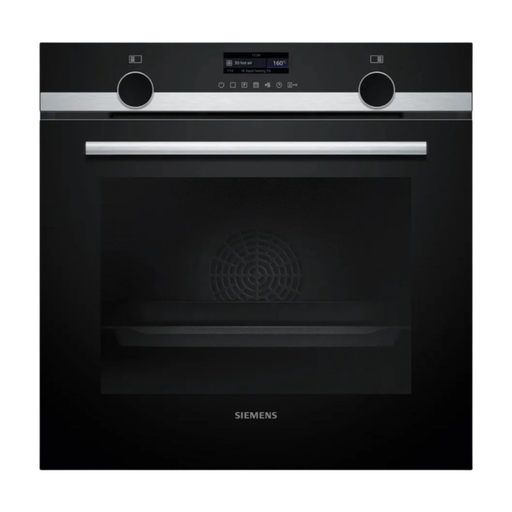
A built-in oven for anyone with a suitable housing unit who wants to compare the internal dimensions with the dish they plan to use.
The product details list a capacity of 71 litres, five shelf positions, top and bottom heat, fan cooking and a grill. According to the product information, the appliance is not intended for children under 8; children aged 8 and over may use it only under close supervision.
Compare the outside dimensions of your dish with the usable internal dimensions, and also check the shelf, door and shelf height. Capacity in litres alone isn’t enough, as the Consumers' Association explains.
Don’t assume you can. Follow the positioning and connection instructions for the exact model, and make sure the heat it gives off can escape. The Fire Service also highlights the need to release heat from ovens and other electrical appliances.
The Netherlands Nutrition Centre advises leaving leftovers to cool within two hours, storing them covered in the fridge and eating them within two days. When serving leftovers, reheat them until piping hot all the way through and don’t reheat them a third time.
For domestic ovens within its scope, the label shows information including the capacity and energy use in kWh per cycle for conventional cooking and, where available, fan cooking. Compare the same setting; the cost in pounds also depends on how you use the oven and your electricity tariff. The European Commission says that small ovens and appliances with microwave heating are outside the stated scope, so don’t assume every compact or combination model has the same oven energy label.
No. The Dutch Government says that the Netherlands has no fixed statutory guarantee period: you’re entitled to a product that works properly, and the retailer is your point of contact if there’s a problem. A manufacturer’s guarantee is separate.