First, measure your largest oven dish and check that it fits in the usable oven space; the stated capacity in litres alone won’t tell you that. Then choose an oven with the settings your recipe requires, and weigh up extra features against the space available in your kitchen, energy consumption and cleaning effort. The Consumers’ Association advises checking the dish and the internal dimensions before making your choice.
Who is this choice relevant to?
Cooking with a large oven dish
You want to cook the dish for your guests in one oven dish, so the main thing is to know whether it will fit in the usable oven space. The Consumers’ Association advises checking the internal dimensions and measuring your largest oven dish.
Planning to cook several dishes
You want to prepare the casserole and other dishes for the same meal. Oven settings, shelf positions and space for arranging dishes all matter, so check the product specifications for the model you’re considering.
Without space for a built-in oven
You’re looking for a spot for a freestanding oven and need to weigh up the worktop space it will take against the size of your oven dish. The Consumers’ Association advises measuring the dish; Inventum lists a capacity of 60 litres for the OV607B, but that figure doesn’t tell you whether your dish will fit.
What should you look for?
Built-in fan oven
A good fit if: you have a suitable housing space and want to cook a large dish or several dishes. Measure the housing space and the dish, and check the usable oven space.
The trade-off: the oven must fit in the housing space and be installed correctly; extra capacity is only useful if you make use of it.
Freestanding oven
A good fit if: you don’t want to use a built-in housing space and have enough room for a freestanding model. Inventum lists fan cooking and conventional top and bottom heat among the features of the OV607B.
The trade-off: the oven takes up worktop space; check the external dimensions, installation instructions and interior space of the specific model.
Combi oven or combination microwave
A good fit if: reheating is important too, and you’ve confirmed that the dish, oven settings and shelf positions will meet your needs.
The trade-off: according to the Consumers’ Association, a combination microwave often focuses on microwave functions; bottom heat or multiple shelf positions may be missing. A combi oven prioritises oven functions.
Measure the dish and check that the oven has the settings you need before choosing a built-in, freestanding or combination appliance.
| What to consider |
What should you check? |
Who should pay particular attention? |
| Space for the dish |
Measure the dish’s width, depth and height, then compare them with the usable interior space and shelf position. |
If I want to use one large dish for my guests, I want to know in advance whether it will fit. Around 36% of consumers put the dish’s fit first. |
| Cooking settings and planning |
Check the oven setting you need, shelf positions and the space between dishes. |
When I’m planning several dishes for a meal, suitable oven settings and a practical layout are important. Around 29% of consumers prioritise this kind of cooking plan. |
| Positioning in the kitchen |
For a built-in oven, check the required housing dimensions and connection; for a freestanding model, check the external dimensions and installation instructions. |
If my kitchen doesn’t have a suitable housing space or has limited worktop space, the position determines which models are practical. Around 21% of consumers start with this space constraint. |
| Energy use and cleaning |
Compare the stated energy use per cooking cycle or per year, and check the cleaning method. |
If I’ll use the oven regularly after the meal, I want to know what its energy use and cleaning requirements involve. Around 14% of consumers look at this first. |
The percentages give a broad indication of how consumers with these different initial priorities compare with one another; they are not survey results. Milieu Centraal advises comparing energy use per use or per year for suitable ovens too.
Common pitfalls
-
Going by capacity in litres alone
The stated capacity isn’t the same as the usable interior space. As a result, a dish may fit differently from what you’d expect based on the number of litres.
Measure the dish and check the internal dimensions and shelf position of the exact model.
If the dish doesn’t fit, you may need a different dish or have to cook the meal in batches.
-
Assuming a combination microwave is the same as a combi oven
The available oven settings, bottom heat and shelf positions can vary. This can matter if your recipe requires a specific setting or you want to plan several dishes.
Check the functions and available space of the specific appliance rather than relying on the word ‘combi’ alone.
-
Assuming you need extra features
Cleaning systems and food sensors vary between models, but they don’t prove that your dish will fit or that a particular feature is necessary for this meal.
Check the fit and the cooking settings you need first. Then choose only extra features that also suit the way you cook day to day.
Brands to consider
Bosch
The HBA534BB3 is an example of a built-in oven with several settings, for anyone considering cooking at different shelf heights.
- Bosch lists a capacity of 71 litres, conventional top and bottom heat, and 3D Hotair for up to three shelf levels for the HBA534BB3.
- Check for yourself whether the dish and housing space will fit; these specifications don’t guarantee that your dish will fit at every height.
Inventum
The OV607B is an example of a freestanding oven for anyone who doesn’t want to use a built-in space.
- Inventum lists a capacity of 60 litres, fan cooking and conventional top and bottom heat for this model.
- According to Inventum, the model doesn’t have a defrost function. Check the available worktop space and internal dimensions too.
Electrolux
The EOC6H76Z is an example of a built-in oven with fan cooking, a food sensor and steam support.
- Electrolux lists a capacity of 72 litres and built-in dimensions of 590 × 560 × 550 mm.
- The steam support available on this model doesn’t mean steam is needed for this casserole; check the housing dimensions for your kitchen.
Siemens
The HB534AER3 is an example of a built-in oven with telescopic rails and several shelf levels.
- Siemens lists 3D hotAir, a single-level telescopic rail system and a cleaning system for this model.
- These features apply to this model; check the housing space and the dimensions of your dish separately.
AEG
The BP7200B is an example of a built-in oven with pyrolytic cleaning and extra features to consider for other cooking needs too.
- AEG lists a capacity of 71 litres, pyrolytic cleaning, fan cooking and a food sensor for the BP7200B.
- Manufacturer descriptions aren’t independent performance tests. First check that the dish and housing space will fit, and that the extra features suit the way you’ll use the oven.
Ovens at Joybuy
These product options are for cooking casseroles and planning meals; check for each model that the dish will fit and that you have enough space in your kitchen.
 No image available
23L dual-zone air fryer mini oven
The product information mentions baking and large oven dishes; check this model’s interior space to see if your dish will fit.
23 litres; two cooking chambers that can be used separately; removable divider option; 15 programmes and LED touchscreen.
View at Joybuy
 No image available
HAUSWIRT C40 fan oven, 35L
A freestanding fan oven to consider if you’re looking for a model for baking; check that the interior is large enough for your oven dish.
35L; thermometer; oven rack with four levels; LED display.
View at Joybuy
 No image available
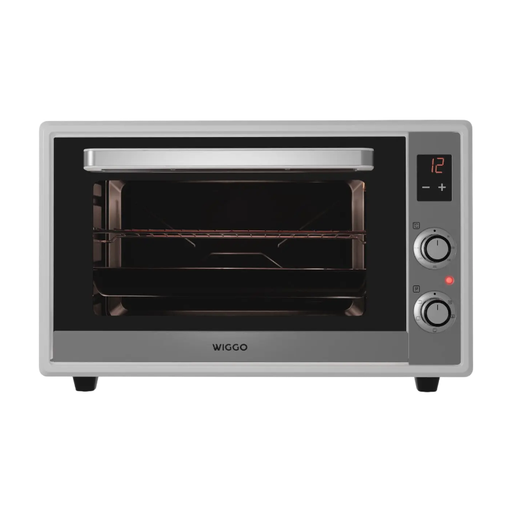
Wiggo WMO-E657(X) freestanding oven, 65L
A freestanding model to consider if you want to cook a larger meal; compare the internal dimensions with your oven dish.
65 litres; 2000W; six cooking functions; mechanical timer. The turbo fan is described as optional, so don’t assume this version has the feature without confirmation.
View at Joybuy
 No image available
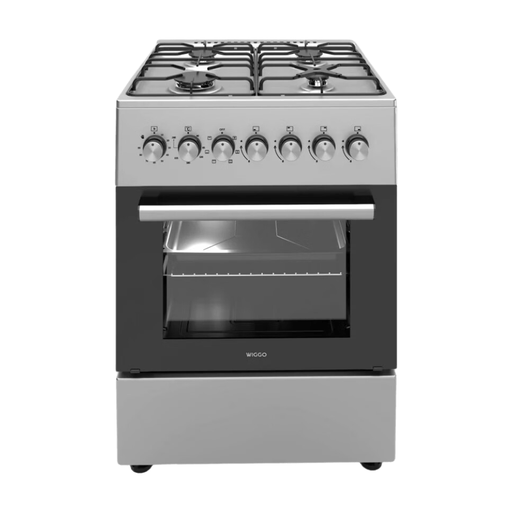
Wiggo WO-E606A(XX) freestanding gas oven, 66 litres
A freestanding gas oven to consider if you’re looking for a gas model; check the installation requirements and whether your dish will fit.
The product information lists a capacity of 66 litres, a grill function, a timer and manual cleaning. According to the product information, the gas connection and installation must be carried out by a professional installer.
View at Joybuy
 No image available
Bosch HBA514BB3 built-in oven, 71 L
A built-in oven to consider if you’re looking for a model with fan cooking; measure the housing space and check that your dish fits inside.
71 L; 3D fan cooking; baking on up to three levels according to the product description; easy cleaning according to the product title.
View at Joybuy
Frequently asked questions
Is 60 or 70 litres enough for my casserole?
You can’t tell from the capacity alone. Measure your dish and compare its width, depth and height with the usable interior space and shelf position. The Consumers’ Association distinguishes between stated capacity and usable space.
Should I choose a combi oven or a combination microwave?
If baking is the main job, focus on comparing the available oven settings and space. According to the Consumers’ Association, a combination microwave prioritises microwave functions and may not have features such as bottom heat; a combi oven prioritises oven functions.
How can I tell if the sausage in my casserole is cooked through?
Follow the instructions for the sausage you’re using and, if it’s raw processed sausage, check that it’s cooked through before serving. A browned top on the casserole alone isn’t a reliable way to check. This food safety advice comes from the Netherlands Nutrition Centre and doesn’t mean you need an oven with a built-in sensor.
How do I compare ovens’ energy consumption?
When comparing suitable ovens, look beyond the letter on the energy label and check the stated energy use per use or per year too. Milieu Centraal points out that size is also a factor in the comparison.
What happens in the Netherlands if my oven develops a fault after I buy it?
For a consumer purchase, the seller must offer a solution if the product doesn’t meet what you could reasonably expect. According to the Dutch government, there’s no fixed statutory guarantee period in the Netherlands; a manufacturer’s guarantee is additional. Ask separately about any installation and service costs.


