
Baking several trays
You’re making a bigger batch for the weekend and want to know whether a fan oven and its available shelf positions will help you bake several trays. Heel Holland Bakt discusses fan baking as a way to bake on multiple levels.


Start with the oven setting specified in your jam biscuit recipe, then check that your baking tray and oven will fit in your kitchen. If you want to bake several trays at once, a fan oven with suitable shelf positions could work well. For a single tray, a freestanding model may be enough, while with a combination microwave you’ll need to check the oven settings and tray space of the exact model.
You’re making a bigger batch for the weekend and want to know whether a fan oven and its available shelf positions will help you bake several trays. Heel Holland Bakt discusses fan baking as a way to bake on multiple levels.
You don’t have a suitable built-in space and want to weigh up how much worktop and baking-tray space a freestanding model will need. Consumentenbond discusses the choice between built-in and freestanding ovens; Inventum lists the capacity and included baking tray, among other details, for the OV457B.
You usually bake one tray at a time and mainly want to follow the oven setting and temperature in your recipe. Heel Holland Bakt discusses the differences between fan and conventional top-and-bottom heat.
Right for you if: you have a suitable built-in space and regularly want to bake larger batches or several trays.
Check: the dimensions of the space, usable interior capacity, oven settings and suitable shelf positions.
Right for you if: you don’t have a suitable built-in space or bake smaller batches.
Check: the appliance takes up worktop space; measure the baking tray too, and check the installation instructions.
Right for you if: you want a microwave function as well as an oven.
Check: according to Consumentenbond, combination microwaves often lack bottom heat and may have few or no different shelf positions.
Choose an oven that suits your recipe and the number of trays you want to use at once. The stated capacity in litres alone won’t tell you whether your baking tray will fit.
| What to consider | What to check before buying | Who should pay particular attention? |
|---|---|---|
| Several baking trays | Check for a fan setting, suitable shelf positions, usable interior dimensions and included trays. | If I want to use several trays for a weekend bake, I check that the oven settings and shelf positions are suitable. Around 40% of consumers say baking several trays is their main buying priority. |
| Kitchen space | Measure the available space and baking tray; check the model’s installation and connection instructions. | If I don’t have a suitable built-in space, a freestanding appliance also needs to fit on my worktop. Around 30% of consumers say kitchen space is their main buying priority. |
| Oven setting in the recipe | Check that the model has the specified oven setting and temperature control. | If I’m baking one tray using a particular jam biscuit recipe, I want to be able to select the setting it recommends. Around 20% of consumers prioritise following the recipe’s oven setting. |
| Extra features and energy use | Decide which features you’ll use; for ovens with an energy label, compare consumption in kWh per cycle. | If I want to use the oven for other things too, or keep an eye on energy use, I compare the features and available energy label information. Around 10% of consumers make this their first buying consideration. |
The stated capacity isn’t the same as the usable space, and doesn’t tell you for certain whether your baking tray will fit.
Measure your baking tray and check the interior dimensions and included accessories. If the tray doesn’t fit, you may need to bake in extra batches.
According to Consumentenbond, combination microwaves often lack bottom heat, and the choice of shelf positions can sometimes be limited.
Check the oven settings and tray space of the exact model before choosing it for your recipe.
According to the European Commission, small and portable ovens are outside the scope of the EU energy labelling rules mentioned for domestic ovens.
For ovens covered by the rules, compare consumption per cycle and choose a size that suits how you’ll use it. The absence of a label on a small or portable oven does not, by itself, prove a breach of the rules.
Freestanding ovens for anyone who doesn’t need a built-in space. Inventum lists a capacity of 45 litres and an included baking tray for model OV457B.
Built-in ovens for anyone with a suitable space. For model HBA534BS0, Bosch lists a capacity of 71 litres, 3D Hotair and conventional top-and-bottom heat.
Built-in ovens with a range of baking and cleaning functions. For the NBU5P40SK, AEG lists air circulation for multiple levels and pyrolytic cleaning.
Compact freestanding ovens. Severin lists a capacity of around 20 litres for the TO 2067 and describes top and bottom heat that can be used separately or together.
This selection includes freestanding ovens, combination microwaves and a built-in combination oven. Check the oven settings, dimensions and accessories for each model to make sure they suit your recipe and kitchen.
 No image available
A combination microwave to consider if you want microwave and grill functions as well as an oven.
The product description lists convection, an included baking tray and an adjustable temperature range of 110–210 °C.
 No image available
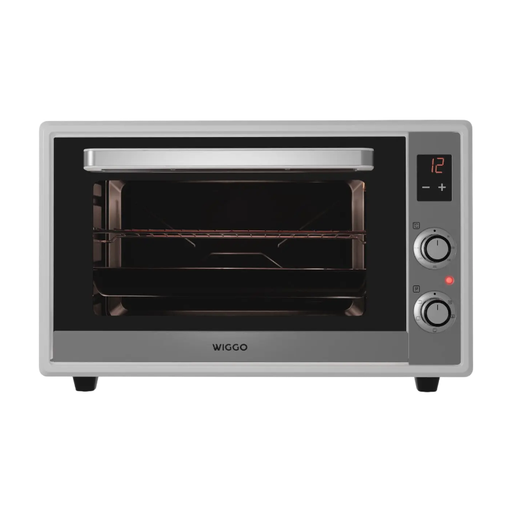
A freestanding model to consider if you don’t have a built-in space; measure your worktop area first.
The description lists six cooking functions, five shelf positions, a 90-minute timer and an adjustable temperature of up to 250 °C. The turbo fan is described as optional, so don’t assume it’s included with this version.
 No image available
A freestanding oven to consider if you’re looking for a model that sits on the worktop rather than in a built-in space.
The description lists six cooking functions, a turbo fan, four shelf positions and a 90-minute timer. The product name states 2000 W.
 No image available
A combination microwave to compare if you want to use a microwave as well as oven functions.
The product description lists convection, grill and microwave functions, plus a turntable. Check that the cooking space and available settings suit your baking tray and recipe.
 No image available
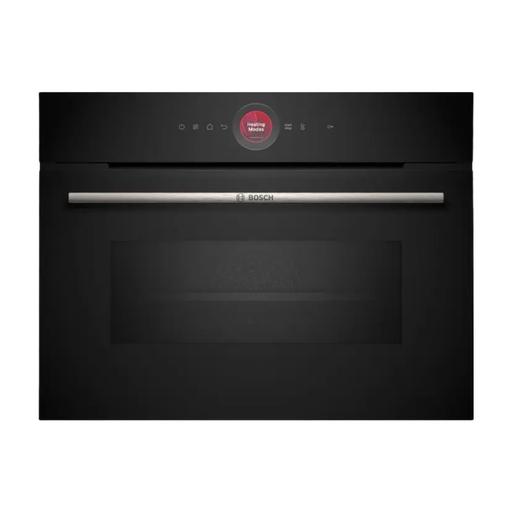
A built-in combination oven to consider if you have a suitable space and want to combine oven and microwave functions.
The product description lists convection, grill and microwave cooking, with a maximum temperature of 230 °C. The product name states a microwave power of 900 W; check the specified built-in dimensions.
Follow the oven setting in your recipe. Heel Holland Bakt recommends reducing the set temperature by 20% when switching from top-and-bottom heat to a fan setting, and checking the result as it bakes.
Measure your baking tray and check the usable interior space; for a built-in oven, also check the specified dimensions of the built-in space. Consumentenbond points out that the usable space may be smaller than the stated oven capacity. Follow the chosen model’s manual for installation.
It depends on the model’s oven settings and tray space, as well as what your recipe requires. According to Consumentenbond, combination microwaves often lack bottom heat and may have few or no different shelf positions, so check the specifications of the exact model.
No. The European Commission lists small and portable ovens as exceptions to the applicable energy labelling rules for domestic ovens. For ovens with a label, you can compare consumption in kWh per cycle; the absence of a label on a small or portable oven does not, by itself, prove a breach of the rules.
Check the markings and safety instructions for the exact appliance, and follow the installation and connection instructions. The Dutch government says electrical appliances covered by the relevant EU rules must carry the CE marking; Brandweer Nederland advises allowing appliances to dissipate heat. This does not confirm that an individual model has already been checked in every respect.