What should you consider when choosing an oven?
Built-in oven with multiple shelf positions
A good fit if: you want to bake lots of fruit turnovers in a limited number of batches and have a suitable housing space and connection.
Consider: check that enough suitable baking trays are included, and factor in any installation costs.
Freestanding oven
A good fit if: you can’t install a built-in oven and can bake the quantity you need in several batches.
Consider: check the tray dimensions and available space; you may need to bake in extra batches.
First, work out how many fruit turnovers you want to bake per batch and how much time and space you have. Then compare the shelf positions and practical running costs.
| What to consider |
What to look for when buying |
Who should pay particular attention? |
| Baking space per batch |
Check the internal and tray dimensions, how many baking trays are included, and whether the exact model supports baking on multiple levels. Bosch specifies up to three shelf positions for the HBA534BS3; AEG specifies up to three trays for the OU5PB40WSM, although one baking tray is included. |
If I need to bake a large batch within a set preparation time, I want to know how many suitable trays I can use at once. Around 36% of consumers say sufficient capacity is their main concern when buying. |
| Heat and oven settings |
Check that the model has a fan setting and, if your recipe requires it, conventional top and bottom heat. When adapting a conventional recipe for a fan oven, the Netherlands Nutrition Centre recommends setting the temperature around 10% lower; follow your recipe and oven instructions, too. |
If I’m baking the same fruit turnovers in several batches, I want to be able to use suitable settings and follow the instructions. Around 29% of consumers prioritise control over baking and suitable oven settings. |
| Positioning and connection |
For a built-in oven, measure the housing space and compare it with the installation diagram. For freestanding use, check the dimensions, required clearance and connection details in the manual. |
If I’m looking for an oven to fit an existing kitchen space, the dimensions and connection need to be right before I can plan. Around 21% of consumers say suitable positioning is their main concern when buying. |
| Running costs and cleaning |
Where possible, compare energy consumption on the same basis and check which cleaning function the exact model has. Milieu Centraal notes that a small oven with an A+ energy label may use less energy than a larger one with an A+++ rating. |
If I’ll also use the oven outside the school bake sale, I want to weigh up electricity use and cleaning as well as baking space. Around 14% of consumers prioritise running costs and cleaning. |
Joybuy ovens for freestanding use and built-in installation
The Joybuy products below include freestanding ovens and built-in models. Compare the available space, the oven settings listed and the size of the suitable baking tray for the number of fruit turnovers you want to make.
 No image available
HAUSWIRT C40 Smart fan oven with thermometer, 35 litres
A freestanding model to consider if you’re looking for a fan oven with a multi-level rack; check how many fruit turnovers will fit on the baking tray you use.
35 litres; thermometer; four-level baking rack.
View at Joybuy
 No image available
Wiggo WMO-E657(B) freestanding midi oven, 65 litres, 2000 W
The freestanding design is worth considering if you don’t have a built-in space; check the external dimensions and tray size to plan your baking.
65 litres; 2000 W; four shelf positions according to the product description.
View at Joybuy
 No image available
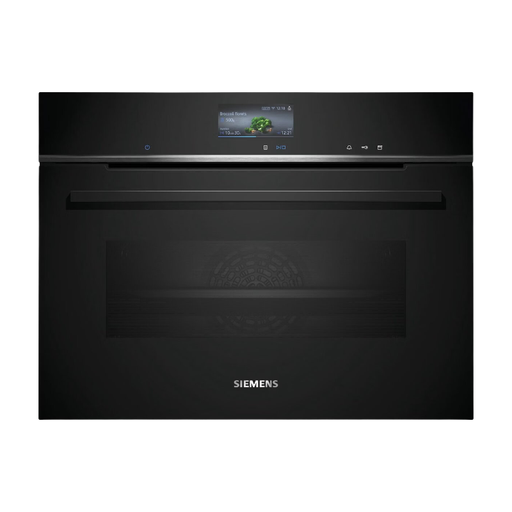
Siemens CS736G1B1 built-in steam oven, 47 litres, 4D Hot Air
A built-in model to consider if the housing space and connection are suitable; measure them first before adding the oven to your baking plans.
47 litres; 4D hot air; humidClean Plus according to the product description.
View at Joybuy
 No image available
Bosch HBA514BB3 built-in oven, 71 litres, 3D Hot Air
This built-in model may suit you if you have a suitable housing space and are considering baking on multiple levels; check the installation details and baking tray dimensions.
71 litres; the product description lists 3D Hot Air on up to three levels and conventional top and bottom heat.
View at Joybuy
 No image available
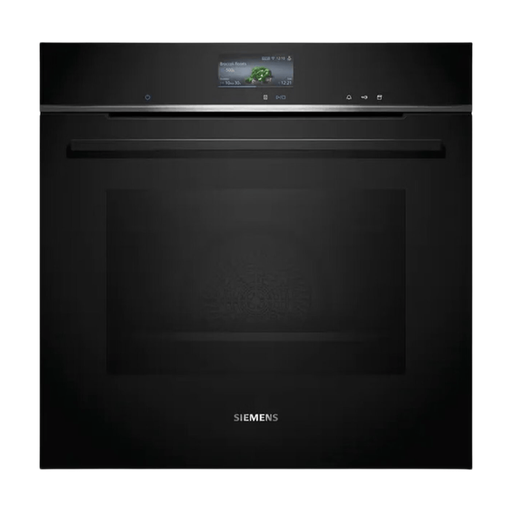
Siemens HS736G3B1 built-in oven, 60 litres, 4D Hot Air
A built-in model to include in your comparison if the housing space is suitable; also check which trays will fit the quantity you want to bake.
60 litres; 4D hot air; humidClean Plus according to the product description.
View at Joybuy
Frequently asked questions about ovens for fruit turnovers
Can I bake fruit turnovers on several trays at once?
Only if the instructions for the exact model support this method and you have suitable trays. Bosch specifies up to three shelf positions for the HBA534BS3; AEG specifies up to three trays for the OU5PB40WSM, but only one baking tray is included. Try the quantity you want to bake in a test batch.
Should I adjust the temperature when using a fan oven?
When adapting a conventional recipe for a fan oven, the Netherlands Nutrition Centre recommends setting the temperature around 10% lower. Follow your recipe and oven instructions and check that the food is cooked through; converting the temperature doesn’t automatically guarantee the same result.
What should I check before installing a built-in oven?
Measure the housing space and compare the dimensions with the details for the exact model. Also check the electrical connection in the manual and ask in advance what any installation service includes.
What should you consider when selling fruit turnovers at a school bake sale?
Food must be prepared, sold and stored safely and hygienically. The NVWA says a food safety plan is required for anyone who prepares and sells food several times a year; don’t assume this applies to every one-off event. Agree on the sale and ingredient information with the school. According to the NVWA, businesses offering food must inform consumers about any allergens it contains.
How far in advance can you bake fruit turnovers?
Follow the storage advice that’s right for the ingredients and packaging of your bakes. The Netherlands Nutrition Centre says an opened apple turnover can be kept for three days in the fridge and three months in the freezer; this advice doesn’t automatically apply to homemade fruit turnovers with a different filling.


