
Baking for a full lunch table
This baker wants to have several batches ready on time, so they look at usable baking tray space and shelf positions, not just capacity in litres. The Consumers’ Association recommends checking the internal dimensions.


Choose an oven based on the usable baking tray space and settings that suit your recipe; a higher capacity in litres doesn’t tell you how many biscuits will fit on one tray. If you want to use several trays at once, check that the model and selected fan setting are suitable, and find out how many baking trays are included. For a freestanding oven, you’ll also need to consider worktop space and ventilation. For a built-in oven, the housing unit must be the right size.
This baker wants to have several batches ready on time, so they look at usable baking tray space and shelf positions, not just capacity in litres. The Consumers’ Association recommends checking the internal dimensions.
This baker needs space for a freestanding appliance and should consider the baking tray, worktop and recommended ventilation clearance together.
This baker wants to use the oven setting specified in their recipe and pays attention to temperature control and the risk of biscuits browning differently or drying out. Heel Holland Bakt explains how fan-assisted cooking differs from conventional top and bottom heat.
Start by working out how many biscuits you want to make per batch, then choose the oven setting, positioning and running costs that suit your needs. The Consumers’ Association recommends checking the internal dimensions, while Heel Holland Bakt explains the difference between fan-assisted cooking and conventional top and bottom heat. Milieu Centraal points out that an energy label alone doesn’t determine which appliance is the most energy-efficient.
| What to consider | What to look for | Who should consider this? |
|---|---|---|
| Batch size | Compare the usable baking tray size and the number of trays included with the size of your biscuits. | If you want to bake enough biscuits before lunch, you’ll benefit most from a suitable tray and shelf positions. Around 36% of consumers put batch size first. |
| Oven setting | Check that the model has the setting specified in your recipe and follow the recommended temperature. | If I want to follow a recipe closely, I need to be able to select the specified setting. Around 29% of consumers prioritise the baking results and how well the oven suits the recipe. |
| Positioning | For a built-in oven, measure the housing unit according to the model’s manual. For a freestanding oven, check its external dimensions and ventilation clearance. | If you don’t have a suitable built-in housing unit or have limited worktop space, consider where the oven will go before buying. Around 21% of consumers make this their main priority. |
| Running costs | For suitable models, compare energy use per cycle on a like-for-like basis and check which trays are included. | If you want to weigh up the purchase price, accessories and energy use together, check the product specifications and any installation service available. Around 14% of consumers put these costs first. |
An oven’s capacity doesn’t tell you how many shaped biscuits will fit, with space between them, on the included baking tray. The stated number of shelf positions is also different from the number of trays included; ETNA lists five shelf positions and one baking tray for the OM316MZ.
Compare the tray size with the size of your biscuits and the batch you want to make. Also check how many baking trays are included in the box.
If there are fewer suitable trays than you need, you may have to bake an extra batch or buy an additional compatible tray.
An oven needs to release heat in line with the installation instructions; the external dimensions alone won’t tell you whether a space is suitable.
Before buying, check the installation and ventilation instructions for the exact model, and measure the space available.
According to the Consumers’ Association, combination microwaves often have different oven features from combination ovens. For example, some don’t have bottom heat or have fewer shelf positions.
Check the oven settings, baking tray shape and shelf positions of the specific appliance.
If the appliance doesn’t have the baking tray or shelf positions you need, you may have to bake extra batches.
Freestanding ovens to compare if you don’t have a built-in housing unit. The OV457B and OV607B are examples with stated net capacities of 45 and 60 litres respectively.
Built-in ovens with a range of controls and cleaning features. The HBA534BS3 is an example to consider if you want to compare ovens with multiple shelf positions.
The OM316MZ is a built-in option to compare if you’re considering using multiple shelf positions.
Built-in ovens to compare for shelf positions and access to the trays. The HB534AER3 is a specific example.
The more compact TO 2068 is an example to compare if you want to bake smaller batches.
This selection features built-in ovens, including models with a microwave function, fan-assisted cooking and multiple shelf positions. Check for each model that it fits your housing unit, that it has the oven setting your recipe requires and that it includes enough suitable baking trays.
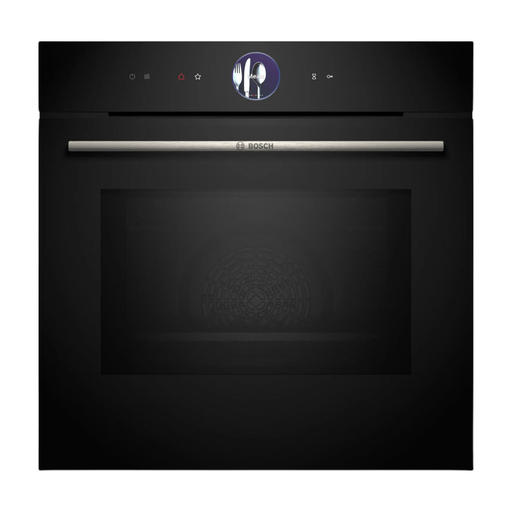 No image available
A built-in option if you’re looking for a microwave function as well as an oven; check that it fits your housing unit.
The product information lists 4D Hotair and an adjustable temperature range of 30–300 °C.
 No image available
An option to compare if you want to use multiple shelf positions and have a suitable built-in housing unit.
The product information lists 3D Hotair for up to three levels at once, top and bottom heat, and three included baking accessories.
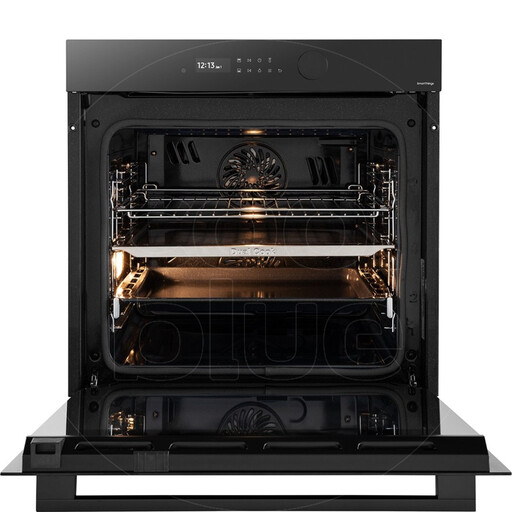 No image available
A built-in option if you’re looking for the additional cooking features listed; check that it fits your housing unit and that the functions suit your baking plans.
The product information lists Dual Cook, AirFry and two cooking compartments. It also mentions 40 automatic programmes.
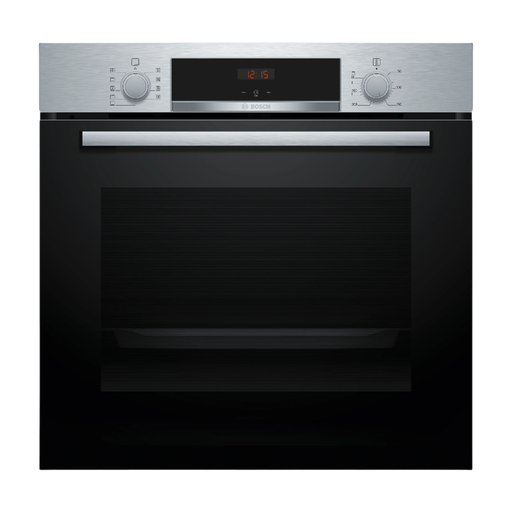 No image available
A built-in option to compare if you want to use multiple shelf positions and have a suitable housing unit.
The product information lists 3D Hotair for up to three levels at once and a temperature range of 50–275 °C. It also lists a baking tray, wire rack and Air Fry tray.
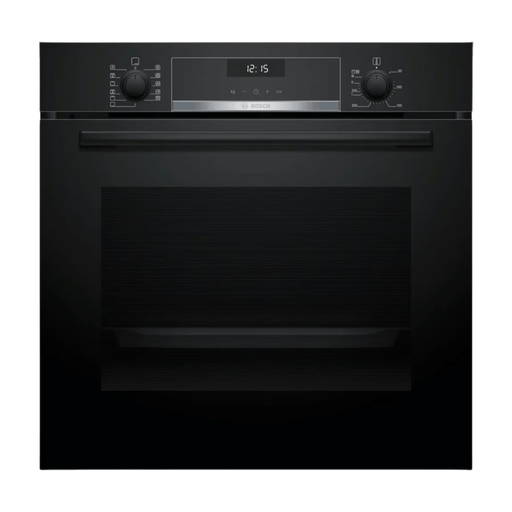 No image available
A built-in option if you want to compare ovens with multiple shelf positions and top and bottom heat; measure the housing unit before buying.
The product information lists 3D Hotair for up to three levels at once and top and bottom heat. It also lists a baking tray, combination wire rack and Air Fry tray.
Follow the setting and temperature in the recipe you’re using. The Heel Holland Bakt recipe consulted specifies 150 °C and baking on a tray; this setting won’t automatically suit every recipe or oven. Fan-assisted cooking and conventional top and bottom heat work differently.
As well as baking time, allow for preparing the dough, any resting time, preheating, baking batches and cooling. In the Heel Holland Bakt speculaas recipe, the dough rests in the fridge for one hour and the biscuits cool on a wire rack after baking; other recipes may differ.
For a built-in oven, measure the housing unit according to the manual. For both built-in and freestanding appliances, follow the installation instructions for heat ventilation. For cleaning, consult the instructions for your chosen model and let hot parts cool down safely first.
Check which baking trays are included and what any installation service covers. According to the Dutch government, when you buy online you’re usually entitled to a 14-day cooling-off period, although there are exceptions. The Netherlands has no fixed statutory warranty period; if something is faulty, contact the seller.
Not every product category is covered by the EU energy labelling rules described here. The European Commission lists small ovens and appliances with a microwave heating function among those outside the scope of the rules it describes for domestic ovens. So check the product category first. For ovens covered by the rules, compare energy use per cycle and the oven setting, not just the label rating.