
Making large batches
You want to work out in advance how many carrots will fit on a baking tray and how many batches you’ll need for the sale.


First, choose an oven that suits the space available for your baking trays and the layout of your kitchen. A spacious oven or several shelf positions can be useful for larger quantities, but the capacity in litres won’t tell you how many carrots you can roast at a time. So check the tray dimensions and included accessories too.
You want to work out in advance how many carrots will fit on a baking tray and how many batches you’ll need for the sale.
You’re looking for an oven that won’t require you to modify a kitchen unit, and want to factor in worktop space and the accessories included.
You’re also buying an oven for everyday use, so you’re considering the right size, energy use, cleaning and the space available in your kitchen.
For consumers preparing roasted carrots for a sale, each row shows the most important buying priority.
| Buying concern | What should you look for? | Which consumers? |
|---|---|---|
| Enough carrots per batch | Measure your baking tray or dish and check the internal dimensions, included trays and instructions for baking on multiple levels. | If I’m making a lot of portions, I want to know how many carrots fit on each tray and whether I can use several trays at once. Around 36% of consumers give baking capacity top priority. |
| Suitable placement | Measure the housing or available worktop space and check the model’s installation and ventilation instructions. | I want to know in advance whether the oven will fit on my worktop or in the existing housing. For around 29% of consumers, placement comes first. |
| Features and cleaning | Check the oven settings, timer, cleaning method and which accessories are included. | When making several batches, I want to choose features and cleaning options that suit how often I use the oven. Around 21% of consumers say ease of use and cleaning are their top priorities. |
| Size and energy use | Choose a size that suits the quantities you usually prepare, and compare energy use on a like-for-like basis. | For smaller batches, I don’t want to choose a bigger oven than I need, but I also don’t want to overlook the extra batches required for the sale. The right level of energy use is the main priority for around 14% of consumers; Milieu Centraal points out that larger ovens use more energy. |
The capacity in litres and the number of shelf positions don’t, by themselves, tell you how many carrots will fit in a single layer on a baking tray or how many trays you can use at once.
Measure your baking tray or dish and check the usable internal space, included trays and instructions for cooking several trays at the same time.
Built-in models have specific dimensions and installation requirements. An oven that doesn’t fit the housing may require additional kitchen alterations.
Before ordering, compare the dimensions of your existing housing with the installation diagram for the exact model you’ve chosen.
For a sale, you’ll need to consider not only preparation but also safe, hygienic food handling and allergen information.
Plan how you’ll cool, store and transport the food. The NVWA distinguishes between one-off and repeated food sales; if you sell repeatedly, check the registration and food safety requirements.
Freestanding ovens, including the TEO7501B for anyone looking for an oven without built-in housing.
Freestanding ovens; the OV607B is a fan oven with a stated capacity of 60 litres.
Built-in ovens, including the HB534AER3 for anyone with suitable housing who wants to consider cooking on several shelf levels.
Built-in ovens, including the NBU5P40SM, which AEG says has a 72-litre capacity, multilevel cooking and pyrolytic cleaning.
Built-in ovens, including the HBG7741B1 with fan cooking settings and pyrolytic cleaning.
The selection includes compact, freestanding and built-in ovens. Check each model’s cooking space and placement requirements to make sure they suit your portions and kitchen.
 No image available
A compact option to consider if you’re looking for a smaller set-up; the product information lists two separate cooking compartments that can operate at the same time.
The title states 23L. The product information lists convection heat and two synchronisable cooking compartments.
 No image available
A worktop model to consider if you’re looking for a fan oven with several rack positions.
The product name states 35L and a four-level baking rack; the product information also lists a thermometer and LED display.
 No image available
A freestanding model to consider if you don’t want to use built-in housing and need several rack positions.
The product name states 65L and 2000W. The product information lists a turbo fan, four rack positions and six cooking functions.
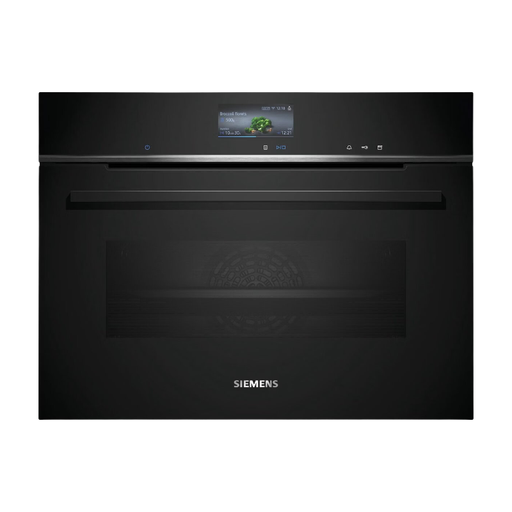 No image available
A built-in option to consider if you have suitable housing and want to factor 4D hot air into your choice.
The product name states 47L and 4D hot air; the product information lists pyrolytic cleaning. As a built-in model, this oven requires suitable housing and correct installation.
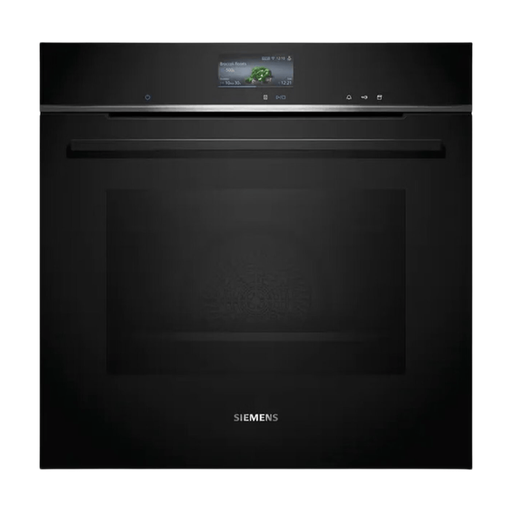 No image available
A built-in model to consider if you have suitable housing and are looking for an oven with 4D hot air.
The product name states 60L and 4D hot air; the product information lists pyrolytic cleaning. Check the housing dimensions and installation requirements for this model.
A Voedingscentrum recipe for roasted vegetables with carrots uses a preheated oven at 200 °C and gives a cooking time of 20–25 minutes for the chopped vegetables described. This is an example from a recipe; cooking times may vary with different quantities, cut sizes or oven settings.
Yes. The NVWA states that food must be prepared and sold safely and hygienically, even when it’s a one-off sale. According to the NVWA’s step-by-step guide, registration is required if you sell food several times a year; the guide says registration isn’t needed if you sell food once a year.
The NVWA says customers must be able to get information about allergens in non-prepacked food. This can be provided in writing or, subject to the NVWA’s conditions, verbally before purchase. Check the ingredients in your recipe; an oven won’t make a dish allergen-free.
Cool leftovers quickly and store them in a sealed container in the fridge or freezer. Voedingscentrum advises not leaving leftovers out of the fridge for more than two hours, and says cooked carrots will keep in the fridge for two days. If you’re selling food, also follow the applicable NVWA requirements for hygiene and temperature control.
Check whether the baking trays you need are included and whether extra trays are suitable for your chosen model. For a built-in oven, also measure the housing and compare it with the model-specific installation instructions.