
Family cooks preparing side dishes
You want to cook pork tenderloin and potatoes or vegetables together. The Consumentenbond recommends checking the internal dimensions and making sure your largest oven dish will fit.


First, choose an oven that will actually fit your roasting tin and any side dishes, then check the heating settings and connection. A freestanding oven needs worktop space, while a built-in oven must fit the existing housing; a temperature probe can help you monitor how the meat is cooking, but it’s no substitute for careful preparation.
You want to cook pork tenderloin and potatoes or vegetables together. The Consumentenbond recommends checking the internal dimensions and making sure your largest oven dish will fit.
You don’t want to rely on a timer alone, so you’re checking whether a suitable model has a temperature probe. Check the manual for instructions on how to use it.
Start by checking the space available: for a built-in oven, measure the housing; for a freestanding model, check its external dimensions and the clearance it needs.
| What to consider | What to look for when buying | Who is this important for? |
|---|---|---|
| Space for the meal | Measure your largest oven dish and check the usable internal dimensions and shelf positions. Also check whether the oven setting you’ve chosen is suitable for cooking everything at the same time. | I want to fit the pork tenderloin and side dishes in together, so the dish really needs to fit. Around 33% of consumers prioritise having room for the whole meal. |
| Control over how the meat cooks | Check whether the exact model has a temperature probe and read the instructions. If not, see whether a suitable separate thermometer would work for your cooking method. | If I want to monitor how the meat is cooking, I look beyond a timer or automatic programme. Around 25% of consumers prioritise control over how the meat cooks. |
| Suitable appliance and connection | Check the external dimensions, housing dimensions and ventilation clearance in the model manual. Also check which plug and electrical connection the appliance requires. | My choice depends first on the housing or the space available on the worktop. Around 25% of consumers start by checking the kitchen fit and connection. |
| Energy use and cleaning | Where possible, compare energy use per cycle on the same basis. Check the cleaning steps in the manual and what a cleaning function means for the way you use the oven. | If I use the oven regularly, I also want to know how much cleaning it requires. Around 17% of consumers prioritise energy use and cleaning. |
The stated capacity doesn’t automatically tell you whether your roasting tin and side dishes will fit comfortably in the oven.
Measure your largest oven dish and check the internal dimensions and shelf positions before choosing a compact, freestanding or built-in oven.
If the dish doesn’t fit, you may need to cook the side dishes separately.
These are different features. For example, the technical overview we consulted for the Siemens HS736G1B1 doesn’t list a probe; according to AEG, the AEG NBR7P621SB does have one.
Check the features for the full model number and decide separately whether you need steam assistance, temperature monitoring or both.
The required housing and connection dimensions vary by appliance and can determine whether it can be installed.
Before buying, check the model manual, housing dimensions, plug and electrical connection. If necessary, ask what’s included with the installation.
Milieu Centraal points out that a smaller oven with a lower energy rating may still use less electricity per cooking session.
Where available, compare energy use per cycle on the same basis, and don’t choose an oven larger than your dishes require.
The OV607B is a freestanding fan oven for anyone who isn’t looking for a built-in model.
The HBG578EB7 is a 60 × 60 cm built-in oven with fan cooking, a telescopic rail and pyrolytic cleaning.
The NBR7P621SB combines a built-in oven with steam assistance, a temperature probe and pyrolytic cleaning.
The WCC54PMSBA is an example of a compact built-in oven.
The HS736G1B1 is a 60 × 60 cm built-in oven with a full steam function.
These built-in ovens are for anyone who wants to cook pork tenderloin and a family meal using standard roasting settings.
 No image available
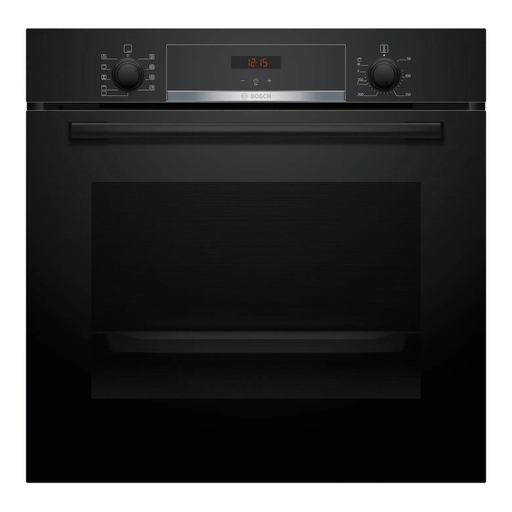
A built-in oven for anyone looking for room for a roasting tin and any side dishes.
The product name lists 3 kW, a grill, pizza function, AquaClean steam cleaning, ECO mode and a timer.
 No image available
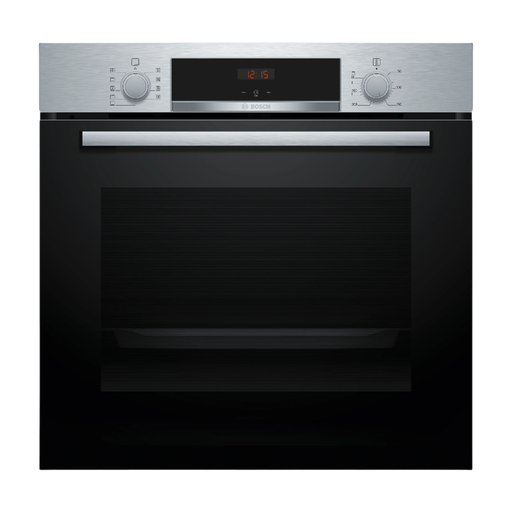
A built-in oven for anyone looking for a standard roasting setting for pork tenderloin and a family meal.
 No image available
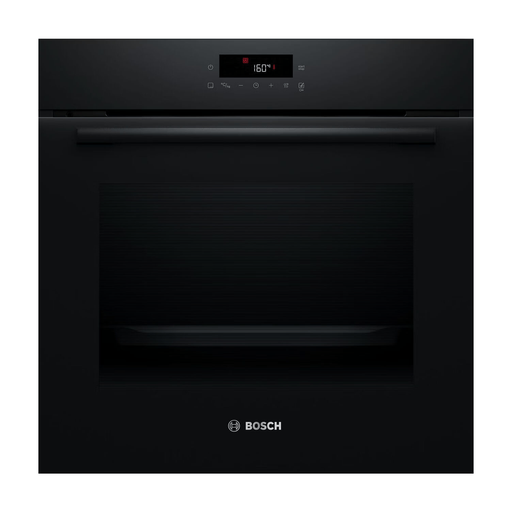
A built-in oven for anyone who wants to cook a roasting tin and any side dishes in the oven.
The product name lists hydrolytic cleaning, Turbo Hot Air, touch controls and a maximum temperature of 275 °C.
 No image available
A built-in oven for anyone who can measure the available housing precisely beforehand.
The product name lists a height of 59,5 cm and pyrolytic and hydrolytic cleaning.
 No image available
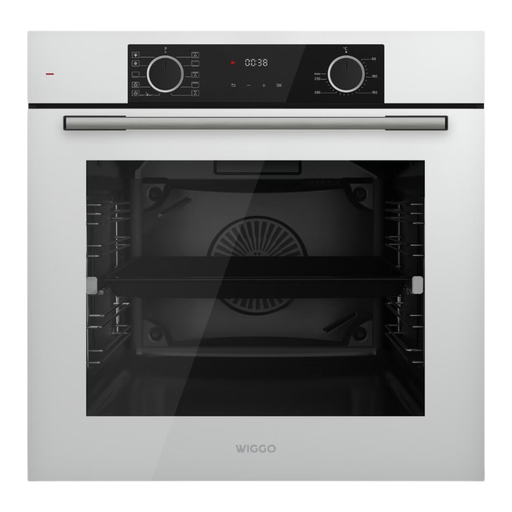
A built-in oven for anyone looking for a standard roasting setting and able to check the size of the available housing.
The product name lists the colour as white.
No, a built-in probe isn’t essential for cooking pork tenderloin. If the exact model has this feature, a probe can monitor the core temperature; check the instructions for how to use it. The Voedingscentrum says cooking meat thoroughly is the safest option and recommends extra care for vulnerable groups.
Measure the housing and check the exact installation dimensions in the model manual. Also check the plug and electrical connection: according to the Consumentenbond, some ovens may require a special connection.
Follow the oven manual; pyrolytic cleaning and manual cleaning are different methods. The Voedingscentrum advises cooling leftovers quickly, storing them in a sealed container and not leaving them out of the fridge for more than two hours.
Check whether the model has a suitable fan setting and usable shelf positions, and whether your dishes will fit in together. The oven setting alone won’t guarantee that everything cooks identically; consider where you place the dishes and follow the instructions in your recipe.