
Baker making several loaves
You want to fit different loaf tins in the oven in one session, so you compare the usable space, shelf positions and fan functions.


First, choose an oven with interior dimensions that suit your loaf tins and the number of loaves you want to bake at once. Then compare the oven settings and shelf positions. A built-in oven with a fan setting can be handy for using several tins, while a smaller or freestanding oven may suit a smaller kitchen or someone who usually bakes just one loaf. The capacity in litres alone doesn’t prove that your tins will fit side by side or on different shelves.
You want to fit different loaf tins in the oven in one session, so you compare the usable space, shelf positions and fan functions.
You usually bake one loaf and weigh up the space available against the interior dimensions of a compact built-in, freestanding or mini oven.
You already have an oven housing and want to check that a new model, its connection and your existing loaf tins will fit.
| What to consider | What should you check? | Who is this important for? |
|---|---|---|
| Several loaf tins | Measure your tins and compare them with the interior width, depth and height. Also check the available shelf positions. | If I want to bake several loaves in one session, the tins need to fit and sit at usable heights. Around 36% of consumers prioritise having space for several loaf tins. |
| Oven setting | Check whether the exact model has conventional heating and a fan setting. See which setting the manual recommends for baking in tins. | If I mainly want to know which setting to use for nut bread baked in a tin, I look at the available functions and the recipe instructions. Around 29% of consumers prioritise the baking setting. |
| Dimensions and placement | For a built-in oven, compare the housing dimensions with the installation dimensions. For any type of oven, check the interior space against your loaf tin. | If I already have an oven housing or a fixed space in the kitchen, the oven needs to fit there and accommodate my tin. Around 21% of consumers prioritise placement and dimensions. |
| Energy use and cleaning | Compare the stated energy use per cycle on the same oven setting, for an oven with the capacity you need. Check which cleaning function the model has. | If I bake often, I also want to consider the energy used for each bake and how easy the oven is to clean afterwards. Around 14% of consumers prioritise energy use and maintenance. |
Parts inside the oven can reduce the usable space. If you’re using several tins, there also needs to be enough room between the shelf positions.
Measure your tins and compare them with the interior dimensions and shelf positions before choosing an oven.
If the tins don’t fit together, you may need to bake in an extra batch.
According to the Dutch Consumers’ Association, combination microwaves may not have bottom heat or several shelf positions.
Check the oven settings and shelf positions on the specific model before choosing it for nut bread.
Milieu Centraal points out that a small oven with an A+ label may use less energy than a larger oven with an A+++ label.
Compare ovens that fit your loaf tins and check the stated energy use per cycle on the same basis.
A built-in model needs to fit your oven housing. In the Netherlands, your statutory guarantee is not automatically limited to the manufacturer’s guarantee period; ACM ConsuWijzer says that the reasonable lifespan under normal use is what matters.
Check the installation dimensions and any service arrangements in advance. Keep your proof of purchase and product information, too.
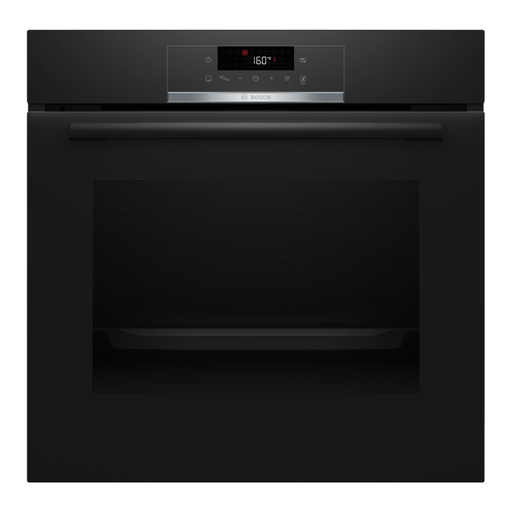
Bosch lists a 71-litre capacity, conventional heating and 3D Hotair for the HBA534BB3 built-in oven.
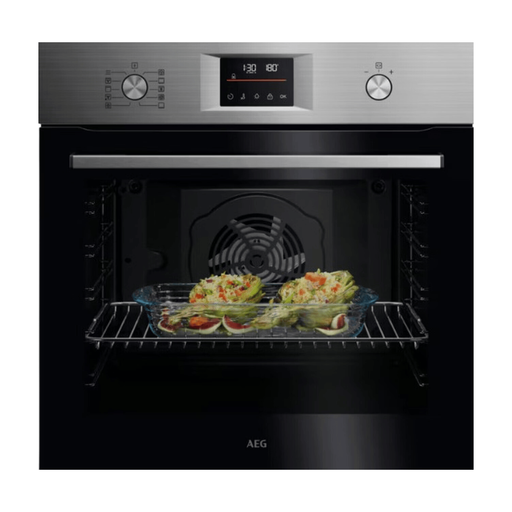
AEG describes the NBU5P40SK built-in oven as a 72-litre fan oven with pyrolytic cleaning.
Siemens describes the HB457G0B3F built-in oven as a 71-litre model with 3D Hotair and adjustable telescopic rails.
According to Inventum, the OV607B freestanding fan oven has a capacity of 60 litres and conventional heating.
According to Severin, the TO 2058 mini oven has a capacity of 42 litres and a fan setting; conventional heating can be set separately or combined.
This selection includes freestanding and built-in ovens, as well as a baking and grilling oven, to help you compare the placement and oven space that suit your loaf tins.
 No image available
A freestanding model to consider if you don’t want a built-in oven and need room for batch cooking. Check the interior dimensions against your loaf tin, and place the oven on a flat, heat-resistant surface with the ventilation openings unobstructed.
 No image available
A built-in model to compare if your oven housing has enough space for installation. The product name lists a 72L capacity and pyrolytic cleaning; check the housing dimensions and whether your loaf tins fit inside the oven.
 No image available
A built-in oven to consider if you want to use several loaf tins and have a suitable housing. Bosch lists 3D Hotair on up to three shelf levels for the HBA534BB3; measure your tins and check the installation dimensions.
 No image available
A built-in model to compare if you have a suitable oven housing. The product name lists an Air Fry function, a steam function and pyrolytic cleaning; check whether the oven space is suitable for your loaf tins.
 No image available
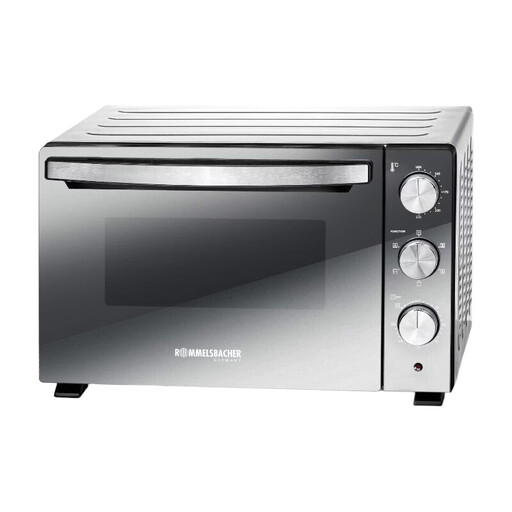
A baking and grilling oven to consider if the tin you use fits inside. Check the interior dimensions before deciding whether this model is suitable for your nut bread.
No. The Dutch Consumers’ Association recommends comparing the interior dimensions with your largest oven dish; also check whether both loaf tins fit in the oven together.
Follow the recipe and the oven manual. The European Commission recommends preheating only when the recipe or instruction table says to.
For leftover meals, the Netherlands Nutrition Centre recommends letting them cool within two hours and storing them in a sealed container in the fridge or freezer. Eat leftovers from the fridge within two days; frozen meal leftovers can be kept for three months, according to the general guidance.
For household ovens within its scope, the label includes details such as the capacity and energy use per cycle for conventional and fan settings, according to the European Commission. Not every type of oven is covered by the same labelling rules, so check the details for the specific appliance.
No. ACM ConsuWijzer explains that there is no fixed two-year period for the statutory guarantee: what matters is what you can reasonably expect from the product under normal use. If there’s a problem covered by the statutory guarantee, contact the seller.