
Home baker making a delicate tart
You want to choose a setting that suits the recipe and method. Bakken.nl and Miele describe different ways to make a custard tart.


Choose an oven that fits your tart tin and has settings that suit your recipe. A separate top-and-bottom heat setting can be useful, while fan-assisted cooking gives you more options for other baking. A freestanding oven needs a suitable space and connection, while a built-in oven must fit the available housing unit.
You want to choose a setting that suits the recipe and method. Bakken.nl and Miele describe different ways to make a custard tart.
You want to check whether your tart tin will fit in the oven and whether there is room for other party bakes. The stated capacity in litres does not tell you whether a particular tin will fit.
You’re looking for a freestanding model and need to consider where it will go, ventilation and the connection. The Fire Service advises keeping the area around appliances clear so heat can escape.
Bakken.nl and Miele recipes use different cooking methods. Choose your recipe first, then check the oven settings, the space for your tin and where the oven will go.
| What to consider | What should you check? | Who should pay particular attention? |
|---|---|---|
| Oven setting | Check whether the model offers separate top-and-bottom heat and fan-assisted settings. | If I’m baking a delicate tart, I want to be able to match the setting to my recipe; around 33% of consumers prioritise this choice. |
| Space for the tart | Measure your tin, including its rim or handles, and compare it with the usable interior space and the position of the baking tray. | For a family gathering, I want to make sure my own tin fits and there’s room for extra bakes. Around 27% of consumers prioritise having this space. |
| Positioning and connection | Compare the built-in dimensions or the freestanding oven’s dimensions with the available space, and check the ventilation and connection instructions. | If I don’t have a built-in housing unit, I’m looking for an oven that can go in a suitable place; around 20% of consumers prioritise this flexibility. |
| Energy use and maintenance | Where applicable, compare the energy use per cycle for the same oven setting and check the cleaning method and warranty terms. | I also want to know what cleaning and everyday use will involve, especially if I use the oven regularly. Around 20% of consumers start with these considerations. |
Recipes can vary: one method bakes the tart directly, while another uses a pre-baked pastry case with a filling prepared separately.
Choose your recipe first and follow its temperature and steps. Don’t simply copy settings from another recipe.
A capacity in litres doesn’t tell you whether your tin will fit in terms of width and depth.
Measure your tin and compare it with the usable internal dimensions of the exact model. If you’re choosing a built-in oven, check the housing unit dimensions too.
According to the European Commission, portable ovens are outside the scope of the European energy labelling rules mentioned. So, the absence of a label alone doesn’t tell you how much energy a particular model uses.
Only compare energy figures when they apply to the oven in question and the same cooking setting.
The OV457B is an example of a freestanding oven for anyone without a built-in housing unit.
The HBA534EB3 is a built-in oven with separate cooking settings and fan-assisted cooking.
The OU5AB20WCM is a built-in oven with conventional heat, fan-assisted cooking and bottom heat.
The H 2465 B ACTIVE is a built-in oven with top-and-bottom heat and Fan Plus.
This selection includes freestanding ovens, built-in ovens and an air fryer oven combination to suit different kitchen layouts and baking needs.
 No image available
The product name describes this model as a freestanding oven. Check the available space and whether your tart tin will fit.
Stated capacity: 65 L. Keep the ventilation openings clear and use only accessories supplied with or recommended by Wiggo.
 No image available
This built-in model is designed for a kitchen with a suitable housing unit. Check the dimensions of the housing unit and your tart tin.
The product name lists a 66 L capacity, five cooking programmes and ecoClean self-cleaning.
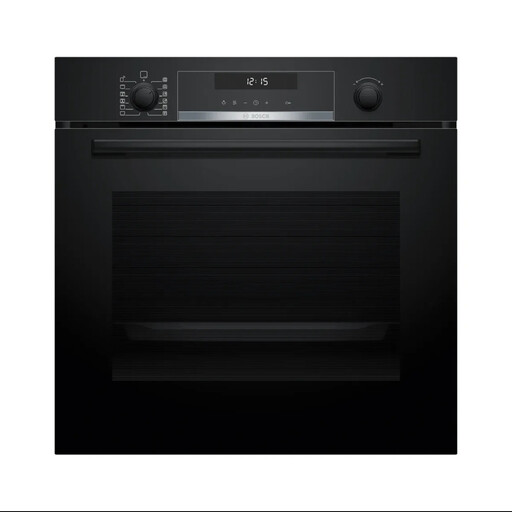 No image available
This built-in oven needs a suitable housing unit. Also measure the internal space needed for your tart tin.
The product name lists an Air Fry function, Home Connect and pyrolytic cleaning.
 No image available
This freestanding model may suit a kitchen without a built-in housing unit. Check the available space and the instructions for the setting required by your recipe.
The stated ventilation clearance is at least 10 cm at the sides and 30 cm above.
 No image available
The product name lists a baking function. Check the manual to find the setting that suits your chosen custard tart recipe.
The product name lists 21 programmes, 1800 W and space for a 13-inch pizza. This doesn’t confirm that your tart tin will fit.
No, follow the method in your chosen recipe. Bakken.nl gives instructions for baking its custard tart in both a conventional electric oven and a fan oven at 160 °C. Another Miele custard tart recipe starts by baking a puff pastry case using Fan Plus at 200 °C, then adds a filling prepared separately. Don’t simply swap the cooking times and temperatures between recipes.
Follow the installation and maintenance instructions for your chosen model. The Fire Service advises keeping the area around appliances clear so heat can escape, and recommends plugging high-power appliances directly into a socket rather than using an extension block or cable reel.
For ovens covered by European labelling rules, compare the stated energy use in kWh per standardised cycle using the same heating method. This won’t necessarily match the energy used to bake your tart. In the Netherlands, statutory guarantees apply alongside any manufacturer’s guarantee. According to ACM ConsuWijzer, there isn’t one fixed guarantee period for all appliances. If a product breaks sooner than you could reasonably expect with normal use, the seller is responsible for providing an appropriate solution.
No, the European Commission lists exceptions to the energy labelling rules, including portable and small ovens. So, a missing label on a portable model doesn’t in itself prove that the rules have been broken, nor does it tell you how well the model will bake a custard tart.