What should you look for when choosing?
Start by deciding whether a freestanding model or an oven designed for a built-in housing is right for your kitchen. Then check that your dish will actually fit and find out which oven setting your recipe calls for.
| What to consider |
What should you check? |
Who is this important for? |
| Baking dish and portions |
Measure your dish, including its handles, and check the oven’s internal space, door opening and shelf position. The Albert Heijn Allerhande recipe example uses a shallow 28 cm dish for 12 portions. |
If I want to use my existing dish, I need to know whether it will fit and make enough portions. Around 36% of consumers focus on dish size and portions. |
| Oven setting and temperature |
Check which settings and temperature options the exact model offers. Follow the setting in the recipe; you may need to adjust it when using a fan oven. |
If I want to keep a close eye on the cooking time and how well it’s baked, I look at the oven settings and temperature control. Around 29% of consumers give baking control top priority. |
| Fitting it in your kitchen |
Compare the external dimensions of a freestanding model, or the full housing dimensions of a built-in oven, with the space available. For built-in models, follow the installation instructions too. |
If I have limited worktop space or a small housing, the oven needs to fit comfortably there. Around 21% of consumers prioritise the space available for installation. |
| Controls and cleaning |
Look at the controls, timer and cleaning options on the exact model. Only consider extra features if you’re likely to use them. |
If I use the oven regularly, I want clear settings and cleaning that’s easy to manage. Around 14% of consumers prioritise ease of use and maintenance. |
Ovens at Joybuy
This selection consists mainly of built-in ovens for a suitable housing, alongside a freestanding fan oven for those with space for one.
 Image unavailable
Comfee built-in oven, 60 cm, 70 L
A good fit if you’re looking for a built-in oven with a choice of cooking settings.
70 L capacity, 3 kW, fan heating, grill and pizza function, LED display with timer and ECO mode. The product name lists an A energy rating.
View at Joybuy
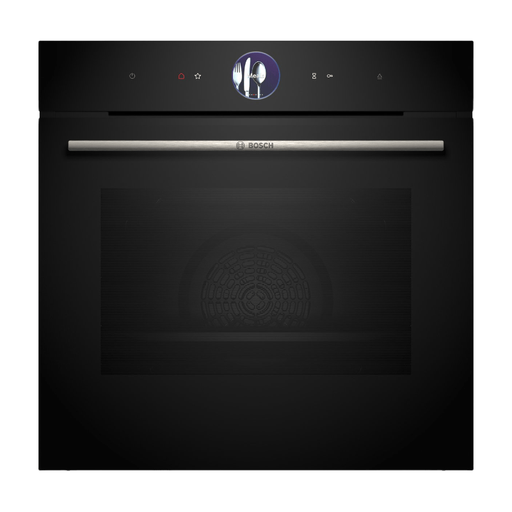 Image unavailable
Bosch HSG7364B1 Series 8 built-in steam oven
A built-in option if you’d like a steam function as well as baking, and have a suitable housing.
60 cm × 60 cm, 71 L capacity and an Air Fry function.
View at Joybuy
 Image unavailable
HAUSWIRT C40 Smart fan oven, 35 L
A freestanding alternative if you have worktop space and want a fan oven.
35 L capacity, a four-level shelf and an LED display. The product description lists adjustable time and temperature settings.
View at Joybuy
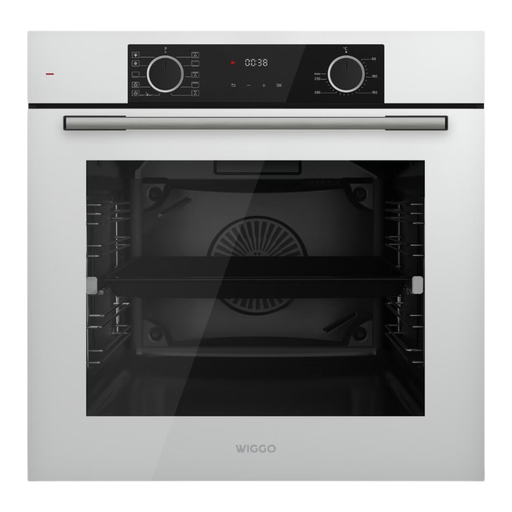 Image unavailable
Wiggo AKA1WO-BFA610 built-in oven, white
A built-in option if you want to choose between top and bottom heat and fan cooking.
The product description lists a temperature range of 40–250 °C and a timer.
View at Joybuy
 Image unavailable
Bosch HBA514BB3 built-in oven, 71 L
A built-in oven to consider if you want to compare top and bottom heat with a fan oven setting.
71 L capacity and 3D fan cooking; the product description also lists top and bottom heat.
View at Joybuy
Frequently asked questions
Should I use a fan oven for clafoutis?
No. First check which setting the recipe specifies. The Netherlands Nutrition Centre says that many recipes are written for top and bottom heat, and recommends using a lower setting when switching to a fan oven. Check that the clafoutis is cooked through at the end of the cooking time.
Does a stated dish diameter confirm that my dish will fit?
Not entirely. Severin says the TO 2067 can accommodate cake tins up to 30 cm, but you should also measure your dish, including its handles, and check the door opening and shelf position.
How should I store clafoutis if I’m taking it for lunch later?
Treat leftover clafoutis as food that needs to be kept chilled: cool it within 2 hours and store it covered in a fridge at 4 °C. The Netherlands Nutrition Centre recommends keeping leftovers chilled for no more than 2 days; keep the clafoutis chilled while transporting it.
Which installation details and connections should I check?
Follow the instructions for the exact model and, for a built-in oven, check the housing dimensions and electrical connection. The Consumers’ Association notes that some ovens may need a special plug or connection; this doesn’t automatically apply to every oven.
Does every mini oven need the same energy label as a built-in oven?
Not necessarily. The European Commission lists small ovens as outside the scope of the cited rules for household ovens. Check the labelling rules for the exact product category, and don’t infer a mini oven’s energy use from the label of a different type of oven.


