
Buffet baker making several cakes
Wants to know whether the cake tins and number of baking batches will fit, without compromising on an even bake.


Start by checking the internal dimensions: your largest cake tin needs to fit, and if you’re baking several cakes, decide whether you want to bake them at the same time. If you have a suitable built-in space, a built-in oven with conventional top and bottom heat is a sensible choice if you mainly bake cakes. If you don’t have a built-in space, a freestanding mini oven could work, provided your tin fits inside. Choose a combination oven if you also want a microwave function, and check the oven settings and shelf space of the specific model.
Wants to know whether the cake tins and number of baking batches will fit, without compromising on an even bake.
Is looking for a freestanding oven and needs to check the internal capacity and suitable oven settings.
Is looking for an oven that will also suit everyday cooking after the buffet, and is weighing up extra features and energy use against the space needed for baking.
Suitable if: you have a suitable built-in space and bake regularly or use a large cake tin.
Bear in mind: measure the built-in space and internal capacity, and check the connection requirements for the specific model.
Suitable if: you don’t have a built-in space and your cake tin fits in the oven.
Bear in mind: check the internal dimensions and where the appliance can be placed according to the instruction manual.
Suitable if: you need a microwave function as well as an oven.
Bear in mind: the Consumers’ Association distinguishes between combination ovens and combination microwaves. Check the oven settings and shelf positions of the appliance you choose.
| Buying consideration | What should you check? | Who should pay particular attention? |
|---|---|---|
| Baking results | Check the recommended oven setting and temperature; follow your chosen recipe. | If I mainly want predictable results for my chocolate cake, I’ll check the baking setting first. Around 36% of consumers prioritise baking results. |
| Tins and baking batches | Measure your largest cake tin and compare it with the internal dimensions and shelf space. | When I’m making several cakes, I want to know whether my tins will fit and whether I’ll need to bake in batches. Around 29% of consumers prioritise space for tins and batches. |
| Positioning and connection | Measure the built-in space or available spot, and check the installation instructions and connection requirements. | If my kitchen is short on space, the oven needs to fit and be installed according to the instructions. Around 21% of consumers prioritise positioning and connection. |
| Use after the buffet | Compare the energy used per cooking cycle, and choose extra features only if you’ll use them afterwards too. | I want to avoid paying for features I’ll hardly use, so I also look at energy consumption. Around 14% of consumers prioritise running costs and extra features. |
The Consumers’ Association recommends checking the internal dimensions and making sure there’s room for your largest oven dish. Milieu Centraal points out that size and energy use per cooking cycle both matter: the energy label alone won’t tell you how much electricity an oven uses for a particular cooking cycle.
The stated capacity isn’t the same as the usable space for your cake tin. The Consumers’ Association recommends checking the internal dimensions.
Measure your tin and compare it with the internal space and shelf positions of the exact model.
If the tin doesn’t fit, you may need to bake in several batches.
Oven settings and shelf positions can vary between appliances, so the baking method you’ve chosen may not be available.
Before buying, check the features and internal space of the specific appliance.
The required dimensions of the built-in space and the connection can vary between models.
Compare the installation diagram and connection requirements with your kitchen. If you’re unsure about the connection, consult a qualified professional.
You may need to modify the built-in space or electrical connection; what’s involved depends on your circumstances.
The features listed apply to the specific models and product ranges, not every product from the brand.
The IOC6070GK is an example of a conventional built-in oven with top and bottom heat.
The BBIE12100BD is an example of a built-in fan oven.
The TO 2058 is an example of a freestanding baking and toast oven.
The HBG7741B1 is an example of a built-in oven with additional features.
The BP7200B is an example of a multifunction built-in oven.
This selection includes built-in ovens, a freestanding convection oven and a combination microwave. For each model, check that your cake tin fits and that the features suit your recipe.
 No image available
An option if you’re looking for a built-in fan oven; compare the internal dimensions with your cake tin.
The product title lists 60 cm, 70 l and 3 kW, plus a grill, pizza function, AquaClean steam cleaning, a timer and ECO mode. The title also states energy class A.
 No image available
A freestanding option if you don’t have a built-in space; measure your cake tin and check the recommended clearance around the oven.
The product title lists 35 l, a thermometer, a four-level baking rack and an LED display. Check that the tin and your preferred baking method are suitable for this oven.
 No image available
A combination microwave to consider if you also want a microwave function; check that the oven settings and space are suitable for your cake tin.
The product title lists 25 l, a grill and convection. The description gives a temperature range of 110–210 °C; check that it’s suitable for your recipe.
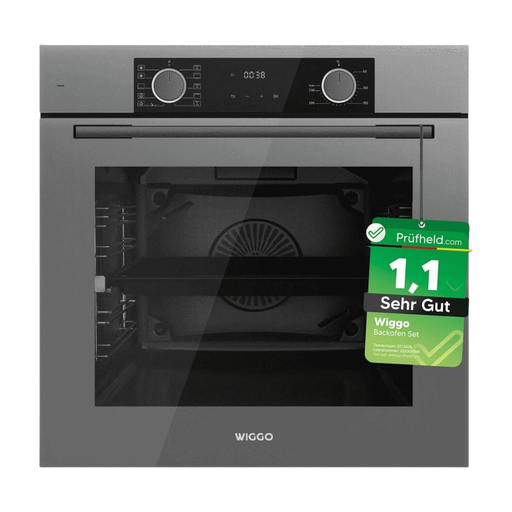 No image available
For anyone looking for a built-in oven with top and bottom heat and convection; check the built-in dimensions and connection in your kitchen.
Compare the internal space with your cake tin and check that the oven settings suit your chosen cooking method.
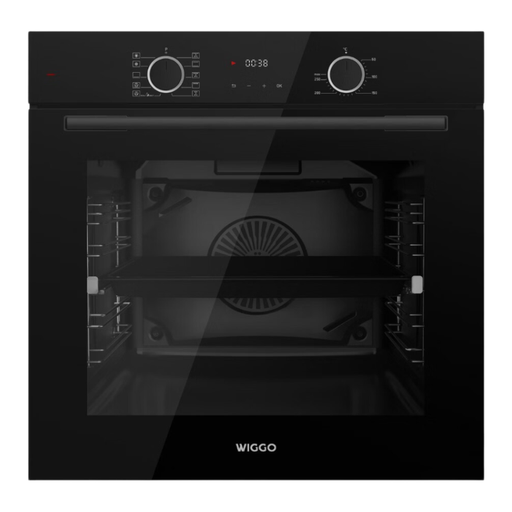 No image available
For anyone looking for a built-in oven with top and bottom heat and convection; check the built-in dimensions and connection in your kitchen.
Compare the internal space with your cake tin and check that the oven settings suit your chosen cooking method.
Follow the setting specified in your recipe. The Consumers’ Association says top and bottom heat is suitable for cakes, and that fan ovens generally need a setting around 20 °C lower. Check whether the cake is cooked through and bear in mind that every oven is different.
It depends on the internal dimensions, shelf space and oven settings of the specific model. Measure both tins and check whether the oven is suitable for use on multiple levels. A recipe using two tins doesn’t prove that they’ll fit in every oven at the same time.
Measure the built-in space and follow the model’s installation instructions. Check the required plug and connection too; according to the Consumers’ Association, some ovens need a special connection. Ask for advice if you’re unsure about the connection in your kitchen.
No, compare the energy used per cooking cycle as well. Milieu Centraal points out that a smaller oven with an A+ rating can use less energy than a larger oven rated A+++.
Keep cake with a cream filling chilled, and check your recipe and the ingredients used. The Netherlands Nutrition Centre recommends storing cream cakes in the fridge; this isn’t a general storage time for every type of chocolate cake. Food safety rules for catering businesses don’t automatically apply to a private buffet.