
Recipe-led cake baker
You want to be able to select the specified oven setting and bake the cake through before adding the lemon syrup. To do this, follow the setting and instructions in your recipe.


Choose an oven with the setting specified in your recipe, and check that your cake tin fits on the shelf with enough room around it. A built-in oven needs a suitable housing unit, while a freestanding model needs a suitable spot. A combination microwave makes most sense if you also want to reheat food, provided you can use the oven function on its own and your tin fits inside.
You want to be able to select the specified oven setting and bake the cake through before adding the lemon syrup. To do this, follow the setting and instructions in your recipe.
You want to know whether your cake tin will fit and how to bake enough cake for everyone. Check the usable space and plan to bake in batches if needed; the capacity in litres alone won’t tell you whether your tin will fit.
Your first consideration is whether you have a suitable housing unit for a built-in oven or a suitable spot for a freestanding appliance. A combination microwave could suit your needs if you want to reheat food as well as bake.
Choose this if: you have a suitable housing unit and bake regularly.
Consider: check the dimensions of the housing unit and the space for your cake tin; a large capacity doesn’t guarantee that every tin will fit.
Choose this if: you don’t want a built-in model and have a suitable spot available.
Consider: the appliance will take up space outside a housing unit; check the installation instructions and the space available for your tin.
Choose this if: you want a microwave function as well as an oven for baking.
Consider: check that your cake tin fits and that you can use the oven function on its own.
| What to consider | What should you check? | Who should give this more consideration? |
|---|---|---|
| Oven setting and doneness | Check which setting your recipe specifies and whether the model has it. Conventional heat and fan-assisted cooking aren’t automatically interchangeable; Heel Holland Bakt recommends following the recipe instructions. | I want to be able to select the setting in my recipe and bake the cake through before adding the syrup. Around 36% of consumers prioritise the oven setting and doneness. |
| Cake tin and baking quantity | Measure your tin and compare it with the usable interior space and shelf position of the exact model. Plan additional batches if everything won’t fit at once. | I want to know in advance whether my tin will fit and how many batches I’ll need to bake for the gathering. Around 29% of consumers prioritise tin size and baking quantity. |
| Installation | For a built-in model, check the housing unit dimensions; for a freestanding model, check its external dimensions and installation instructions. | I first need to know whether my kitchen can accommodate a built-in oven or where a freestanding appliance could go. Around 21% of consumers say installation is the deciding factor. |
| Extra features and energy use | For a combination microwave, check whether the oven function can be used on its own. Compare energy use per cooking cycle alongside oven capacity; ANWB points out that energy-use comparisons are most useful for ovens with the same capacity. | I want to use the oven to reheat food too, or take energy use into account alongside baking. Around 14% of consumers prioritise additional uses and running costs. |
The stated capacity doesn’t tell you whether your tin will fit on the shelf or sit at the height you want.
Measure your tin and check the usable interior space and shelf position of the exact model.
If the tin doesn’t fit, you may need a different one or have to bake the cakes one after another.
A recipe for conventional oven baking doesn’t automatically call for a combination of microwave and oven functions.
Check which setting your recipe specifies and use the oven function on its own if the recipe doesn’t call for a microwave.
The housing unit must suit the dimensions and installation requirements of the exact model.
Before buying, compare all the specified housing unit dimensions with your kitchen and check the installation instructions.
If the oven doesn’t fit the housing unit, you may need to adapt your kitchen or pay for extra installation work.
An energy label alone doesn’t give you everything you need to compare energy use per cooking cycle between ovens of different capacities.
ANWB recommends comparing energy use for ovens with the same capacity. Where available, also check the energy use per cooking cycle.
The Bosch HBA534BS0 is a built-in oven worth comparing if you’re looking for conventional heat and fan-assisted cooking.
The freestanding OV607B oven and the MN305C combination microwave offer different options without needing a built-in housing unit.
The EOF6H46Z is a built-in oven worth comparing for conventional baking, fan-assisted cooking and the housing unit it requires.
The built-in HM776GKB1 is worth considering if you’re looking for a microwave function as well as an oven.
This selection includes built-in ovens, freestanding ovens and a combination microwave for baking lemon cake. Check the installation requirements, oven space and features you want for each model.
 No image available
An option if you’re looking for a built-in oven with fan-assisted cooking and have a suitable housing unit.
The product title lists 70 L, 3 kW and 60 cm; the product description mentions several shelf levels and functions. Check the exact housing unit dimensions and whether your cake tin will fit on the shelf you want to use.
 No image available
A freestanding countertop model to consider if you don’t want a built-in oven.
The product title lists 35 L and a baking rack with four levels. Check the interior space and installation instructions against your cake tin and kitchen.
 No image available
An option if you want a microwave and grill function as well as an oven for baking.
The product description lists convection, a temperature range of 110–210 °C and an oven cavity measuring 340 × 220 × 344 mm. Check that your cake tin will fit and which oven setting your recipe calls for.
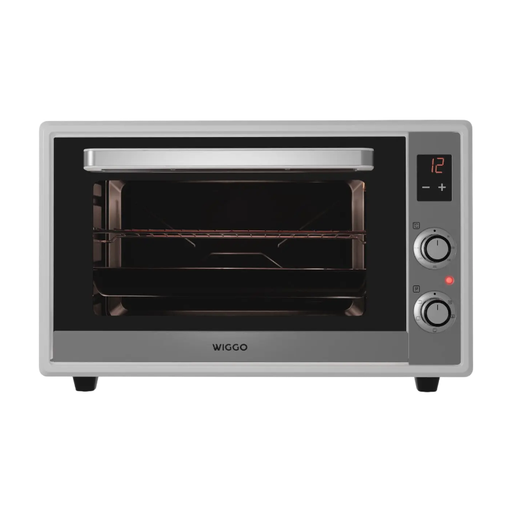 No image available
A freestanding oven to consider if you have space for a larger countertop model.
The product information lists 65 L, six functions and a 90-minute timer. Check the installation instructions and the space available for your tin.
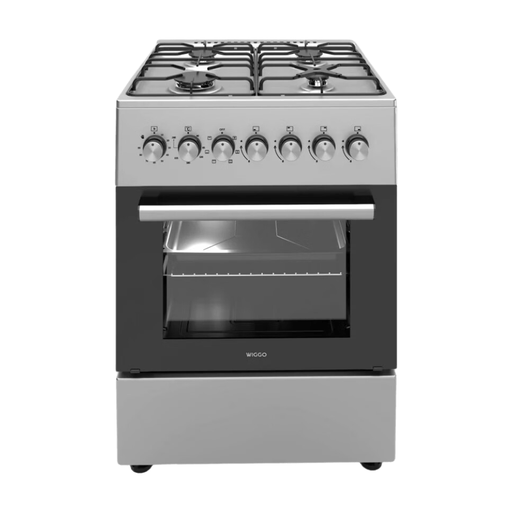 No image available
A freestanding model to consider if you also need the stated gas hobs and have a suitable gas connection.
The product description lists an oven capacity of 66 litres, four gas burners and an oven grill function. Professional installation and a gas connection are required; follow the ventilation instructions too.
Not necessarily: it’s best to use the setting specified in the recipe. Heel Holland Bakt says the suitable setting depends on the recipe; keep an eye on the instructions and the result as the cake bakes.
In the Rutger Bakt recipe, the syrup is poured over the freshly baked cake while it’s still warm and in its tin. This is a recipe instruction, not an oven function.
Measure your cake tin and compare its dimensions with the usable interior space and shelf position of the exact model. The stated capacity in litres won’t tell you on its own whether your tin will fit.
Don’t automatically use this setting for a recipe that calls for conventional oven baking. Check the setting specified in the recipe and whether you can use the oven function of the model you’ve chosen on its own.
According to ACM ConsuWijzer, if you buy from a business online, you’ll usually have up to 14 days from delivery to change your mind, subject to legal exceptions. If the product is faulty, you’re also entitled to a legal guarantee and the seller is responsible for offering a suitable solution. This isn’t the same as every oven having a fixed two-year guarantee.