Start with the recipe, the tart tin and how many tarts need to go in the oven at once. Conventional top and bottom heat is suitable for recipes that specify this setting. Fan-assisted cooking can be useful for baking on several shelves, but may dry out bakes more quickly. A freestanding oven needs a suitable place to stand, while a built-in oven must fit an appropriate housing unit. None of the features mentioned, on its own, guarantees a better result for custard tart.
Who is this oven guide for?
Workshop baker making one custard tart
You want to use the oven setting specified in the recipe and position the tart tin at the recommended height. Heel Holland Bakt discusses how the choice between fan-assisted cooking and conventional top and bottom heat depends on what you are baking.
Leading several baking groups
You want to know how many tins will fit at once and whether the recipe allows baking on several shelves. Heel Holland Bakt describes fan-assisted cooking as an option for baking on multiple shelves; check the recipe too, and bear in mind the risk of food drying out.
Organiser with limited kitchen space
You need to choose between a freestanding oven and an available built-in housing unit, and want to check both the installation requirements and the space for your tart tin. Consumentenbond advises checking the internal dimensions and the space needed for baking tins.
What should you look for when buying?
Start with the recipe and the tin, then work out how much baking space you need and which type of oven will suit your kitchen. Heel Holland Bakt explains that blind baking depends on the pastry case and filling; Consumentenbond advises checking the oven’s internal dimensions.
| What to consider |
What to look for |
Who is this most important for? |
| Pastry case and filling |
Check that the oven has the specified conventional top and bottom heat setting and that the tin fits at the required height. |
If I’m baking one custard tart, I want to follow the setting and shelf position given in the recipe. Around 36% of consumers prioritise control over the pastry case and filling. |
| Tarts per batch |
Measure the tins and check the usable internal space and shelf positions. Fan-assisted cooking may be suitable for several shelves, but watch out for food drying out. |
For several workshop groups, I want to know whether the tins will fit at once and whether the recipe is suitable for baking on different shelves. Around 29% of consumers give simultaneous baking capacity top priority. |
| Suitable installation |
For a built-in oven, measure the housing unit and oven space; for a freestanding model, measure the available space and follow the instructions for positioning it. |
If there isn’t a suitable built-in housing unit, I want to be able to position a freestanding model safely, with enough space around it. Around 21% of consumers start by considering their available kitchen layout. |
| Purchase and maintenance |
Compare the features your workshop will actually use, and check the cleaning method, included accessories and any installation requirements. |
If the oven will be used regularly, I want to know what cleaning it involves and what practical installation choices I need to make. Around 14% of consumers prioritise purchase and maintenance. |
Pitfalls to avoid
-
Comparing capacity in litres alone
The stated capacity doesn’t tell you whether your tart tin will fit at the required height. Racks and trays can reduce the usable space.
Measure your largest tin and check the model’s internal dimensions and shelf positions.
-
Assuming a microwave combi oven is a full-size baking oven
According to Consumentenbond, microwave combi ovens often lack bottom heat and sometimes have fewer shelf positions.
Check each model’s available oven settings, bottom heat and space for your tart tin.
-
Choosing a built-in oven without considering installation
A built-in model must fit the available housing unit and provide enough internal space for the tins you’ll use during the workshop.
Measure the housing unit and oven space, and check the installation instructions for your chosen model.
Also consider the practicalities of installation. The work required will depend on the oven and the available housing unit.
Brands to compare
Inventum
A freestanding option for a workshop space without a suitable built-in housing unit; the OV457B is a specific model to compare.
- Inventum lists a 45-litre capacity, conventional top and bottom heat, fan-assisted cooking, a baking tray and a rack for the OV457B.
- Check that your tart tin fits in the usable space and follow this model’s positioning instructions.
ETNA
A built-in option if you already have a housing unit; the OM165ZT is a model reviewed here, with a stated housing-unit height of 600 mm.
- ETNA lists conventional top and bottom heat and turbo fan-assisted cooking for the OM165ZT.
- As well as the stated housing-unit height, check the full dimensions of your kitchen unit and oven interior.
AEG
A built-in option with conventional heat and fan-assisted cooking; the OU5AB2W0CK is an example to compare for features and space.
- AEG lists conventional top and bottom heat, fan-assisted cooking, a net oven capacity of 65 litres and Aqua Clean enamel for the OU5AB2W0CK.
- The features and manufacturer descriptions listed are not an independent comparison of baking results for custard tart.
Bosch
A built-in option to consider if several shelf positions matter; the HBG578EB7 is the model reviewed here.
- Bosch lists conventional top and bottom heat and 3D fan-assisted cooking on up to three shelves for the HBG578EB7.
- A feature for baking on several shelves doesn’t prove that custard tarts will bake evenly on each one.
Ovens at Joybuy for this workshop
This selection includes freestanding and built-in ovens to compare for baking space, available heating functions and suitability for your workshop kitchen.
 No image available
Wiggo WMO-E657(B), freestanding oven, 65 litres, black
A freestanding option for a workshop space without a built-in housing unit; measure your tin and the available space before choosing.
The description lists a 65-litre capacity, six cooking functions, a turbo fan and four shelf positions. The oven has an enamel interior and must be cleaned by hand.
View at Joybuy
 No image available
Bosch HBF133BR0, built-in oven, 66 litres
A built-in option for a kitchen with a suitable housing unit; check the housing unit and internal space for your tart tin.
The description lists a 66-litre capacity, conventional top and bottom heat, 3D fan-assisted cooking and baking on up to three shelves. The temperature range is 50–275 °C; the stated housing-unit dimensions are 59,5 × 56,8 × 55 cm.
View at Joybuy
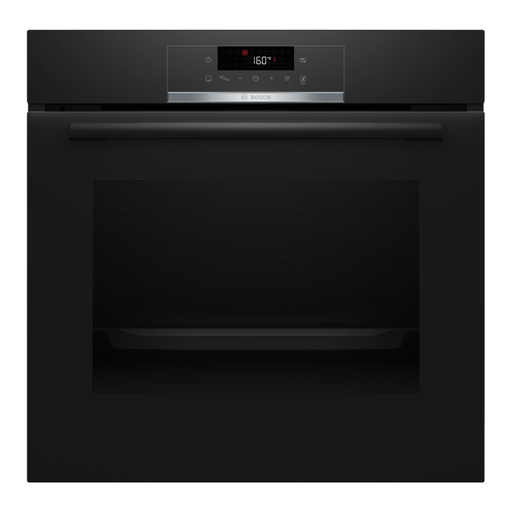 No image available
Bosch HQG572EB3, built-in oven, 71 litres, black
A built-in model to consider if you want the option of conventional top and bottom heat as well as fan-assisted cooking; check the housing-unit dimensions first.
The description lists a 71-litre capacity, conventional top and bottom heat, 3D fan-assisted cooking and up to three shelf positions. The temperature range is 30–275 °C and the oven has pyrolytic cleaning. The stated housing-unit dimensions are 585 × 560 × 550 mm.
View at Joybuy
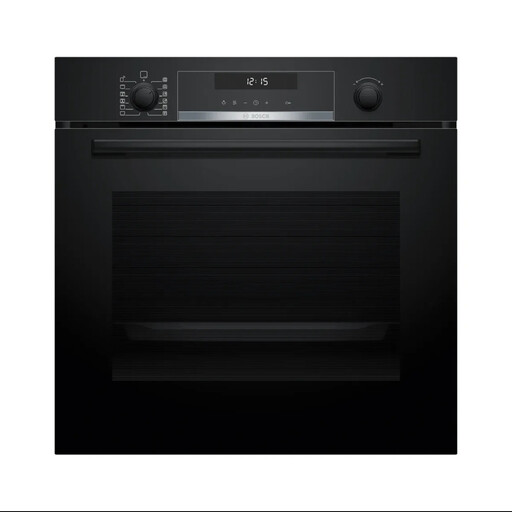 No image available
Bosch HBG578EB7, built-in oven, 71 litres
A built-in option if you want to compare different oven settings and shelf positions; measure the housing unit and tart tins before choosing.
The description lists conventional top and bottom heat, fan-assisted cooking and up to three shelf positions. The capacity is 71 litres, the temperature range is 30–275 °C and the oven has pyrolytic cleaning. The stated housing-unit dimensions are 585 × 560 × 550 mm.
View at Joybuy
 No image available
Wiggo WMO-E353(X), freestanding oven, 35 litres, stainless steel, 1800 W
A freestanding model to compare if you need a more compact set-up; check that your tart tin fits inside the oven.
The description lists a 35-litre capacity, 1800 W, an adjustable temperature of up to 250 °C and four shelf positions. Top and bottom heat are available separately or together; a baking tray and rack are included. The instructions specify a level surface, at least 10 cm of clearance at the sides and 30 cm above. The oven and accessories can get hot, so use oven gloves.
View at Joybuy
Frequently asked questions
Does a custard tart case always need to be blind baked first?
No, it depends on the recipe and the pastry. Heel Holland Bakt describes blind baking as an option when the pastry case needs longer to bake than the filling; follow the instructions for your recipe.
Can I simply switch on fan-assisted cooking for several tart tins?
Not without checking the recipe and the oven space. Heel Holland Bakt says fan-assisted cooking can be used on several shelves, but the airflow may dry out bakes more quickly. It doesn’t guarantee the same results for several custard tarts.
What should I check before participants use a freestanding oven?
Follow the instructions for the specific model to ensure it is positioned and used safely. The Inventum OV457B manual warns that accessible parts can get hot and says to use oven gloves when putting food in or taking it out. Don’t assume the same model-specific instructions apply to a different oven.
What can I do if the oven breaks sooner than I could reasonably expect?
For a purchase by a consumer, your statutory guarantee applies alongside any manufacturer’s warranty. According to ACM ConsuWijzer, the seller must resolve a fault that occurs during normal use if the product breaks sooner than you could reasonably expect. What you can reasonably expect depends, among other things, on the product and how it is used.
What food safety rules apply if I sell workshop tarts to consumers?
The Netherlands Food and Consumer Product Safety Authority lists rules for handling food safely when selling to consumers. The NVWA states that registration and a food safety plan or hygiene code are required if you sell several times a year. Whether this applies to your activity depends on the actual sales you make.


