Start with the recipe and your tart tin: check that the oven has the required settings and that the tin fits on the shelf. A freestanding oven could suit you if you don’t have a suitable built-in space and the oven, tin and chosen spot all fit. If you do have a suitable space, you can compare built-in ovens. The capacity in litres alone won’t tell you whether your tin will fit or whether the custard will cook evenly.
Who should consider this oven choice?
Baker making a delicate custard tart
You want to be able to blind-bake the pastry case, then cook the custard according to the recipe. Good Food’s recipe uses several oven stages, so check the settings and temperature controls on the exact model you’re considering.
Host with a large tart tin
You’re baking for several guests and need to check that the tin will actually fit on the shelf and inside the oven. The stated capacity alone won’t tell you whether it will fit.
Baker without a built-in space
You’re looking for a freestanding oven and need to check both the space for the tart tin and the required clearance around the appliance. Follow the instructions for the model you choose.
What to look for in an oven for custard tart
Good Food’s recipe starts by baking the pastry case, then lowers the temperature to cook the custard. Compare the baking settings and temperature controls on the exact model with your own recipe.
Freestanding oven
Choose this if: you don’t have a suitable built-in space and, after measuring, the oven, tart tin and chosen spot all fit.
Trade-off: the oven takes up worktop space. Keep the required clearance and ventilation openings unobstructed, as set out in the manual.
Built-in oven
Choose this if: you have a suitable built-in space and its dimensions match the model’s installation specifications.
Trade-off: the space, connection and fit of the tart tin all need to be right. A larger oven doesn’t prove that your tart will bake better.
| What to consider |
What to look for when buying |
Who this matters to |
| Baking settings |
Compare the settings and temperature range of the exact model with the instructions in your recipe. |
If I bake the pastry case and custard in separate stages, I want to be able to follow the settings in my recipe. Around 36% of consumers put baking settings first. |
| Fit of the tart tin |
Measure the diameter and height of the tin, then compare them with the usable internal dimensions, shelf and shelf positions. |
If I’m making a tart for several neighbours, I want to know whether my tin will actually fit on the shelf, not just how many litres the oven holds. Around 29% of consumers put fit first. |
| Where it will go in the kitchen |
Measure the built-in space or the spot where you plan to place it, and check the model-specific instructions for ventilation and connection. |
If I first need to find out which type of oven will fit my kitchen, I want to start with the built-in space or the room available. Around 21% of consumers put kitchen space first. |
| Running costs and aftercare |
Where available, compare energy use per cycle on a like-for-like basis and read the warranty and service terms. |
If I bake regularly, I want to consider electricity use and help if something goes wrong, as well as the purchase price. Around 14% of consumers put running costs and aftercare first. |
Pitfalls to avoid when buying
-
Choosing based on capacity in litres alone
The capacity and external dimensions won’t tell you directly whether your tart tin will fit on the shelf.
Measure your tin and, if needed, compare it with the usable internal and shelf dimensions of the exact model.
-
Choosing a freestanding oven without checking where it will go
An empty spot on the worktop won’t necessarily meet the oven’s ventilation and safety requirements.
Check the manual and keep the required clearance and ventilation openings unobstructed.
-
Assuming a larger or higher-rated model will automatically be more energy-efficient
The oven’s size or energy label alone won’t show which model will use less electricity for the way you cook.
Where available, compare energy use per cycle on the same basis for the models you’re considering.
Brands to compare
Inventum
The freestanding OV457B is one to consider if you don’t have a built-in space.
- Inventum lists a 45-litre capacity, six programmes, top and bottom heat, and fan-assisted cooking for the OV457B.
- Measure your tin and check the installation instructions. These specifications aren’t a baking test for custard tart.
ETNA
The OM670MZ built-in oven is one to compare if you have a suitable space and want a choice of baking settings.
- According to its product specification sheet, the OM670MZ has a 72-litre capacity, five shelf positions, and settings including top/bottom heat and bottom heat.
- Compare the stated installation dimensions with your own built-in space. The features don’t prove how this oven will bake a custard tart.
Bosch
The HBF133BA1 built-in oven is one to consider if you’re looking for top and bottom heat and suitable built-in dimensions.
- Bosch lists a 66-litre capacity, top and bottom heat, and minimum and maximum built-in dimensions for this model.
- The list of heating systems provided doesn’t include a separate bottom-heat setting. Check which setting your recipe needs. This is a specification comparison, not a baking test.
Ovens on Joybuy for custard tart
These models include freestanding and built-in ovens. For each one, check that the settings, tart tin and available space for installation or placement suit your needs.
 No image available
HAUSWIRT C40 fan oven, 35 L, four levels, thermometer
A freestanding model to compare if you’re looking for a compact oven. Check that your tart tin fits and that the settings suit your recipe.
The product name lists 35 L, a four-level baking rack, a thermometer and an LED display.
Joybuy
 No image available
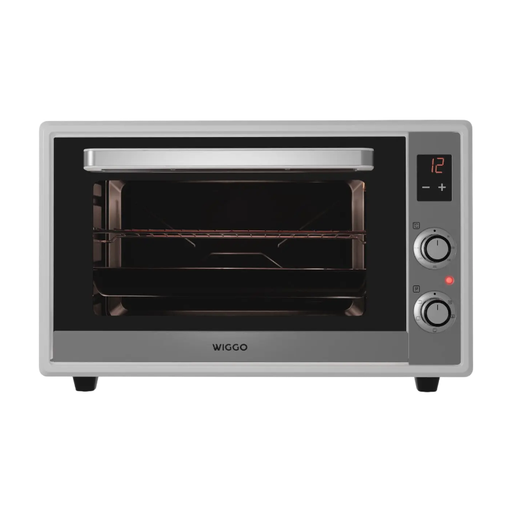
Wiggo WMO-E657(X) freestanding oven, 65 L, stainless steel, 2000 W
A freestanding option if you don’t have a built-in space. Measure your tart tin and check the model’s clearance requirements.
The product name lists 65 L and 2000 W.
Joybuy
 No image available
Bosch HMG7361B1 Double Oven, 71 L
A built-in option to compare if your kitchen has a suitable space. Check the installation dimensions and the settings required by your recipe.
The product name lists 71 L, pyrolytic cleaning, 3D Hot Air and Home Connect.
Joybuy
 No image available
Wiggo WMO-E353(X) freestanding oven, 1800 W, 35 L
A freestanding model to consider if you have room for a separate oven. Check that your tin fits and that you can leave the required clearance around it.
The product name lists 1800 W and 35 L. Keep the ventilation openings unobstructed, as set out in the model-specific instructions.
Joybuy
 No image available
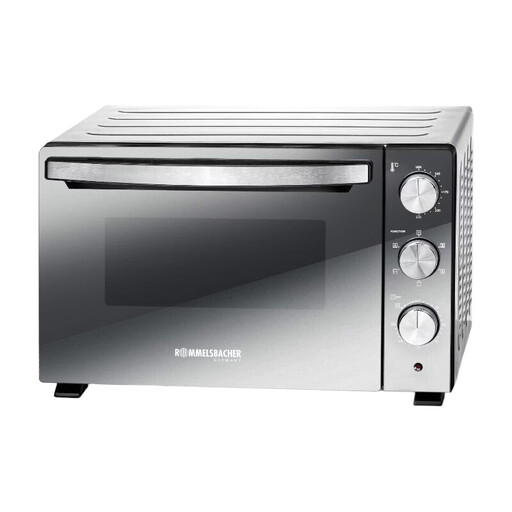
Rommelsbacher Baking & Grilling Oven BGS 1500
A baking and grilling oven to compare if you’re looking for a freestanding appliance. Check that its available settings match your recipe.
Also check that the shelf positions and space for your tart tin are suitable for what you want to bake.
Joybuy
Frequently asked questions
Which setting should you use for a custard tart?
Follow the recipe for your tart and compare the recommended setting with the terms used in your oven manual. Good Food’s recipe bakes the pastry case first, then lowers the temperature to cook the custard to 140 °C in a conventional oven or 120 °C in a fan oven. Don’t automatically use these temperatures for a different recipe.
How do you check installation requirements and first use?
For a built-in oven, compare the dimensions of the space with the installation specifications for the exact model. For a freestanding oven, follow the model-specific instructions for positioning, ventilation, connection and first use. Checking the external dimensions alone isn’t enough.
What does it cost to run, and who can help if it breaks?
Where available, compare electricity use per cycle rather than looking only at the energy label or oven capacity. The Dutch Government says that if there’s a problem with a product you’ve bought, you can contact the retailer. A manufacturer’s warranty is in addition to your statutory rights.
Does an oven sold in the Netherlands need an energy label?
Energy labelling is compulsory for household ovens covered by the applicable EU product rules. The European Commission sets out these rules for household ovens. Check whether a specific model falls within the relevant product category.
How should you store the tart until the neighbourhood get-together?
This depends partly on the filling. The Netherlands Nutrition Centre advises keeping pastries with perishable cream fillings chilled and setting your fridge to 4 °C. The storage life for pastry cream doesn’t automatically apply to a whole custard tart.


