
Baking small lunch portions
You bake one small tart or a few individual tarts and are mainly looking for the right baking setting and tin—not necessarily the largest oven.


Start by choosing an oven that fits your baking tin and lets you select the setting specified in your recipe. A compact countertop oven may be enough for small batches; larger tins or several tarts call for more usable baking space, while a combi microwave can be handy if you also want to reheat food. Check the CE marking on the model you choose: the NVWA says the Low Voltage rules apply to electrical equipment with a rated AC voltage of 50 to 1000 V. Any baked tart with a perishable filling must be kept chilled until lunchtime.
You bake one small tart or a few individual tarts and are mainly looking for the right baking setting and tin—not necessarily the largest oven.
You don’t have a suitable built-in space, so you need to weigh up the oven’s internal and external dimensions against where it can be placed safely.
You want to bake several tarts at once or use a larger tin, so you’re comparing the available baking space with the size of your own tin.
A good fit for: small tarts, kitchens without a built-in space and a baking tin that you’ve confirmed will fit the model.
Keep in mind: the oven limits the size of your tin and batches. Also check the clearance specified in the manual.
A good fit for: a larger tin or more tarts per batch, if you have enough worktop space.
Keep in mind: the stated capacity doesn’t necessarily tell you whether your tin will fit on the rack.
A good fit for: anyone who wants to bake and reheat with one appliance and has a recipe suited to the available oven setting.
Keep in mind: check that your tin can rotate freely on the turntable and that the required baking setting is available.
A good fit for: a suitable built-in space or a kitchen where you’re also looking for an oven for other baking.
Keep in mind: check the required niche dimensions. Installation may be more than you need for a small lunch portion.
| What to consider | What should you check? | Who is this important for? |
|---|---|---|
| Baking setting | Compare the settings available separately with the instructions in your recipe. Bosch describes conventional top and bottom heat as suitable for delicate bakes; this is the manufacturer’s advice, not a guarantee of results for every custard recipe. | If I mainly want to know which setting suits my recipe, I’m looking for an oven that actually has it. Around 36% of consumers put the baking setting first. |
| Baking tin and kitchen space | Measure your tin and the space available; compare them with the usable interior, opening, external dimensions and placement instructions for the exact model. | If space is limited, I want to know whether both the oven and my tin will fit. Around 29% of consumers give available space and fit top priority. |
| Portions per batch | Check how many tins will actually fit on the baking tray. A larger capacity in litres doesn’t, on its own, prove that you can fit more tins on one shelf. | If I want to bake several lunch portions at once, I look at the usable baking tray. Around 21% of consumers choose mainly according to the batch size they need. |
| Baking and reheating | Check the available oven setting and, for a combi microwave, whether the tin can move freely on the turntable. Inventum says the MN302CB has a fan oven function from 120 to 230 °C and a 31,5 cm diameter turntable. | If I’m looking for one appliance for baking and reheating, its oven function needs to suit my recipe. Around 14% of consumers make combined use their top priority. |
Capacity doesn’t tell you whether your baking tin will fit through the opening or sit on the rack. If it doesn’t fit, you may need a different tin or to bake in more batches.
Measure your tin and compare it with the usable space and opening of the exact model.
Ovens differ in which settings you can select individually. The Inventum OV207B lists separate top and bottom heat settings; Inventum describes the MN302CB as having a fan oven function.
Check the functions of the model you’re considering and compare them with the baking method in your recipe.
An oven bakes the tart, but it won’t keep a filling that needs to be chilled cold until lunchtime.
The Voedingscentrum advises keeping highly perishable food at 4 °C and not leaving it out of the fridge for more than 2 hours. So plan how you’ll transport the tart while keeping it chilled.
The BG 950 is a compact countertop option for a small baking tin.
The OV207B is a countertop oven, while the MN302CB is a separate range of combi microwaves for anyone who also wants to reheat food.
The TO 2058 is a larger countertop oven to consider if you need more baking space.
The Optimo OF444810 is a compact oven range with a manufacturer-listed pastry setting.
The HBA534BS3 is a built-in alternative if you have a suitable niche and are looking for a larger oven.
This selection includes compact and larger countertop ovens, as well as a built-in oven. Choose based on how your baking tin will fit and which baking setting you need. The NVWA says CE marking is required for electrical products covered by the Low Voltage rules; check the marking on the specific item.
 No image available
Worth considering if you’re looking for a larger countertop oven. Measure your baking tin and the available space before choosing.
 No image available
A compact countertop option to compare if you use a smaller baking tin. Check the stated dimensions and fit for the exact model.
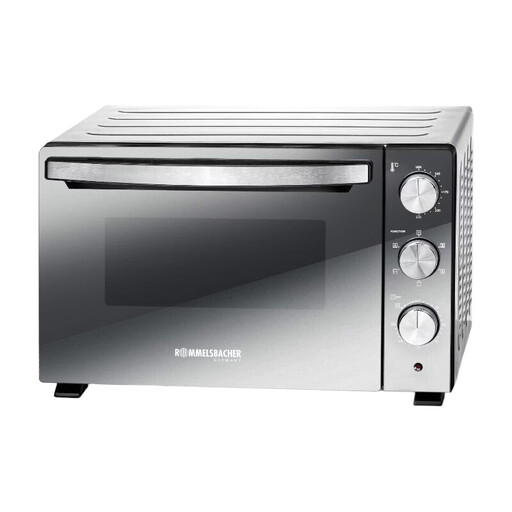 No image available
A countertop baking and grilling oven to consider if you need more baking space. Check that the dimensions and baking settings suit your needs.
 No image available
For small round tins: Rommelsbacher lists a 10-litre capacity and baking tins up to 20 cm in diameter for the BG 950. Check the size of your own tin.
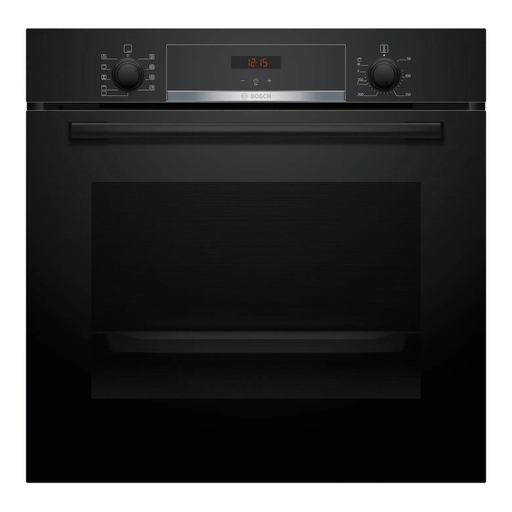 No image available
A built-in option if you have a suitable niche. Check the installation requirements and whether the features of this exact model suit your recipe.
First, follow the baking setting in your recipe and check that your chosen model has it. Bosch describes conventional top and bottom heat as suitable for delicate bakes; this is the manufacturer’s advice, not proof that every custard tart will turn out better that way.
Measure your tin and compare its dimensions with the usable interior and opening of the exact model. For the BG 950, Rommelsbacher lists round baking tins up to 20 cm; also check that your tin can sit on the rack or baking tray.
Not without first checking the manual for the exact model. Find out where it can be placed and how much clearance is needed for heat to escape.
Keep the tart chilled until you’re ready to eat it, and plan how you’ll keep it cold during transport. The Voedingscentrum advises keeping highly perishable food at 4 °C and not leaving it out of the fridge for more than 2 hours.
CE marking is required for electrical products covered by the relevant rules. The NVWA says the Low Voltage rules apply to electrical equipment with a rated AC voltage of 50 to 1000 V. Check the marking on the specific item.