
Cake baker with a fitted kitchen
You want to bake your celebration cake in a built-in oven and are mainly looking at usable interior space, oven settings and the dimensions of the housing.


Start by checking whether your cake tin will fit in the oven and whether the model has the setting your recipe calls for. For example, the Consumers’ Association lists conventional top and bottom heat as a suitable setting for cakes. A built-in oven needs the right housing dimensions and connection; a freestanding model needs a suitable spot on your worktop. For a combination appliance, check the oven functions of the exact model. None of the specifications mentioned can, by itself, predict how your custard tart will turn out.
You want to bake your celebration cake in a built-in oven and are mainly looking at usable interior space, oven settings and the dimensions of the housing.
You’re looking for a freestanding oven and want to check that both the cake tin and the oven will fit in the available worktop space.
You want to combine baking with a microwave function, but you’ll need suitable oven functions for your tart.
Suitable for: a kitchen with an appropriate housing space, especially if you bake regularly.
Bear in mind: measure the housing space and check the connection; installation may be required.
Suitable for: a kitchen where you don’t want a built-in oven and have enough suitable worktop space.
Bear in mind: the oven takes up worktop space; follow the model’s placement and ventilation instructions.
Suitable for: when you need a microwave function as well as an oven.
Bear in mind: functions vary between appliances; the Consumers’ Association points out that combination microwave ovens often don’t have a bottom heat setting.
| What to consider | What should you check? | Who is this most relevant to? |
|---|---|---|
| Oven settings | Check the available settings, temperature controls and shelf positions. Follow the recipe and oven manual for the setting and baking time. | If I want to match the baking setting to my cake recipe, I’ll first check which functions the model actually has. Around 36% of consumers prioritise the baking setting. |
| Fit and capacity | Measure the cake tin and compare it with the usable interior dimensions; the capacity in litres alone won’t tell you whether the tin will fit. | If I’m planning other dishes for the party too, I’ll want to know whether the tin and the baking equipment I need will fit in the oven. Around 29% of consumers prioritise fit and capacity. |
| Positioning and installation | For a built-in oven, check the housing and appliance dimensions, as well as the connection. For a freestanding model, check the required clearance and ventilation. | If my kitchen has little spare space, I need to know where the oven can safely stand or be installed. Around 21% of consumers put positioning first. |
| Cleaning and energy use | Compare the cleaning method and, where applicable for the model, the energy consumption per cycle on the EU oven label. This won’t estimate the energy used for your recipe. | If I want to keep the oven easy to clean after the party too, I’ll compare the cleaning function and the relevant energy label. Around 14% of consumers start with cleaning and energy use. |
The stated capacity in litres doesn’t tell you whether a particular tin will fit in the usable oven space. Parts inside the oven can reduce the available room.
Measure your cake tin and compare its dimensions with the interior space, including where it will sit on a shelf or baking tray.
The Consumers’ Association notes that combination microwave ovens often don’t have bottom heat, so the product category name doesn’t tell you which settings are available.
Check the functions of the exact model and compare them with the setting your recipe calls for.
The oven needs to fit the housing space and the electrical connection. Installation or changes to the connection may involve extra work.
Check the installation manual beforehand and find out what’s included in the installation.
Custard filling can be perishable. The Netherlands Nutrition Centre advises not leaving perishable food out of the fridge for more than 2 hours and keeping your fridge at 4 °C.
Make room in the fridge for the tart and follow the storage advice for the filling you’re using and the recipe.
The HBA534BS3 built-in oven is one example you can use to compare conventional heat, fan-assisted cooking and separate bottom heat.
The freestanding TEO2101B and TEO7501B show how capacity can vary between models.
The IOM6035GT built-in oven is an example for anyone looking to compare different heating settings and shelf positions.
The NBU5P40SM built-in oven is an example you can use to compare heating settings and pyrolytic cleaning.
This selection includes built-in ovens, freestanding ovens and a combination oven. Compare the baking settings and fit with your recipe and cake tin.
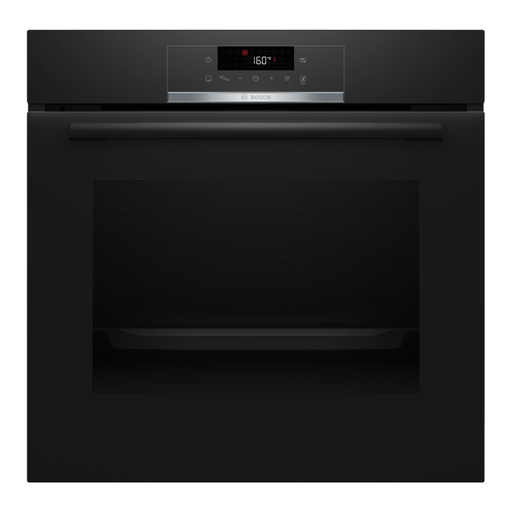 No image available
An option if you’re looking for a built-in oven with top and bottom heat and room for several dishes.
The stated oven capacity is 71 litres, and the oven interior measures 357 × 480 × 415 mm. Baking on up to three levels is listed. Compare the housing dimensions and connection with your kitchen.
 No image available
A freestanding option if you’re not looking for a built-in oven and have a suitable spot for an oven with a hob.
The product information lists a 45-litre capacity, six functions and fan-assisted cooking. Check the model’s baking settings and the clearance needed for ventilation.
 No image available
A freestanding option if your recipe calls for top and bottom heat and you don’t want a built-in oven.
The product information lists a 35-litre capacity, four shelf positions, and a baking tray and wire rack included. The instructions call for a flat, heat-resistant surface with at least 10 cm of clearance all around and 30 cm above.
 No image available
A compact freestanding option if your cake tin is within the stated size and you have a suitable spot for the oven.
The product information lists a 22-litre capacity, five heating settings and cake tins up to 25 cm in diameter. Check that your tin is within this size and that the oven has enough ventilation space.
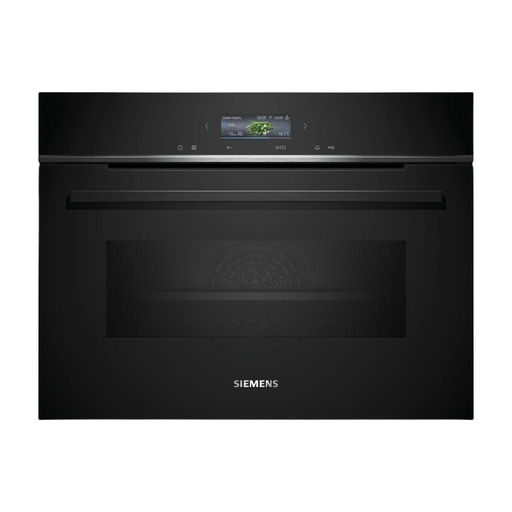 No image available
A built-in combination option if you need a microwave function as well as an oven.
The product information lists a 45-litre capacity, 4D hot air and automatic baking programmes. Check that the oven settings suit your recipe and that the built-in dimensions and connection are right for your kitchen.
No, fan-assisted cooking isn’t essential in every case: the Consumers’ Association lists top and bottom heat as a suitable setting for cakes, among other things. Follow your recipe and oven manual for the temperature, setting and baking time.
Measure the housing space and compare it with the exact appliance dimensions. Also check the connection and installation manual; don’t rely on a general size description alone.
Keep the tart chilled in line with the recipe and the product information for the filling you’re using. The Netherlands Nutrition Centre advises keeping your fridge at 4 °C and not leaving perishable food out of the fridge for more than 2 hours; this isn’t a general storage time for every finished tart.
Household ovens covered by the relevant EU rules must meet energy labelling requirements. The European Commission gives small and portable ovens as examples of products outside the scope of energy labelling, so don’t assume a mini oven needs to display the same label as a standard built-in oven.
According to ACM ConsuWijzer, the seller is responsible for the legal guarantee if the product doesn’t meet what you could reasonably expect when used normally; a shorter manufacturer’s guarantee doesn’t remove that right. Online purchases generally also come with a cooling-off period of up to 14 days after delivery, subject to applicable exceptions.