
Home baker with a favourite baking dish
You want to keep using your own dish, so check its internal dimensions before weighing up extra oven features. The Consumentenbond recommends comparing the usable oven space with your largest oven dish.


Start by checking the size of your baking dish and the setting required by your recipe. A stated capacity in litres doesn’t guarantee that your dish will fit, as the Consumentenbond also points out when comparing oven space. A freestanding oven is a good choice if your kitchen doesn’t have a suitable built-in space; for a built-in oven, the housing must be the right size. For your picnic, also plan how to transport your bake safely: according to the Voedingscentrum, food that needs to be kept chilled should be carried in a cool bag.
You want to keep using your own dish, so check its internal dimensions before weighing up extra oven features. The Consumentenbond recommends comparing the usable oven space with your largest oven dish.
You’re looking for a freestanding oven and need to check both the space on your worktop or in your kitchen and whether your baking dish will fit. The capacity in litres won’t tell you that on its own.
You’re considering a built-in oven for clafoutis and other dishes. You’ll need to take the housing dimensions, usable interior space and oven settings into account.
Measure your own dish, including the handles, and check that it will fit through the opening and sit on a shelf. An Albert Heijn recipe uses a 28 cm shallow tart tin, but your dish may be different.
Choose this when: you don’t have a built-in space and your usual baking dish fits inside the appliance.
Consider: a compact model may limit your choice of baking dishes, so check the internal dimensions and door opening.
Choose this when: you want to use a larger dish or need more oven space without installing a built-in model.
Consider: check that the external dimensions suit the available space. The capacity in litres alone won’t tell you whether your dish will fit.
Choose this when: you have a suitable built-in space or are planning a fitted kitchen, and you’ll use the oven for other dishes too.
Consider: compare the housing dimensions with the installation dimensions for the exact model, and check the usable interior space.
Choose this when: using a microwave is important to you, and the oven settings and space of the specific appliance suit your recipe.
Consider: the Consumentenbond notes that combination microwaves often don’t have a bottom heating element and tend to offer fewer shelf positions than ovens designed primarily for baking.
| What to consider | What should you check? | Who is this important for? |
|---|---|---|
| Baking dish and oven setting | Measure the dish, including the handles, and check the internal dimensions, opening and shelf position specified in your recipe. | I want to keep using my own baking dish, so I’m checking that it fits and that the oven has the right setting. Around 36% of consumers give the shape of the dish and how evenly it cooks top priority. |
| Space for a freestanding oven | Compare the external dimensions with the available space and check the model’s installation instructions. | Without a built-in space, I’m looking for a freestanding model that will fit where I plan to put it. Around 29% of consumers prioritise being able to install their oven without a built-in space. |
| Room for a larger dish | Compare the dimensions of your dish with the usable interior space and door opening. | If I want to use a larger dish or make more portions, I need to know how much usable space there really is—not just the stated capacity in litres. Around 21% of consumers prioritise baking capacity. |
| Built-in installation and other uses | Check the housing dimensions and consider the oven settings alongside the other dishes you want to prepare. | If I want to cook other dishes too, I’ll check that the housing is suitable and the oven has the settings I need. Around 14% of consumers prioritise versatility in a built-in oven. |
An oven’s total volume isn’t the same as the usable space for your dish. The Consumentenbond recommends comparing the internal dimensions with the largest oven dish you want to use.
Measure your dish, including the handles, and check the opening and shelf position before choosing a model.
If your dish doesn’t fit, you may need a different one.
According to the Consumentenbond, combination microwaves often don’t have a bottom heating element and generally offer fewer shelf positions. This can matter for the setting or dish required by your recipe.
Compare the oven functions and interior space of the exact model with your recipe and baking dish.
Baking and transporting food safely are two separate considerations. The Voedingscentrum recommends carrying chilled products in a cool bag and throwing them away if they’ve been left unrefrigerated for more than two hours.
Check the ingredients in your recipe and plan how to transport it according to its storage requirements.
The Voedingscentrum recommends carrying food that needs to stay chilled in a cool bag.
Model codes can vary between versions. A commercial warranty is also separate from your statutory rights; one doesn’t replace the other.
Compare the full model code and specifications. Read the warranty terms separately and remember your statutory rights.
The OV307B is an example of a freestanding oven for anyone looking for a compact baking space.
The TO 2058 is an example of a freestanding oven with a larger stated capacity.
The HBA534BS3 is an example of a built-in oven with several heating systems.
The MATÄLSKARE 403.687.65 is an example of a built-in oven for a suitable kitchen layout.
This selection includes freestanding and built-in ovens to compare for clafoutis and other dishes. Before choosing, check that your baking dish fits and that the oven will fit in the available space.
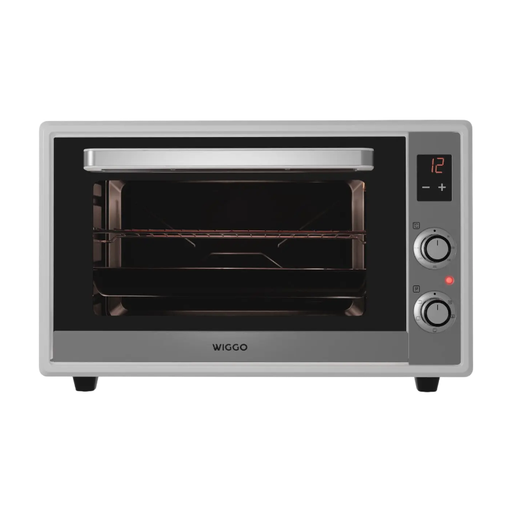 Image unavailable
A freestanding model for anyone without a built-in space who wants a roomier oven. The product name lists a 65 L capacity and 2000 W; the description mentions six cooking functions. The turbo fan is listed as optional, and the exterior can become hot during use.
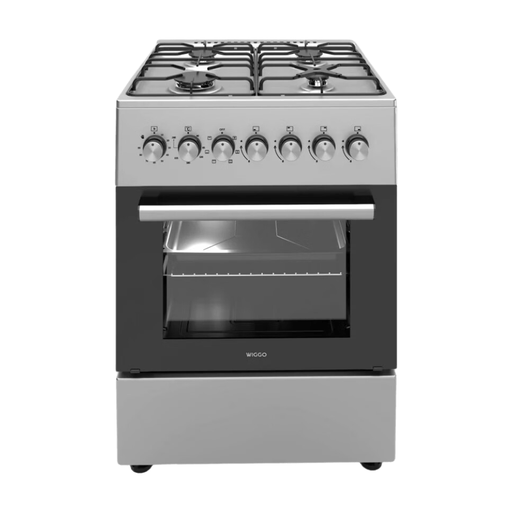 Image unavailable
A freestanding gas oven for anyone without a built-in space. The description lists a 66-litre capacity and a grill function. According to the product information, installation and connection to the gas supply must be carried out by a professional technician, and ventilation is required.
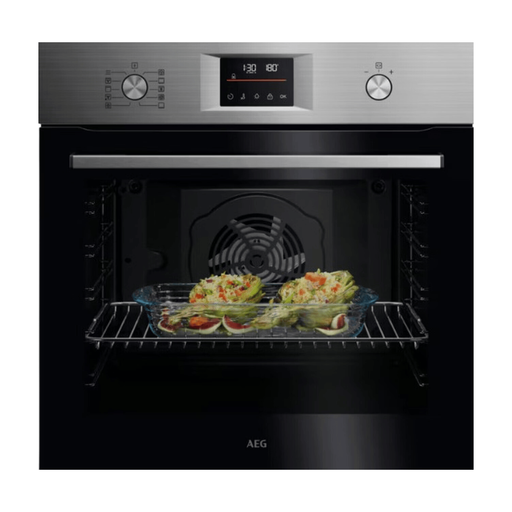 Image unavailable
A built-in model for anyone with a suitable housing space who wants a range of oven functions. The description lists a 72-litre capacity, convection cooking, a grill, 45 cooking programmes and five shelf positions. The housing space and installation must meet this model’s requirements.
 Image unavailable
A freestanding oven for anyone looking for top and bottom heat without a built-in installation. The description lists a 35-litre capacity, 1800 W, a 90-minute timer and four shelf positions. Leave at least 10 cm of space at the sides and 30 cm above the appliance; don’t use it inside an enclosed cupboard.
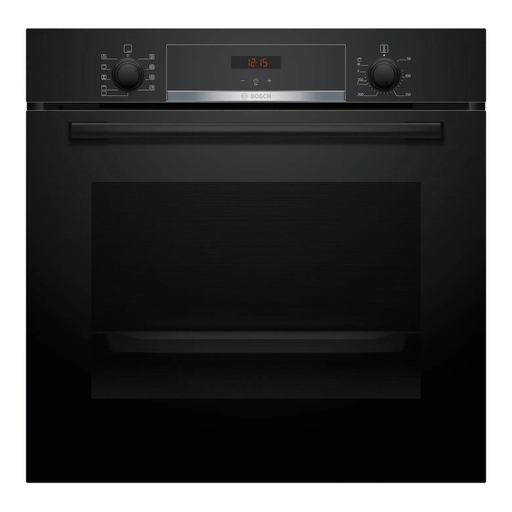 Image unavailable
A built-in oven for anyone with a suitable kitchen space who also wants to prepare other baked dishes. The description lists a 71-litre capacity, convection cooking, a grill, seven cooking programmes and hydrolytic cleaning. Check the installation dimensions for this model.
Follow the setting and temperature in the recipe you’ve chosen, and check which settings your oven offers. Bosch gives a general rule of thumb that a fan setting can be around 20 °C lower than the temperature for top and bottom heat. This isn’t a fixed setting for every oven or clafoutis.
Carry ingredients or prepared food that needs to stay chilled in a cool bag. The Voedingscentrum recommends throwing away food that would normally be refrigerated if it has been left unrefrigerated for more than two hours. Storage requirements also depend on the ingredients in your recipe.
Follow the instructions for your exact model and let hot parts cool down safely first. Inventum recommends cleaning the OV307B with a soft, damp cloth and a little washing-up liquid; IKEA recommends a damp cloth and a mild cleaning product for the MATÄLSKARE.
No. A manufacturer’s or seller’s warranty is separate from your statutory rights. According to ACM ConsuWijzer, if a product is faulty despite being used normally, the seller must provide an appropriate solution free of charge. There is no single fixed statutory warranty period for all ovens.
Electrical equipment covered by Directive 2014/35/EU must carry the CE marking. EUR-Lex explains that the directive applies to equipment rated at 50–1,000 V AC or 75–1,500 V DC. Check whether it applies and review the conformity information for the specific model.