What should you look for when buying?
Start by assessing the baking task and the tin, then consider where the oven will go. Once those basics are right, compare how it works and the aftercare available.
| What to consider |
What should you check? |
Who will find this important? |
| Suitable baking setting |
Check the oven setting and whether you can set the temperature and time specified in the recipe. |
If I want to bake a cake base according to a recipe, I need the oven to handle the required baking task. Baking is the top priority for around 33% of consumers. |
| Space for the tin |
Check the internal dimensions and whether the tin, wire rack and any baking tray can be positioned properly. |
If I’ve chosen a specific cake tin for a family celebration, I want to make sure it fits my set-up. Space for the tin is the top priority for around 27% of consumers. |
| Positioning and connection |
For a built-in oven, measure the housing according to the installation diagram. For freestanding use, follow the positioning and connection instructions. |
If I don’t have a suitable built-in housing or don’t want to adapt my kitchen, the oven needs to fit the space I have available. Positioning is the top priority for around 27% of consumers. |
| Use and aftercare |
Compare energy labels and consumption on the same basis, and check each model’s cleaning requirements and warranty terms. |
If several ovens suit my recipe and kitchen, I also want to consider energy use, maintenance and support if something goes wrong. Running costs and aftercare are the top priority for around 13% of consumers. |
Ovens at Joybuy
This selection includes freestanding ovens and combination appliances. Check each model’s baking setting, internal space and positioning requirements against your recipe, cake tin and kitchen.
 No image available
HAUSWIRT C40 Smart fan oven, 35 L
A freestanding model to consider if you don’t want a built-in housing. The product name lists a capacity of 35 L and a four-level baking rack; check that your tin and baking tray will fit and that the settings suit your recipe.
View at Joybuy
 No image available
Sharp YC-PC254AE-S combination microwave oven, 25 L
A combination appliance to consider if you want to combine baking with microwave use. The stated oven cavity dimensions are 340 × 220 × 344 mm and the turntable has a diameter of 270 mm; check that your tin and recipe set-up will fit.
View at Joybuy
 No image available
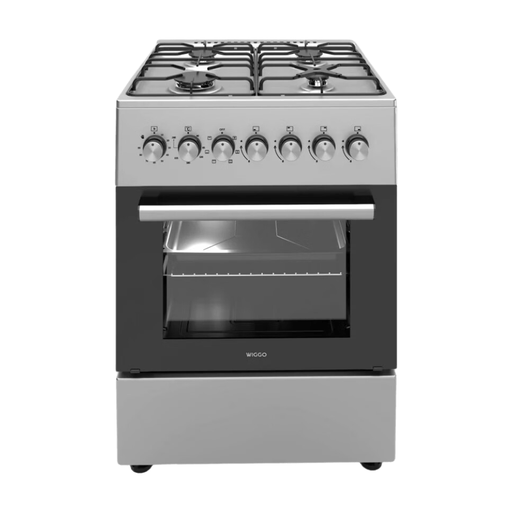
Wiggo WO-E606A(XX) freestanding gas oven, 60 cm
Consider this freestanding gas oven only if the model specifications confirm that it has the baking setting your recipe requires. Have a qualified professional carry out the installation and gas connection, and ensure good ventilation.
View at Joybuy
 No image available
Wiggo WMO-E657(B) freestanding oven, 65 L
A freestanding model to consider if you’re looking for an oven for baking. The product name lists a capacity of 65 L and 2000 W. When positioning it, leave at least 10 cm of clear space on all sides and 30 cm above it, and don’t block the ventilation openings.
View at Joybuy
 No image available
Siemens FF023LMB2 combination microwave oven, 20 L
A combination appliance to consider if you want a microwave function as well as baking. The product name lists a capacity of 20 L; the product information lists convection, grill and microwave functions. Check which setting suits your recipe. If you position it in a cupboard, make sure there’s enough ventilation.
View at Joybuy
Frequently asked questions
Do I need a microwave for a chocolate ganache cake?
Not for the baked base in the recipe from Rutger bakt: it’s baked on a baking tray in an oven at 180 °C, then the ganache is added to the cooled base. Follow your own recipe, as the method may differ. A microwave function doesn’t replace a required oven setting.
How can I tell if my cake tin will fit?
Check the internal dimensions and whether the tin fits your recipe set-up, for example on a baking tray. The recipe from Rutger bakt uses a 20 cm cake ring on a baking tray; a capacity in litres won’t tell you whether your tin will fit.
What should I check before positioning the oven and using it for the first time?
For a built-in oven, compare the housing with the installation diagram for the exact model. For a freestanding oven, follow the instructions for positioning and connection. The Fire Service recommends connecting high-power appliances directly to a socket wherever possible, rather than using a cable reel or extension lead.
Do household ovens in the Netherlands need an energy label?
The European Commission states that energy labelling is compulsory for ovens. Check whether the specific compact appliance falls into that product category, and compare models’ labels and consumption on the same basis.
What if the oven breaks down too soon during normal use?
According to ACM ConsuWijzer, in the Netherlands you have statutory rights against the seller if a product doesn’t offer what you could reasonably expect. If the fault is covered, the seller must resolve the problem free of charge; the length of a manufacturer’s warranty doesn’t, by itself, determine how long your statutory rights last.


