
Baking one cake
You want the oven setting to suit your recipe and your cake tin to fit inside the oven. The Consumers’ Association (Consumentenbond) recommends checking the internal dimensions and comparing them with your largest oven dish.


Choose an oven based on your recipe, the dimensions of your cake tin and the space you have available. A freestanding oven could be suitable if you don’t have a fitted oven space. A built-in oven is another option if your kitchen has a suitable niche, while a combi microwave is worth considering if you also need a microwave function. Capacity in litres and a fan-assisted setting alone won’t tell you whether your tin will fit or whether several cakes will bake evenly at the same time.
You want the oven setting to suit your recipe and your cake tin to fit inside the oven. The Consumers’ Association (Consumentenbond) recommends checking the internal dimensions and comparing them with your largest oven dish.
You’re making several cakes for the same sale and want to know how many tins will fit at once, or how many batches you’ll need. A manufacturer’s claim that an oven has several shelf levels doesn’t prove that your cakes will all turn out the same when baked together.
You may not have space for a built-in oven, so you’re comparing a freestanding appliance with a combi microwave. Check the space available for your tin, the functions and the model’s installation instructions.
Suitable when: you don’t have a suitable built-in oven space and your cake tin fits inside the appliance with enough room around it.
Keep in mind: capacity in litres doesn’t tell you which round cake tin will fit. Check the ventilation and placement instructions too.
Suitable when: you have a suitable built-in oven space and want oven settings or baking space to suit your recipe and plans.
Keep in mind: measure both the oven space and your cake tin. A manufacturer’s claim about several shelf levels doesn’t guarantee the same baking results for several cakes.
Suitable when: you also want to reheat food regularly, as well as bake, and your tin fits the model you’ve chosen.
Keep in mind: don’t assume every model has the same oven settings or shelf levels as a baking oven.
| Key consideration | What should you check? | Who is this important for? |
|---|---|---|
| Oven setting and recipe | Compare the setting specified in your recipe with the functions of the exact model. Conventional heat and fan-assisted settings aren’t automatically interchangeable. | If I want to follow my chosen recipe as closely as possible, I prefer an oven with the recommended setting. Around 31% of consumers prioritise the oven setting and baking results. |
| Does the cake tin fit? | Measure your tin and compare its dimensions with the oven space. With a combi microwave, also check that the tin can rotate freely on the turntable. | I want to use my existing or chosen tin without relying on the capacity in litres alone. Around 25% of consumers give the fit of their cake tin top priority. |
| Number of cakes | Work out how many tins you need and check the internal dimensions, shelf positions and instructions for baking several cakes at once. | If I need to make several cakes for the same sale, I want to plan in advance how many batches I’ll need. Around 19% of consumers prioritise capacity and the number of batches. |
| Installation and purchase | Check the dimensions of the oven space or appliance, the ventilation clearance and the installation instructions. | I need to know whether the appliance can be installed and used safely in my kitchen before choosing a model. Around 13% of consumers prioritise installation and purchase requirements. |
| Baking and reheating | Compare the individual oven settings and check whether your tin fits on the turntable. | If I also want to reheat food regularly, as well as bake, the combination of functions matters to me. Around 12% of consumers give combined use top priority. |
The usable space may be smaller than the stated capacity. So even an oven with plenty of litres may not be suitable for your tin.
Measure your cake tin and compare its dimensions with the internal space before choosing an oven.
A combi microwave won’t necessarily have a conventional bottom-heat setting or several shelf levels like a baking oven.
Check the oven functions of the exact model and compare them with the method in your recipe.
A manufacturer’s claim about shelf levels isn’t a test of your recipe, tins or baking results.
If you need several cakes, consider doing a test bake and allow for separate batches if necessary.
Safe storage and information about allergens present are also important when selling food.
Agree on ingredients, storage and allergen information with the school in advance. The Netherlands Food and Consumer Product Safety Authority (Nederlandse Voedsel- en Warenautoriteit) provides information on selling food safely and allergens in non-prepacked food.
Freestanding baking and toaster ovens. The TO 2058 is worth comparing if you’re looking for a separate oven with conventional top and bottom heat.
Freestanding ovens. The OV457B is worth comparing if you’re looking for a freestanding fan-assisted oven.
Built-in baking ovens. The HBA534BS3 is worth considering if you have a suitable built-in oven space and want to choose between conventional heat and fan-assisted cooking.
Combi microwaves. The NN-CD88 is worth comparing if you want to combine baking and reheating in one appliance.
Built-in baking ovens. The HB457G0B3F is worth comparing if a suitable 60 × 60 cm built-in oven fits in your kitchen.
This selection includes freestanding baking ovens and combination appliances for anyone weighing up the size of their cake tin, available kitchen space and need for a microwave function.
 No image available
Could suit you if you’re looking for a freestanding convection oven. Check that your cake tin fits inside.
The product title lists a capacity of 35 litres and a four-level baking rack. The product description mentions a convection system and baking; several levels alone don’t guarantee even baking results.
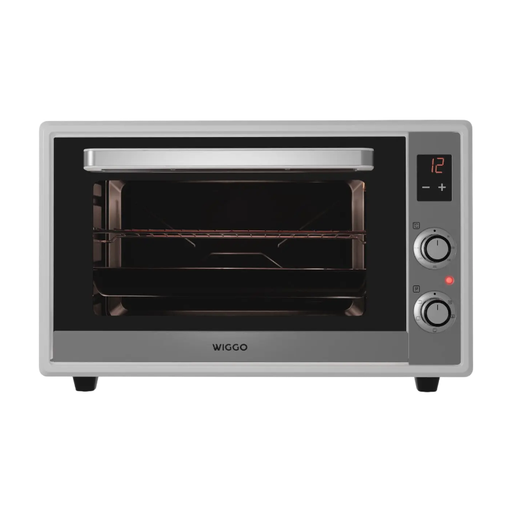 No image available
Could suit you if you’re looking for a freestanding oven. Measure the available space and the internal dimensions to check that your cake tin will fit.
The product details list a capacity of 65 litres and six cooking functions. The turbo fan is described as optional.
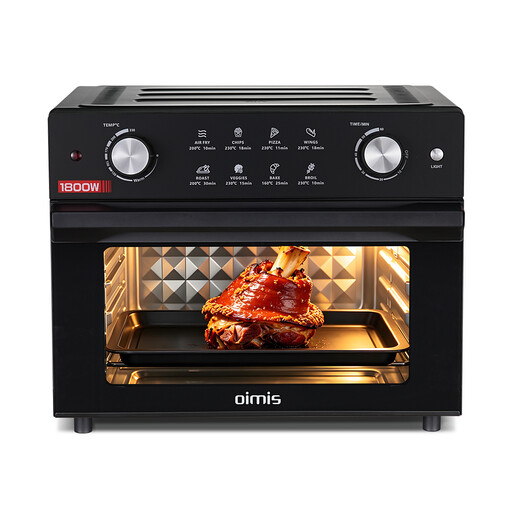 No image available
Could suit you if you’re looking for a combined oven and toaster. Check that the dimensions and oven setting suit your cake tin and recipe.
The product title says it fits a 13-inch pizza and has manual controls.
 No image available
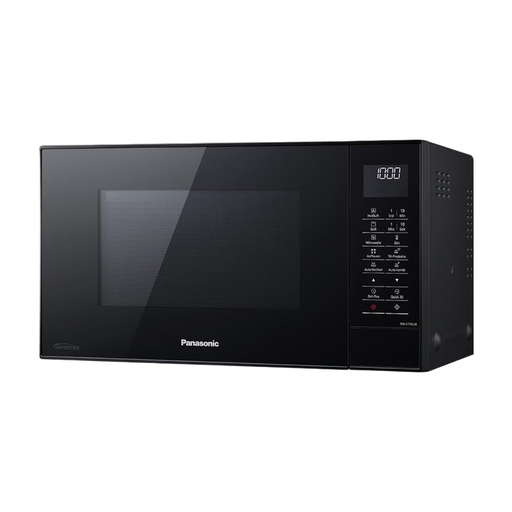
Could suit you if you want to combine baking and microwave use. Check that your cake tin can rotate freely on the turntable.
The product details list a 34 cm turntable and hot-air baking. The product title lists a microwave power of 1000 W.
 No image available
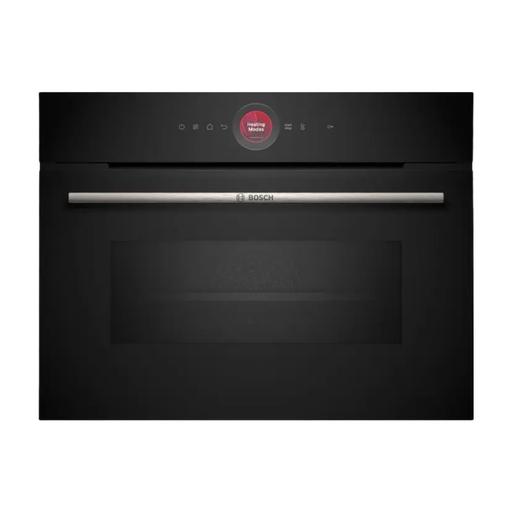
Could suit you if you’re looking for a built-in combination oven. Check the dimensions of the oven space and whether the cake tin is suitable for the oven function.
The product details list a capacity of 45 litres, a microwave power of 900 W and oven-space dimensions of 45,50 × 56 × 55 cm. The description mentions convection cooking.
Not for every recipe. Start with the setting specified in yours. Switching to a fan-assisted setting may require an adjustment. For example, a vanilla chocolate cake recipe from Heel Holland Bakt specifies 180 °C conventional top and bottom heat, but that setting won’t automatically suit a different cake.
No. Measure your tin and compare it with the available internal space. With a combi microwave, the tin must also be able to rotate freely on the turntable.
Follow the placement and ventilation instructions for the exact model. The Fire Service (Brandweer) recommends allowing appliances to release their heat and, where possible, plugging high-power appliances directly into a wall socket rather than using a cable reel or extension lead.
Prepare, sell and store food safely, and tell customers about any allergens present in non-prepacked food. The Netherlands Food and Consumer Product Safety Authority links a mandatory HACCP food safety plan on its events page to preparing and selling food several times a year. This doesn’t automatically mean you need to register or have a plan for a one-off school sale.
Follow the storage advice for the ingredients and recipe. For foods that need to be kept chilled, the Netherlands Nutrition Centre (Voedingscentrum) recommends a fridge temperature of 4 °C. An oven is no substitute for refrigeration.