
Weekend baker with a favourite cake tin
You mainly want to know whether your tin will fit and whether you can use the oven setting specified in the recipe.


Start by checking whether your cake tin fits in the oven and whether the appliance has the setting specified in your recipe. Compare the usable internal dimensions and features, not just the capacity in litres. A freestanding oven needs a suitable spot on your worktop, while a built-in oven needs a correctly sized housing. With a combination microwave, it’s particularly important to check the baking settings and whether there’s room for your tin.
You mainly want to know whether your tin will fit and whether you can use the oven setting specified in the recipe.
Your choice depends on the available worktop space or oven housing. Both the external dimensions and usable internal space matter.
You want to combine functions, so you’ll need to check which oven settings the combination appliance offers and how much room there is for your cake tin.
Best for: anyone who doesn’t want to use a built-in housing and has a suitable spot on the worktop.
Consider: the appliance takes up worktop space, and you’ll also need to check that your cake tin fits inside.
Best for: anyone with a suitable kitchen layout who wants to choose between fan and conventional heat (top and bottom heat).
Consider: check the housing dimensions and the usable oven space separately.
Best for: anyone with a smaller housing who wants a separate oven with a choice of baking settings.
Consider: measure your cake tin and compare the built-in dimensions. There’s no evidence that steam assistance is necessary for this cake.
Best for: anyone who wants one appliance for both microwave functions and baking.
Consider: check the baking settings and whether there’s room for your tin. Not every model offers the same oven functions.
| What to consider | What should you check? | Who should consider this? |
|---|---|---|
| Will the cake tin fit? | Measure your tin, including any protruding edges, and compare its dimensions with the oven opening and usable internal space. The Consumers’ Association recommends checking the internal dimensions and the size of the largest oven dish. | If I need to use my usual tin in the oven, I want to know in advance whether it will fit through the opening and sit on the rack. Around 36% of consumers say that a good fit for their bakeware is their top priority. |
| Which baking setting does the recipe call for? | Check that the appliance has the required setting. When converting a recipe from conventional heat (top and bottom heat) to fan oven, the Netherlands Nutrition Centre recommends starting with a temperature around 10% lower. | If I want to follow the recipe as closely as possible, I check the specified setting and temperature. Around 29% of consumers put using the correct recipe setting first. |
| Where can the oven go? | Compare the built-in dimensions with your housing. For a freestanding model, check the installation and connection instructions, and make sure you have a suitable spot for it. | If space is limited, I want to know in advance whether there’s room on the worktop or in the existing housing. Around 21% of consumers say that available installation space is their top priority. |
| Combining baking with microwave use | Check the oven settings, space for your tin and whether there’s a turntable. The Consumers’ Association points out that combination microwaves often have fewer oven settings or shelf positions, and sometimes don’t have bottom heat. | If I also want to reheat meals, I weigh up that function against the baking options for my recipe. Around 14% of consumers prioritise combined use and the trade-offs involved. |
The stated capacity doesn’t tell you whether your cake tin will fit through the opening or have enough room on the rack.
Measure your tin and compare its dimensions with the opening and usable internal space before choosing a model.
Available settings and shelf positions vary between appliances. Some combination microwaves don’t have bottom heat.
Compare the model’s features with the baking setting and space for your tin required by your recipe.
There’s no fixed statutory guarantee period in the Netherlands. Your statutory rights are separate from any manufacturer’s or seller’s guarantee.
Check what any additional guarantee covers. If a product is faulty, contact the seller.
Freestanding fan ovens for anyone who isn’t looking for a built-in model; the OV457B is one example.
Built-in ovens with several baking settings; the HBA514BB3 is one example, offering fan cooking as well as conventional heat (top and bottom heat).
Compact built-in ovens; the EVD6H46GZ is a 45-litre model with a conventional setting and fan cooking.
Combination microwaves with fan cooking for anyone who also values microwave functions; the MCP 349 SL is a freestanding example.
This selection includes freestanding fan ovens, combination microwaves and built-in ovens, so you can compare options for different kitchen layouts and baking needs.
 Image unavailable
A freestanding model to consider if you’re not looking for a built-in oven; check that your cake tin fits inside.
The product name lists 35L, a thermometer and a four-tier baking rack.
 Image unavailable
A combination model to compare if you want to use your microwave and bake in one appliance; check that your tin fits on the turntable.
The description lists convection, microwave and grill functions, a temperature range of 110–210 °C and an oven cavity measuring 340 × 220 × 344 mm. The turntable has a diameter of 270 mm.
 Image unavailable
A built-in model to compare if you have a suitable housing and want a choice of baking settings.
The product information lists a capacity of 71 litres, 3D Hotair and conventional heat (top and bottom heat). The oven cavity is specified as 357 × 480 × 415 mm, and the housing dimensions as 585 × 560 × 550 mm.
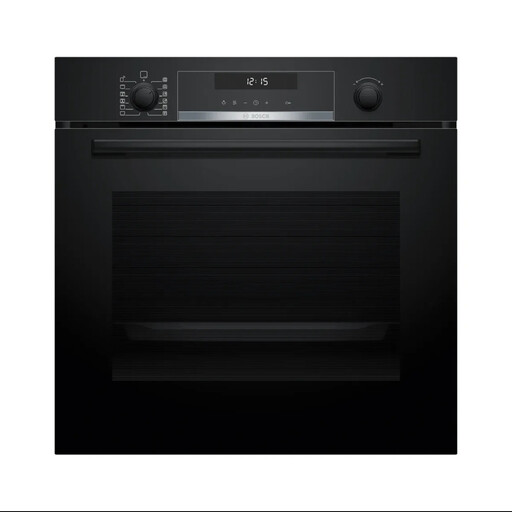 Image unavailable
A built-in oven to consider if your kitchen housing can accommodate it and you want to choose between fan cooking and conventional heat (top and bottom heat).
The product information lists 3D Hotair, conventional heat (top and bottom heat) and a temperature range of 50–275 °C. The stated housing dimensions are 585 × 560 × 550 mm.
 Image unavailable
A built-in model to compare if you have a suitable housing and want to prepare recipes using different oven settings.
The product information lists 3D Hotair, conventional heat (top and bottom heat) and baking on up to three levels.
Not without checking the oven setting in your recipe and your oven’s instructions. When converting a recipe from conventional heat (top and bottom heat) to a fan oven, the Netherlands Nutrition Centre recommends starting with a temperature around 10% lower.
Compare your cake tin with the usable internal dimensions and the oven opening. For a built-in model, also check the stated installation dimensions against your housing. For a freestanding model, follow the installation, connection and safety instructions in the manual.
Where oven energy labelling rules apply, compare the stated kWh per standard cycle for the same heating setting. This won’t tell you how much energy the oven will use to bake your cake. The Dutch government states that there’s no fixed statutory guarantee period in the Netherlands. If a product is faulty, contact the seller.
No. The European Commission describes energy labelling rules for household ovens, but also lists exceptions, including small ovens and appliances with microwave heating. So don’t assume every appliance has the same oven energy label.
The Netherlands Nutrition Centre recommends cooking dishes containing raw egg thoroughly, and washing your hands and utensils after contact with raw egg. Follow this food safety advice when making your chosen recipe; it isn’t an oven specification.