
Cooking for a large group
You want enough room to spread out the chicken and vegetables, and may be considering using several trays. Compare the tray dimensions and usable shelf positions, not just the capacity in litres.


Start by choosing an oven that fits your roasting tin and the space available. A spacious built-in oven may suit you if you want to use several trays at once, while a freestanding oven is an alternative if you don't have a suitable built-in space. Then check which trays are included, the installation requirements and the cleaning features. No oven function can replace cooking chicken thoroughly.
You want enough room to spread out the chicken and vegetables, and may be considering using several trays. Compare the tray dimensions and usable shelf positions, not just the capacity in litres.
You’re looking for a freestanding oven that fits on your worktop and has room for your roasting tin. The space available and the usable interior dimensions will help determine which model is right for you.
If you use your oven regularly, you’ll also want to consider cleaning and energy consumption. Check the features and energy use of the exact model you’re interested in.
Choose this when: you have a suitable built-in cavity and want to spread the chicken and vegetables across several trays.
Consider: the cavity and connection must be suitable; several shelf positions don’t automatically mean that several trays are included.
Choose this when: a built-in oven isn’t possible or isn’t what you want, and you mainly need one large tray.
Consider: the oven takes up worktop space, and its capacity in litres doesn’t tell you how much room there’ll be for your roasting tin.
Choose this when: smaller portions or cooking in several batches will work for your dinner. Severin lists the TO 2056 as having a capacity of 30 litres.
Consider: check that your roasting tin fits and that the features of the exact model suit the way you plan to cook.
| What to consider | What to look for | Who it matters to |
|---|---|---|
| Room for chicken and vegetables | Compare the usable interior and tray dimensions with your roasting tin and the quantity you plan to cook. | If you want to cook chicken and vegetables in your own roasting tin, you’ll want to make sure it fits. Around 36% of consumers put space for a baking tray first. |
| Several trays | Check the fan-assisted setting, usable shelf positions and how many suitable trays are included. | If you want to cook different components at the same time, suitable shelf positions are a key consideration. Around 29% of consumers say this is their main priority. |
| Where you can put the oven | For a built-in model, check the cavity dimensions and connection details. For a freestanding one, check the required clearance and positioning instructions. | If the space available determines whether a built-in or freestanding oven will work, placement becomes the deciding factor. Around 21% of consumers put this first. |
| Energy use and cleaning | Where applicable, compare energy use per cycle using the same oven setting, and check the model’s cleaning features. | If you roast regularly, you may want to factor in the cleaning involved and how much energy the oven uses. Around 14% of consumers make this their top priority. |
The capacity in litres doesn’t tell you the dimensions of the usable tray. So even an oven with a large capacity may not be suitable for your roasting tin.
Measure your roasting tin and, before you buy, check the usable interior dimensions, the tray size and what’s included with the exact model.
Built-in ovens to consider if you want to compare model-specific shelf positions and cleaning features.
Freestanding ovens if you don’t want a built-in model and are looking for a larger single tray.
A simpler built-in oven to consider if your cavity is suitable and you’re mainly focused on cooking one main dish.
Built-in and steam ovens for comparing cooking settings with steam alongside conventional roasting.
This selection includes freestanding ovens and built-in models for anyone considering space, fan cooking or several shelf positions. Always check that your roasting tin fits.
 No image available
A freestanding model to consider if you’re not looking for a built-in oven. Check that the interior has room for your roasting tin.
65-litre capacity; 2000 W; six cooking functions; 90-minute timer; enamel interior; dimensions 40 × 60 × 49 cm.
 No image available
Compare the stated capacity with your roasting tin and the quantity you want to cook at one time.
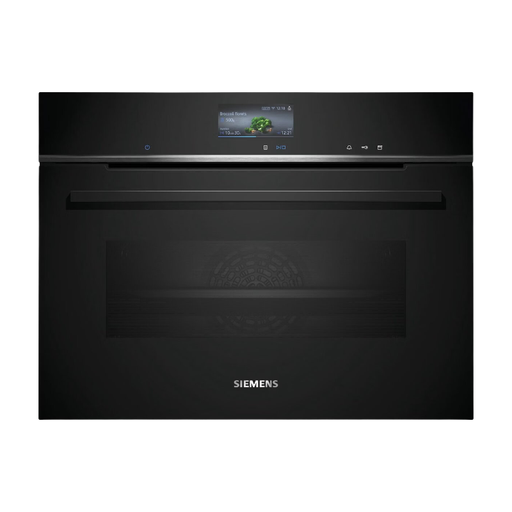
47 litres; built-in steam oven; 4D hot air; pyrolytic self-cleaning; Home Connect.
 No image available
A built-in model to compare if your cavity is suitable and you’ve considered the space needed for your roasting tin.
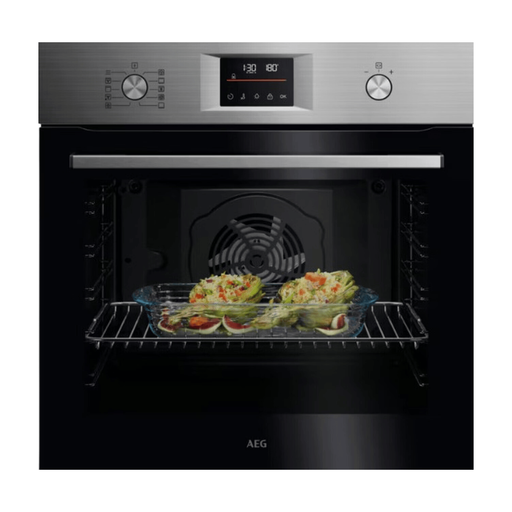
72-litre capacity; convection cooking; five shelf positions; pyrolytic self-cleaning; 45 cooking programmes.
 No image available
Worth considering if you have a suitable built-in cavity and are looking at shelf positions for several trays.
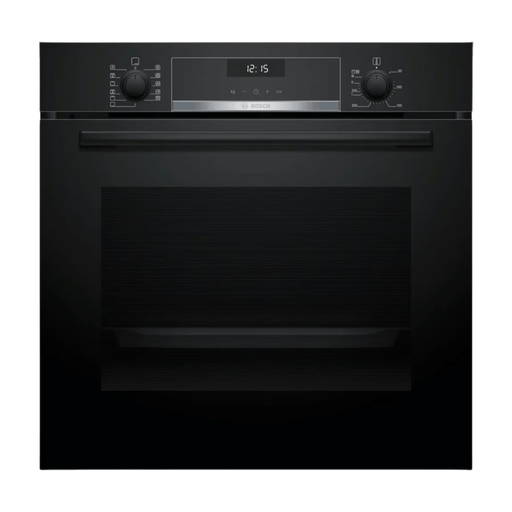
71 litres; 3D Hotair for up to three shelf positions; one universal pan included; EcoClean Direct.
 No image available
Compare the oven capacity and stated shelf positions with the quantity you want to cook at one time.
71 litres; cooking on up to three levels; Air Fry; EcoClean Direct.
No. Shelf positions don’t tell you whether every piece of chicken is cooked through. Voedingscentrum advises cooking chicken thoroughly until the meat is completely white inside, and keeping raw chicken separate from cooked food.
No. Follow the instructions for the model you’ve chosen. For a built-in oven, check the cavity and connection; for a freestanding oven, check the surface it will stand on and the required clearance. These requirements vary by model.
Cool leftovers quickly and store them in a sealed container in the fridge or freezer. Voedingscentrum advises not leaving cooked chicken out of the fridge for more than two hours, and says cooked chicken breast will keep in the fridge for two days.
Not every oven is covered by the applicable energy labelling rules. The European Commission excludes small and portable ovens from the scope of the rules. For labelled models, compare energy use per cycle for the oven setting you use.
No. There’s no fixed statutory warranty period in the Netherlands. According to the Dutch government, it depends on what you can reasonably expect from a product. If a product is faulty, contact the seller. A manufacturer’s warranty or an extended warranty is in addition to your statutory rights.