
Cooking a full tray
You want to cook chicken and vegetables on one tray for a weekend lunch. So first check that the tray and the food will actually fit in the oven.


Start by checking the dimensions of your baking tray and the space available: an oven’s capacity in litres doesn’t tell you whether your chicken and vegetables will fit on the tray. Then choose a suitable oven setting; fan cooking can help distribute heat across the tray or over several shelf levels. If you’re buying a built-in oven, check the recess and connection too. If you roast regularly, consider how you’d like to clean the oven.
You want to cook chicken and vegetables on one tray for a weekend lunch. So first check that the tray and the food will actually fit in the oven.
Your choice between a built-in oven and a freestanding model depends on the space available in your oven recess or on your worktop, as well as the connection.
You use your oven regularly for dishes that can leave greasy splashes, so you’ll want to consider cleaning and ease of use too.
| What to consider | What should you check? | Who is this important for? |
|---|---|---|
| Space on the baking tray | Measure your baking tray and compare its width and depth, as well as the available shelf height, with the oven. Check the dimensions of any tray supplied with the oven too. | If I want to cook chicken and vegetables together on one baking tray, I first need to know whether the tray and the food will fit. Around 36% of consumers put tray space first. |
| Roasting setting and heat distribution | Check the settings on the exact model, and follow the recipe and manual for temperature and shelf position. The Voedingscentrum advises cooking chicken all the way through. | If you’re looking for the right setting for a traybake or for cooking several dishes, heat distribution is a key consideration. Around 29% of consumers prioritise the roasting setting. |
| Fit and connection | Measure the oven recess or worktop space, and compare the model’s installation requirements, plug and rated power with the connection available. | If my kitchen has limited space, the oven needs to fit the recess or worktop space and work with the available connection. Around 21% of consumers put kitchen fit first. |
| Cleaning after roasting | Compare the cleaning method and the instructions for the oven, baking tray and other accessories. | If you roast often, you’ll want to know how much cleaning there’ll be after cooking. Around 14% of consumers make cleaning their top priority. |
The capacity doesn’t tell you how wide or deep the oven tray is. So even an oven with a generous capacity might not suit your baking tray or dish.
Measure your baking tray and compare its dimensions with the internal dimensions of the exact model before choosing.
The installation requirements and electrical connection can matter just as much as the oven recess. The Consumentenbond points out that some ovens may need a special connection.
Before ordering, compare the model’s manual with your oven recess and the connection available.
Chicken that looks cooked on the outside isn’t necessarily cooked all the way through. Raw chicken can contain pathogens, according to the Voedingscentrum.
Check that the chicken is cooked through, even if the vegetables or the outside already look ready.
Freestanding ovens for anyone who doesn’t want to use a built-in oven recess.
Built-in ovens for anyone with a suitable oven recess who wants to compare oven settings.
Built-in ovens with a choice of cleaning functions.
Built-in ovens with conventional heat, fan cooking and a cleaning function.
This selection includes freestanding and built-in ovens for anyone looking for an oven for roasting. Compare the settings, available space and installation requirements for each model.
 No image available
A freestanding worktop model with convection, for anyone who wants to roast and cook several dishes on different levels.
Capacity: 35 l. The product name mentions a thermometer and a four-level baking rack.
 No image available
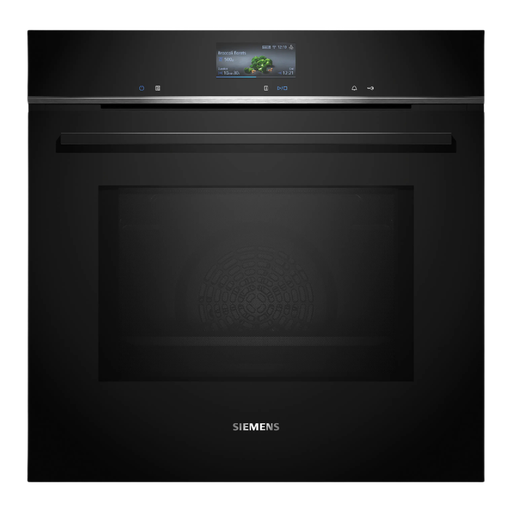
A built-in oven for anyone who wants to consider 4D HotAir and pyrolytic cleaning when choosing.
The product name mentions 4D HotAir, pyrolytic self-cleaning, Home Connect and a TFT display. Check the recess and connection requirements for your kitchen.
 No image available
A built-in oven for anyone who wants to compare a large capacity with fan cooking on several levels.
Capacity: 71 l. The product description mentions 3D HotAir for up to three levels and EcoClean Direct. Check the recess dimensions and the space for your baking tray.
 No image available
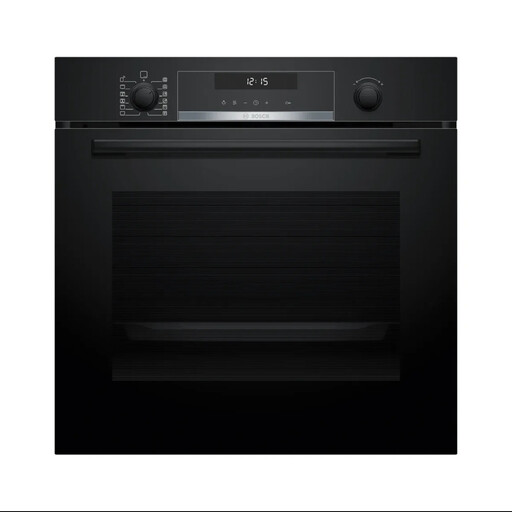
A built-in oven for anyone who wants to consider fan cooking and pyrolytic cleaning for regular roasting.
Capacity: 71 l. The product description mentions 3D Hot Air for up to three levels and pyrolytic cleaning. Check the recess dimensions and connection requirements for your kitchen.
 No image available
A freestanding countertop model for anyone who wants to compare a roasting function with air circulation.
Capacity: 30 l; power: 1800 W. The product description mentions 360° air circulation and a rotisserie spit.
No, fan cooking isn’t essential. Conventional top and bottom heat can also be used for meat dishes. Fan cooking can help distribute heat across the tray or when cooking several dishes on different levels. Follow the setting in your recipe and make sure the chicken is cooked all the way through.
No. Check the connection requirements for the specific model and the electrical connection in your kitchen too. The Consumentenbond points out that some ovens may need a special connection.
Follow the instructions for the oven and its accessories. According to the Consumentenbond, pyrolysis heats residue until it turns to ash, which you can then wipe away. A cleaning aid or hydrolysis works differently, so follow the instructions for your specific model.
The energy label shows, among other things, the consumption in kWh per cycle for conventional heat and, where applicable, fan cooking. This doesn’t give you a fixed cost for your dish: the cost also depends on how you use the oven and your electricity tariff. The European Commission explains this energy consumption information for household ovens.
You may do, because the Netherlands has no fixed statutory guarantee period. According to the Dutch government, a product should be fit for purpose for as long as you can reasonably expect. If there’s a fault, contact the seller; a manufacturer’s guarantee is separate.