
Baker with limited kitchen space
You want to bake cheese straws occasionally without having an oven built in. Check the usable tray size and how much space the appliance needs, rather than looking only at its capacity in litres.


For a modest batch and if you don’t have a suitable built-in oven space, a freestanding fan oven is a sensible choice. For larger batches or baking on several trays at once, a built-in oven with clearly specified shelf levels may be a better fit. Bosch lists a maximum of three shelf levels for the HBA534BS3, while AEG lists two for the OU5AB2W0CK. Compare the usable tray size, available space and installation requirements, and check the applicable Dutch safety requirements for the exact model.
You want to bake cheese straws occasionally without having an oven built in. Check the usable tray size and how much space the appliance needs, rather than looking only at its capacity in litres.
You make larger batches for guests and want to know how many shelf levels the specific model supports with fan cooking. Manufacturers list different numbers for individual Bosch and AEG models, for example.
You bake other dishes too and want to switch between fan cooking and conventional top and bottom heat. Follow the temperature and oven setting in the recipe you’re using.
Choose this option: if you don’t want a built-in oven and the twists will fit on the supplied baking tray.
Keep in mind: capacity in litres doesn’t tell you how many twists will fit on one tray; also follow the manual’s guidance on ventilation clearance. Severin’s product page listed the TO 2068 as out of stock.
Choose this option: if a compact model doesn’t offer enough tray space, but you can’t install a built-in oven. Inventum lists a capacity of 30 litres and a supplied baking tray for the OV307B.
Keep in mind: check the external dimensions, tray space and ventilation requirements. A larger capacity doesn’t automatically mean the oven is the right size for every batch.
Choose this option: if you have a suitable built-in space and want to compare the number of shelf levels. Bosch lists a maximum of three shelf levels for the HBA534BS3, while AEG lists two for the OU5AB2W0CK.
Keep in mind: check the dimensions of the built-in space, the connection and the trays supplied. These manufacturer specifications are not a like-for-like test of baking results.
| What to consider | What to look for when buying | Who should pay particular attention? |
|---|---|---|
| Will the batch fit on the baking tray? | Check the usable dimensions of the baking tray and how many trays are included; don’t rely on capacity in litres alone. | If I’m baking a weekend batch, I want to know whether the tray has room for the number of twists I’d like to make. Around 40% of consumers prioritise batch size and tray space. |
| Baking on several trays at once | Check how many shelf levels the manufacturer lists for the exact model and how many trays are included. | When I’m expecting guests, I want to be able to assess whether I can use several trays at once. Around 30% of consumers give baking on several shelf levels top priority. |
| Oven setting and temperature | Check that the settings you want are available and follow the recipe instructions. Koopmans lists 200 °C for its cheese straw recipe for both conventional and fan ovens. | If I bake other dishes too, I want to choose an oven setting that suits the recipe. Around 20% of consumers prioritise the choice of oven settings. |
| Size and energy consumption | For ovens covered by the labelling rules, compare consumption in kWh per cycle on a like-for-like basis. The European Commission lists small and portable ovens as exceptions to the energy labelling scope referred to here. | For a small batch, I don’t want to choose a larger oven without taking energy consumption into account. Around 10% of consumers prioritise suitable size and energy consumption. |
Cheese twists are baked on a tray. Capacity in litres alone won’t tell you how many will fit on the usable tray.
Compare the tray dimensions and the number of trays supplied with the batch you want to make.
A tray that’s too small may mean an extra baking round; sometimes you’ll need a suitable additional baking tray.
This could mean changing the temperature specified for the recipe for no good reason.
Follow the stated oven setting and temperature. Koopmans lists 200 °C for its cheese straw recipe for both conventional and fan ovens; towards the end of the stated cooking time, check the colour and whether they’re cooked through.
An energy rating alone won’t tell you which size is best for your batch. Milieu Centraal also recommends considering energy consumption per use and oven size.
For models covered by the labelling scope, compare consumption in kWh per cycle on a like-for-like basis. The European Commission excludes small and portable ovens from the scope referred to here.
A freestanding option for a medium-sized weekend batch: Inventum lists a capacity of 30 litres and a baking tray for the OV307B.
A compact freestanding option: Severin lists a capacity of around 20 litres and fan cooking for the TO 2068.
A built-in option for anyone who values multiple shelf levels: Bosch describes the HBA534BS3 as having 3D Hot Air.
A built-in option to compare with Bosch: AEG lists a capacity of 65 litres for the OU5AB2W0CK.
This selection includes freestanding and built-in ovens for anyone looking for a fan oven. Check the exact variant, available space and installation requirements for each model.
 Image unavailable
A built-in option to compare if you have a suitable cabinet space and are looking for a fan oven.
The product name lists 71 L and 3D Hot Air. Before buying, check the dimensions of the built-in space, the connection and the installation requirements for the exact variant.
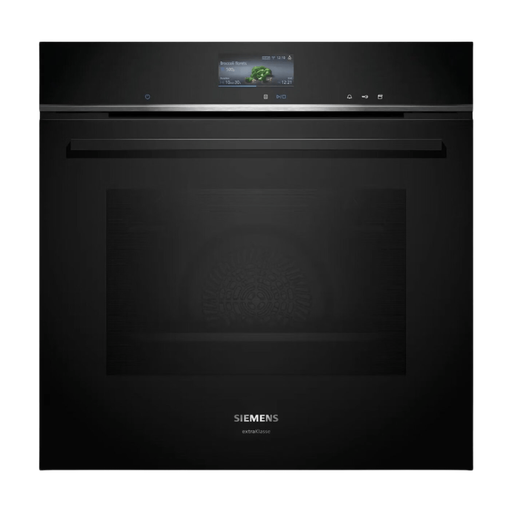 Image unavailable
A built-in option to consider if you have a suitable cabinet space and are looking for a fan oven.
The product name lists 60 L and 4D Hot Air. Check the dimensions and installation requirements for the exact variant before choosing a built-in model.
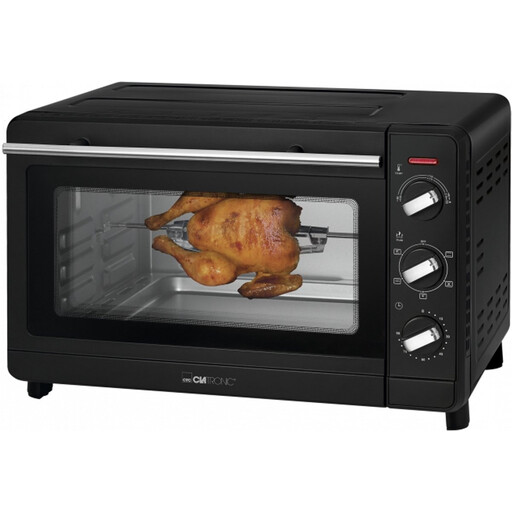 Image unavailable
A freestanding option to compare if you’re not looking for a built-in oven; check that its dimensions and positioning suit your kitchen.
The product name lists 30 L and 1500 W. Place the oven on a stable, heat-resistant surface, away from water and flammable materials; surfaces get hot.
 Image unavailable
A freestanding mini oven to compare if you don’t want a built-in oven; make sure its position suits the space in your kitchen.
The product name lists 2000 W and 45 L. Keep the ventilation openings clear, use a stable, heat-resistant surface and don’t leave the oven unattended while it’s in use.
 Image unavailable
A freestanding mini oven to compare if you’re not looking for a built-in model; check that the appliance and required ventilation clearance will fit in the available space.
Follow the manual’s instructions for positioning and don’t touch hot surfaces while the oven is in use.
Start by following the recipe and its specified oven setting. Koopmans lists 200 °C and a cooking time of around 20 minutes for its cheese straw recipe, for both conventional and fan ovens. The Voedingscentrum’s general tip to use a lower temperature when switching to fan cooking doesn’t replace the temperature specified for fan cooking in the recipe itself.
Follow the manual for the exact model to find out how much ventilation clearance is required. The Fire Service points out that heat needs to be able to escape from appliances and advises plugging high-powered appliances directly into a socket rather than into a cable reel or extension block.
If the product is faulty, contact the seller. According to the Dutch Government, the Netherlands has no fixed statutory warranty period; a manufacturer’s warranty is in addition to your statutory right to a product that works properly.
Electric household ovens placed on the market in the Netherlands and within the applicable voltage limits must meet the relevant electrical safety requirements and carry the mandatory CE marking. The NVWA describes these requirements within the applicable legal frameworks; check the documentation and marking for the specific model. CE marking is not an independent performance test.
Not necessarily. The European Commission lists small and portable ovens as exceptions to the energy labelling scope referred to here. So first check whether the specific oven falls within that scope before drawing conclusions about a missing label.