
Baking large batches for guests
If you want to use several baking trays when guests are coming, check the tray sizes and whether you can bake on different levels. The Allerhande cheese straw recipe uses two baking trays.


If you regularly bake a large batch of cheese straws for guests, focus on the usable baking tray area and whether you can bake on multiple levels. Also check that the oven will fit in your kitchen. For smaller batches, a freestanding oven or compact combination microwave may be a better fit, provided its oven function and baking tray are suitable. An Allerhande recipe uses two baking trays and recommends swapping them halfway through, so a multi-level baking function doesn’t automatically mean you can skip this step.
If you want to use several baking trays when guests are coming, check the tray sizes and whether you can bake on different levels. The Allerhande cheese straw recipe uses two baking trays.
If you’re looking for a freestanding oven, compare the space it needs with the room you have available, and check the size of the baking tray supplied.
A compact appliance can be a good choice for smaller batches, especially if you also want to reheat food. Just check that its oven function and tray are suitable for what you want to bake.
Best for: regularly baking larger batches, if you have a suitable built-in space.
Bear in mind: check the niche dimensions, baking tray area and accessories. A larger oven isn’t necessarily more energy-efficient for small batches.
Best for: baking without a built-in oven, if you have space on your worktop or another suitable spot.
Bear in mind: check the space around the oven and whether the baking tray is large enough for your batch.
Best for: a smaller kitchen where you want a microwave as well as an oven for baking.
Bear in mind: check that the tray and cheese straws will fit. The microwave function doesn’t replace the oven function.
The Allerhande recipe uses two baking trays and swaps them halfway through. So don’t compare oven capacity alone: check the tray sizes, heating functions and the space you have for the appliance too.
| What to consider | What to look for | Who is more likely to prioritise this? |
|---|---|---|
| Batch size and even baking | Compare the usable baking tray dimensions and the trays supplied; check which rack positions the model supports. | If I want to fill several trays when guests are coming, I want to know how many cheese straws will fit at once and what the oven manual recommends. Around 36% of consumers prioritise baking capacity. |
| Positioning and space | Measure the built-in niche or available space, then compare it with the installation instructions and tray dimensions. | If I don’t have a built-in space or there’s little room on the worktop, the appliance needs to fit somewhere practical. Around 29% of consumers prioritise positioning and usable space. |
| Baking and other everyday uses | Check the separate oven function, temperature range and tray supplied with the exact model. | If I want to reheat food as well as bake, I’m looking for a combination appliance that does both. Around 21% of consumers put versatility first. |
| Energy use and cleaning | Where possible, compare the energy use per cooking session for a similar purpose, and read the cleaning instructions. | If I often make small batches, I want to choose a size that suits how I use it and know how much cleaning the accessories will involve. Around 14% of consumers look at this first. |
The capacity in litres doesn’t tell you whether a baking tray is large enough for the amount of cheese straws you want to make.
Compare the actual tray dimensions, supplied accessories and rack positions with the batch size you usually bake.
If one tray isn’t enough, you may need to bake another batch. Also check whether you’ll need an additional tray that fits.
You need an oven function for baking; the microwave function is designed for reheating and does a different job.
Check the separate oven function and the tray supplied with the exact model.
Severin’s Dutch product page lists convection for the TO 2078, but the technical overview also says ‘Fan function: no’.
Check the manual or ask about the exact model before choosing it for this function.
The right size and energy use per cooking session also matter if you often bake small batches.
Where possible, compare energy use per cooking session for a similar purpose, and weigh this against the batch sizes you usually make.
Built-in ovens for kitchens with a suitable niche. Bosch says the HBA514BS3 offers 3D Hot Air on up to three rack levels.
Freestanding ovens for baking without a built-in model. Inventum states that the OV607B has a capacity of 60 litres and comes with a baking tray.
Compact combination microwaves for baking and reheating in one appliance. Panasonic says the NN-DF37PWEPG has a separate oven function.
Built-in ovens for baking on multiple levels. Siemens says the HB457G0B3F offers 3D hotAir on up to three rack levels.
Mini ovens can be a compact option for smaller batches. The TO 2078 is part of the Dutch range.
These models include a compact combination microwave, freestanding ovens and built-in ovens for baking with an oven or fan function.
 No image available
A compact combination option if you want to use a microwave and grill as well as bake.
The product description lists convection, a temperature setting of 110–210 °C and a baking tray.
 No image available
A built-in option if you have a suitable niche and want to bake on multiple levels.
The product description lists a 71-litre capacity and 3D fan cooking on up to three levels at once. It specifies installation by a qualified electrician; check the niche dimensions and installation instructions.
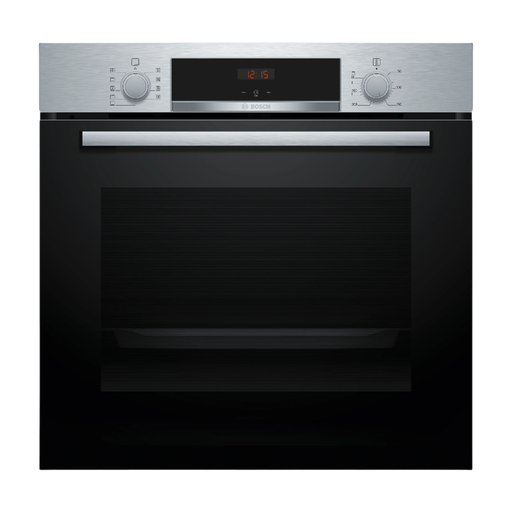 No image available
A built-in oven to consider if you have a suitable niche and the option to bake on multiple levels matters to you.
The product description lists 3D fan cooking on up to three levels and a capacity of 71 litres. Check the niche dimensions and installation instructions for this model.
 No image available
A freestanding option if you’re not looking for a built-in oven and have a suitable place for the appliance.
The product description lists conventional top and bottom heat, a fan function and a temperature range of 100–230 °C. Place the oven on a stable, heat-resistant surface and allow sufficient ventilation.
 No image available
A freestanding oven to consider if you’re not looking for a built-in model and the integrated hob suits your needs too.
The product description lists a 45-litre capacity, conventional top and bottom heat and convection. Check the available space and ventilation requirements.
No. For this recipe, choose an oven or a combination microwave with a separate oven function. Follow the recipe and oven manual for the temperature and cooking time.
The Allerhande cheese straw recipe recommends swapping the two trays halfway through. Also follow the instructions for your chosen heating function; a multi-level function hasn’t been tested with this specific recipe.
For a built-in oven, check the niche dimensions and the installation instructions for the exact model. For a freestanding oven, measure the available space and allow for the specified ventilation.
Where possible, compare the electricity used per cooking session for a similar purpose. Choose a size that suits your usual batch sizes too; a larger model isn’t automatically the best choice for smaller amounts.
That specification alone isn’t enough to tell you. Check the manual for multi-level use, compare the tray sizes with your batch and follow the recipe instructions, including swapping the trays if required.