Start by checking whether the workshop venue can accommodate a built-in oven and how many scones you want to bake in each batch. Compare the usable baking tray space and oven settings, not just the capacity in litres. A built-in fan oven with several shelf levels could suit baking multiple trays at once, while a freestanding model is an option if there’s no suitable built-in space. For either type, check which trays are included, the recipe settings and how to position the oven safely.
Who is this choice relevant to?
Workshop host running several groups
If you want to bake several batches at once, compare the usable baking tray space and the trays supplied. The Consumentenbond explains what to look for in the interior space of a built-in oven, while Bosch Netherlands lists multi-level fan cooking for the HBA534BB3.
Host who follows the recipe closely
If you want to stick to the recipe settings, check which oven functions are available. Good Food gives different temperatures for conventional and fan cooking in a cheese scone recipe, and Heel Holland Bakt explains the difference between these settings.
Organiser without a built-in space
If there’s no suitable space for a built-in oven, you could consider a freestanding model and check the available worktop space and positioning instructions. Inventum provides model-specific safe-use guidance for the OV457B.
What should you look for when buying?
Start with the space available: this will determine whether a built-in or freestanding oven is practical. Then compare the recipe setting with the space your baking trays actually need.
| Consideration |
What to check |
Who is this most important to? |
| Baking capacity |
Measure your baking tray and compare the usable interior space, trays supplied and supported shelf levels. |
If I’m catering for several workshop groups at once, I want to know how many trays and scones will actually fit. Around 36% of consumers prioritise capacity. |
| Oven setting |
Check that the oven offers the setting and temperature required by your recipe. For one cheese scone recipe, Good Food recommends 180 °C fan or 200 °C conventional. |
If you want to follow the recipe precisely, you’ll need to use the right setting and temperature. Around 29% of consumers prioritise matching the recipe. |
| Positioning |
Measure the built-in space or available worktop area, and check the connection requirements and positioning instructions for the exact model. |
If I’m working at a venue without a built-in space, I need an oven that can be positioned there safely according to its manual. Around 21% of consumers prioritise the space available. |
| Energy use and cleaning |
Where possible, compare energy use per baking cycle and check which accessories are included and how they should be cleaned. |
If you’re also considering energy use and cleaning after the workshop, you’ll want to compare these factors in advance. Around 14% of consumers prioritise use and maintenance. |
Common mistakes
-
Comparing capacity in litres alone
The usable space may be smaller than the stated capacity, and several shelf positions don’t necessarily mean that the same number of baking trays are included.
Measure the baking tray you want to use and compare the internal dimensions, included accessories and shelf levels supported by the model.
If trays don’t fit at the same time or aren’t included, you may need to bake in extra batches or buy suitable additional trays.
-
Treating fan and conventional heat as the same setting
The right setting depends on the recipe you’re using. One published cheese scone recipe gives different temperatures for fan and conventional cooking; these aren’t standard settings for every recipe.
Follow the setting and instructions in the recipe you’re using for the workshop, and check how the scones are baking as you go.
-
Positioning a freestanding oven without checking the manual
Positioning and operating instructions vary by model. At a workshop, it’s also important to make sure participants keep away from hot surfaces.
Before use, check the manual for positioning and connection instructions, and use oven gloves when handling hot parts.
Brands to consider
Bosch
Built-in ovens such as the HBA534BB3 could suit a workshop venue with a suitable built-in space.
- Bosch Netherlands lists a capacity of 71 litres, 3D Hotair on up to three shelf levels and one included universal pan for the HBA534BB3.
- The number of shelf levels doesn’t tell you how many trays are included or how cheese scones will bake on each level. Check that you have the trays you need.
ETNA
The OM470RVS built-in oven may be worth considering if you have a suitable space and are looking for an oven with several shelf levels.
- ETNA lists a capacity of 72 litres, turbo fan cooking and five shelf levels for this model.
- The shelf levels don’t tell you how many baking trays are included or how many scones will fit at once. Check the accessories and the space available.
Inventum
The freestanding OV457B could be an option for a workshop venue without a suitable built-in space.
- Inventum lists a capacity of 45 litres, fan cooking, conventional heat and one included baking tray.
- Having just one baking tray may mean extra batches for larger groups. Follow the model manual for positioning and use.
Severin
The freestanding TO 2058 mini oven could suit smaller batches or baking in several rounds.
- Severin lists a capacity of 42 litres, four shelf levels, and fan and conventional heat that can be used separately or together.
- Four shelf levels don’t mean that four baking trays are included or that several full trays of cheese scones will fit at once.
Ovens at Joybuy
This selection includes built-in and freestanding ovens for workshop venues where you want to weigh up baking space, available oven functions and positioning.
 No image available
Comfee electric built-in oven, 60 cm, 70 L
For a workshop venue with a suitable built-in space; check in advance that the baking tray area will accommodate your batches.
The product name lists 3 kW, a grill, pizza function, AquaClean steam cleaning, a timer, ECO mode and energy class A.
View at Joybuy
 No image available
23 L dual-zone air fryer mini oven
For anyone looking for a freestanding mini oven; check that the cooking surface will suit the trays and batches you need for the workshop.
The product name lists a capacity of 23 litres, two zones, 15 programmes and an LED touchscreen.
View at Joybuy
 No image available
Bosch HMG7361B1 built-in oven, 71 L
For a workshop kitchen with a suitable built-in space and a need for an oven with fan cooking.
The product name lists 3D Hot Air, pyrolytic cleaning and Home Connect.
View at Joybuy
 No image available
Bosch HBG536EB4 built-in oven, 71 L
For anyone considering a built-in fan oven who can check the space and baking tray capacity in advance.
The product name lists 3D Hot Air and a stainless steel finish.
View at Joybuy
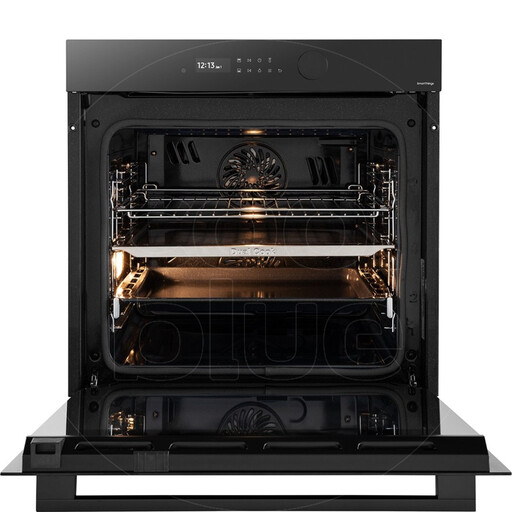 No image available
Samsung NV7B5655SCK/U1 built-in oven, 76 L
For a workshop venue with a suitable built-in space; check that the oven settings suit the recipe you’re using.
The product name lists Dual Cook, pyrolytic cleaning and an AirFry function. Remove accessories before a pyrolytic cleaning cycle and take care around hot surfaces.
View at Joybuy
Frequently asked questions
Should you always bake cheese scones at 180 °C?
No. For one cheese scone recipe, Good Food recommends 180 °C with fan cooking and 200 °C for conventional cooking. Follow the setting and instructions in the recipe you’re using for the workshop; these aren’t standard settings for every recipe.
Can you use several baking trays at once?
It depends on the oven and the trays you’re using. Heel Holland Bakt describes fan cooking as suitable for baking on several levels. Also check how many shelf levels the exact model supports, which trays are included and whether the scones will fit with enough space around them.
What should you consider when positioning a freestanding oven?
Follow the positioning and connection instructions in the manual for your chosen model. The Inventum manual for the OV457B warns that parts can get hot and advises using oven gloves when putting food in or taking it out. These instructions don’t automatically apply to other ovens.
What food safety rules apply if the workshop operates as a food business?
According to the NVWA, businesses that prepare, process or sell food must work with a HACCP food safety plan. They can use an applicable, approved hygiene code for this purpose. Whether this applies to your workshop depends on the circumstances of your business.
Does all cover expire after two years?
No. ACM ConsuWijzer distinguishes between a manufacturer’s or seller’s guarantee and your statutory rights. In the Netherlands, statutory rights don’t have a fixed two-year duration and depend in part on what you can reasonably expect from the product under normal use. If you’re buying for business use, check the applicable terms of sale too.


