
Baking for a group
You’d prefer to make the portions you need in one batch, so you compare baking trays rather than looking only at oven capacity.


First, compare the usable baking tray with the number of scones you want to bake at once. Then consider whether a freestanding model or a built-in oven will suit your kitchen. Choose an oven setting that matches your recipe: Good Food recommends 180 °C fan or 200 °C conventional for one cheese scone recipe. The models mentioned are examples to help guide your choice; check the relevant safety documentation for the exact model before buying an oven.
You’d prefer to make the portions you need in one batch, so you compare baking trays rather than looking only at oven capacity.
You want to follow a cheese scone recipe and know that fan and conventional settings are not interchangeable.
You need to choose between a freestanding appliance on the worktop and an oven fitted into a suitable housing unit.
If you’re baking cheese scones to share, the main things to consider are portion size, recipe settings, available space and how easy the oven is to share.
| What to consider | What to look for | Who should pay particular attention? |
|---|---|---|
| Portions per batch | Compare the usable baking tray size with the dimensions of your shaped scones and the space needed between them. | If I’m baking for a group, I want to know whether the scones will fit on the tray, rather than estimating based on the oven’s capacity in litres. Around 31% of consumers say the quantity they can bake per batch is their top priority. |
| Recipe oven setting | Check that the model has the setting your recipe specifies, and follow the recipe temperature. For one recipe, Good Food recommends 200 °C conventional or 180 °C fan. | I want to set the oven to match my recipe and check it while baking, rather than automatically converting between settings. Following the recipe closely is also a priority for around 31% of consumers. |
| Location and installation type | Measure the intended space. For a built-in oven, check the housing unit and installation requirements; for a freestanding model, follow the placement instructions. | If my worktop or housing unit limits my options, I need to be able to place or install the appliance there in accordance with the instructions. For around 25% of consumers, finding a suitable place for the appliance is the main consideration. |
| Controls and maintenance | Check the controls, timer and cleaning instructions for the exact model and the accessories supplied. | If other people will be using the oven too, I want the controls and cleaning to be practical for everyone. Around 13% of consumers put ease of shared use and maintenance at the top of their list. |
An oven’s capacity in litres doesn’t tell you how many shaped scones will fit on the supplied baking tray with enough room between them.
Check the tray dimensions and compare them with the size of the portions you plan to make before choosing an oven.
If the tray is too small for the number of portions you want to make, you may need to bake in several batches.
Fan and conventional are different oven settings. Heel Holland Bakt notes that air circulation can dry out baked goods more quickly.
Follow the setting and temperature in your recipe, and check the scones towards the end of the cooking time.
A freestanding appliance needs a suitable place, while a built-in oven needs a housing unit and installation that are right for the model.
Check the dimensions and follow the placement and ventilation instructions in the manual for the exact model.
The OV207B and OV607B models reviewed are freestanding ovens with capacities of 20 and 60 litres respectively.
According to Bosch, the HBA534EB3 reviewed is a 71-litre built-in oven with 3D Hotair and conventional heating.
The TO 2068 reviewed is a freestanding mini oven and grill with a capacity of around 20 litres.
According to AEG, the TE8PB73ZAT reviewed is a built-in oven with a capacity of 71 litres.
The products below include freestanding and built-in ovens. For each exact model, check that it has the setting your recipe calls for and that its baking tray will fit the portions you want to make. Electrical equipment covered by the EU Low Voltage Directive must meet the relevant safety requirements and carry CE marking. EUR-Lex makes clear that this general requirement alone does not confirm compliance for an individual model. So check the marking and product documentation for the model you’re considering.
 No image available
The product title describes a fan oven with a four-tier baking rack. Check that the tray space and oven setting suit your recipe.
35 L capacity; four-tier baking rack; LED display.
 No image available
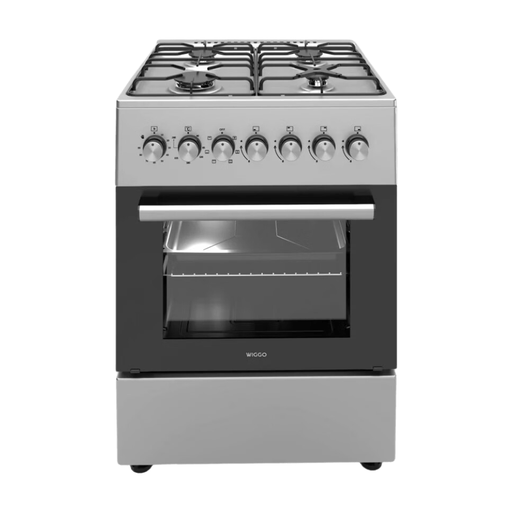
This is a freestanding gas cooker with an oven, not a model described as a fan oven. Before choosing it, check that its oven setting works for your recipe.
60 cm; gas; stainless steel. The product information specifies professional installation and a gas connection.
 No image available
The product title describes a freestanding oven. Check the available oven settings and supplied accessories for your cheese scone recipe.
65 L; black; 2000 W.
Keep the ventilation openings clear in accordance with the product instructions.
 No image available
A built-in oven for anyone with a suitable housing unit. Check the installation requirements and make sure the oven setting matches your recipe.
71 L; 3D Hot Air; Easy Cleaning; stainless steel.
 No image available
This built-in oven is an option if the housing unit and installation are suitable. Check that its features meet your needs for baking cheese scones.
71 L; 3D Hot Air; Pyrolytic Self-Cleaning; Home Connect.
Follow the oven setting and temperature in your own recipe. For one recipe, Good Food recommends 200 °C for conventional baking or 180 °C with a fan setting. These settings won’t necessarily suit every recipe or oven.
Follow the recipe you’re using. Good Food’s cheese scone recipe calls for preheating the oven with a baking tray inside; the Voedingscentrum notes that preheating isn’t always necessary for oven dishes.
Compare the usable tray size with the dimensions of your shaped scones, allowing for the spacing specified in your recipe. The oven’s capacity in litres alone won’t tell you how many scones you can bake at once.
A freestanding model is suitable only if you have an appropriate space and can follow the placement instructions. A built-in oven needs a suitable housing unit and installation. Measure the intended space and check the requirements for the exact model.
Electrical equipment covered by the EU Low Voltage Directive must meet the relevant safety requirements and carry CE marking before being placed on the market. EUR-Lex outlines the general requirement; check the CE marking and accompanying product documentation for the exact model.